
Catalogue Search | MBRL


Are you sure you want to remove the book from the shelf?

{{itemTitle}}
9
result(s) for
"Spencer, Robert author"
Sort by:

Cosmopolitan criticism and postcolonial literature
Via readings of novels by J.M. Coetzee, Timothy Mo and Salman Rushdie and the later poetry of W.B. Yeats, this book reveals how postcolonial writing can encourage the enlarged sense of moral and political responsibility needed to supplant ongoing forms of imperial violence with cosmopolitan institutions, relationships and ways of thinking.
eBook

Did Muhammad Exist?
Are jihadists dying for a fiction? Everything you thought you knew about Islam is about to change. Did Muhammad exist? It is a question that few have thought-or dared-to ask. Virtually everyone, Muslim and non-Muslim alike, takes for granted that the prophet of Islam lived and led in seventh-century Arabia. But this widely accepted story begins to crumble on close examination, as Robert Spencer shows in his eye-opening new book. In his blockbuster bestseller The Truth about Muhammad, Spencer revealed the shocking contents of the earliest Islamic biographical material about the prophet of Islam. Now, in Did Muhammad Exist? , he uncovers that material's surprisingly shaky historical foundations. Spencer meticulously examines historical records, archaeological findings, and pioneering new scholarship to reconstruct what we can know about Muhammad, the Qur'an, and the early days of Islam. The evidence he presents challenges the most fundamental assumptions about Islam's origins. Did Muhammad Exist? reveals: *How the earliest biographical material about Muhammad dates from at least 125 years after his reported death*How six decades passed before the Arabian conquerors-or the people they conquered-even mentioned Muhammad, the Qur'an, or Islam*The startling evidence that the Qur'an was constructed from existing materials-including pre-Islamic Christian texts*How even Muslim scholars acknowledge that countless reports of Muhammad's deeds were fabricated*Why a famous mosque inscription may refer not to Muhammad but, astonishingly, to Jesus*How the oldest records referring to a man named Muhammad bear little resemblance to the now-standard Islamic account of the life of the prophet*The many indications that Arabian leaders fashioned Islam for political reasons Far from an anti-Islamic polemic, Did Muhammad Exist? is a sober but unflinching look at the origins of one of the world's major religions. While Judaism and Christianity have been subjected to searching historical criticism for more than two centuries, Islam has never received the same treatment on any significant scale. The real story of Muhammad and early Islam has long remained in the shadows. Robert Spencer brings it into the light at long last.
eBook

Islam Unveiled
In \"Islam Unveiled,\" Robert Spencer dares to face the hard questions about what the Islamic religion actually teaches--and the potentially ominous implications of those teachings for the future of both the Muslim world and the West. Going beyond the shallow distinction between a \"true\" peaceful Islam and the \"hijacked\" Islam of terrorist groups, Spencer probes the Koran and Islamic traditions (as well as the history and present-day situation of the Muslim world) as part of his inquiry into why the world's fastest growing faith tends to arouse fanaticism. \"Islam Unveiled\" evaluates the relationship between Islamic fundamentalism and \"mainstream\" Islam; the fixation with violence and jihad; the reasons for Muslims' disturbing treatment of women; and devastating effects of Muslim polygamy and Islamic divorce laws. Spencer explores other daunting questions--why the human rights record of Islamic countries is so unrelievedly grim and how the root causes of this record exist in basic Muslim beliefs; why science and high culture died out in the Muslim world--and why this is a root cause of modern Muslim resentment. He evaluates what Muslims learn from the life of Muhammad, the man that Islam hails as the supreme model of human behavior. Above all, this provocative work grapples with the question that most preoccupies us today: can Islam create successful secularized societies that will coexist peacefully with the West's multicultural mosaic?.
eBook
Postcolonial Locations
Postcolonial Locations seeks to clarify the meaning of ‘the postcolonial’ through close textual readings, and prioritises material and located readings over more abstract theoretical discussions; it seeks to re-orient the field by providing practical explorations of what the discipline is for. The book begins with an introduction to the key theoretical debates in the field – between the universal and the particular; the global and the local – but it then goes on to demonstrate, via a series of close textual readings, that these distinctions are not always useful and that we can achieve a more comprehensive and complete reading of the multiple times, places and texts in which colonial power is both exerted and fought.
An engaging and comprehensive guide to contemporary postcolonial studies, this book is essential reading for students as well as professors.
eBook
For Humanism
Today, anti-humanism is a dominant, even definitive, feature of contemporary theory. This book sets out to challenge this by establishing the historical context that resulted in humanism’s eclipse, critiquing anti-humanism, and exploring alternative, neglected traditions and possible new directions. Humanism is a diverse and complex tradition that may facilitate the renewal of progressive theory through the championing of human subjectivity, agency and freedom. Across four extended essays, David Alderson, Kevin Anderson, Barbara Epstein and Robert Spencer engage critically with the Marxist tradition, recent developments in poststructuralism, postcolonialism and queer theory.
eBook
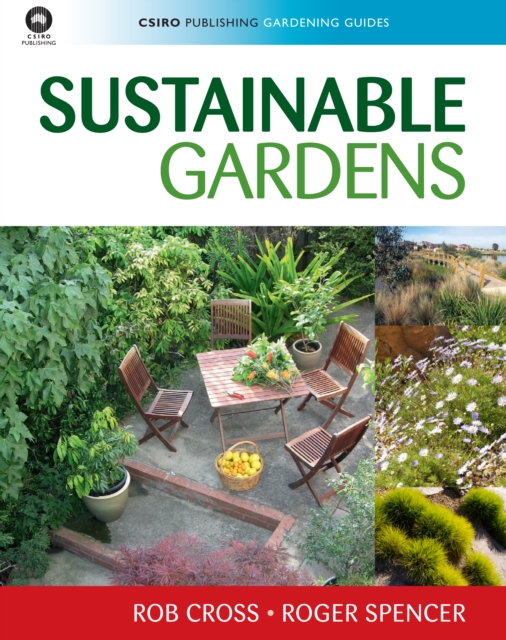
Sustainable gardens
The third title in the CSIRO Gardening Guide series, Sustainable Gardens by Roger Spencer and Rob Cross shows how horticulture can contribute towards a more sustainable future. Written for home gardeners, professional horticulturists, landscapers, and all those passionate about cultivated landscapes, this book examines the steps we can take towards harmonising gardening activity with the cycles of nature. Two outstanding botanists from the Royal Botanical Gardens in Melbourne, Roger and Rob have produced a genuine gardening bible for our times. They show how every gardener - both professional and amateur - can contribute positively to environmental stewardship. Gardens may be consumers of resources, but the negative effects of this consumption can be minimised and can be offset by some of the positive contributions gardens make. Roger and Rob explain the connections between human activity, resource depletion, and environmental degradation. They show how to conduct an audit of gardening practices, materials, and results so that every gardener can measure the impact he or she is having on nature. They show: how to minimise the impacts on nature of our consumption of water, materials and energy in the garden; how to make gardens more environmentally friendly through design, construction and maintenance phases; the importance of biodiversity and how horticulture can help protect natural systems; and the role that gardening can play in alleviating the environmental impacts of food production. Checklists are provided so that gardeners can ensure they are taking the most sustainable path through each phase of gardening - design, construction, maintenance. The book ends with a guide round an existing garden that combines physical beauty with sustainability, and discusses future trends for sustainable horticulture. In an increasingly urbanised world, parks and gardens are our main point of contact with nature. If we can maximise the environmental benefits of our gardens, public spaces and landscapes, we will make a huge contribution to sustainable living. This book if the first to show us how.
eBook
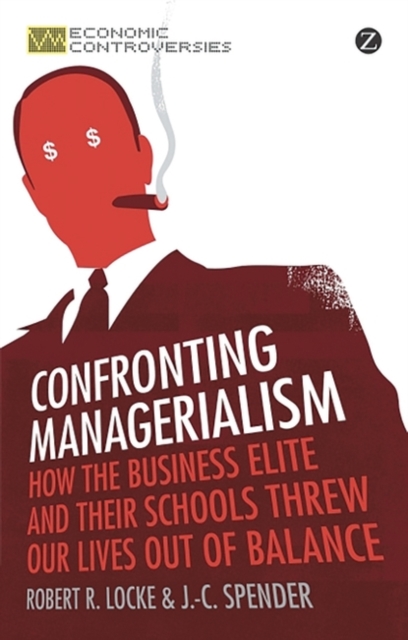
Confronting Managerialism
Confronting Managerialism offers a scathing critique of the influence of neoclassical economics and modern finance on business school teaching and management practice. Locke and Spender show that responsible management has given way to 'managerialism', whereby an elite caste of businessmen disconnected from any ethical considerations call the shots. The book traces the loss of managers' earlier social concerns, amply encouraged by management education's transformation since the 1960's, especially in the US. It also questions not only the social ethics of the US management caste but its management efficacy compared to systems of management that are highly employee participatory and dependent, such as in Germany and Japan. A unique, topical and controversial look at a subject that impacts us all.
eBook

Driving climate change : cutting carbon from transportation
Climate change is one of the greatest challenges facing global society. The debate over what to do is confounded by the uncertain relationship between increasing greenhouse gas emissions and climate change, and the impact of those changes on nature and human civilization. This book will provide professionals and students alike with the latest information regarding greenhouse emissions while presenting the most up-to-date techniques for reducing these emissions. It will investigate three broad strategies for reducing greenhouse gas emissions: 1) reducing motorized travel, 2) shifting to less energy intensive modes, and 3) changing fuel and propulsion technologies. Findings will be presented by the leaders in the field with contributions from professors, researchers, consultants and engineers at the most prominent institutions - commercial, academic and federal - dealing with environmental research and policy. * Includes a comprehensive evaluation of current industrial practice* Provides technologically sound and manageable techniques for engineers, scientists and designers* Incorporates guidelines for a sustainable future
eBook