
Catalogue Search | MBRL


Are you sure you want to remove the book from the shelf?

{{itemTitle}}
6
result(s) for
"Spiller, Neil, editor"
Sort by:

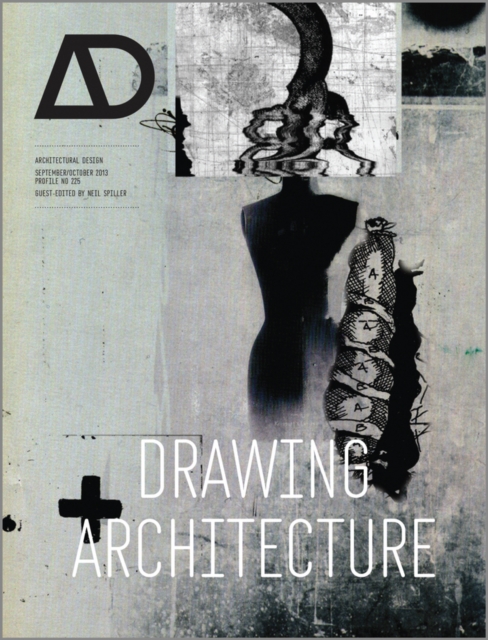
Drawing Architecture
We are in the second decade of the 21st century and, as with most things, the distinction between digital and analogue has become tired and inappropriate. This is also true in the world of architectural drawing, which paradoxically is enjoying a renaissance supported by the graphic dexterity of the computer. This new fecundity has produced a contemporary glut of stunning architectural drawings and representations that could rival the most recent outpouring of architectural vision in the 1960s, 1970s and 1980s. Indeed, there is much to learn by comparing the then and the now. The contemporary drawing is often about its ability to describe the change, fluctuations and mutability of architecture in relation to the virtual/real 21st-century continuum of architectural space. Times have changed, and the status of the architectural drawing must change with them. This reassessment is well overdue, and this edition of AD will be the catalyst for such re-examination. Features the work of: Pascal Bronner, Bryan Cantley, Peter Cook, Perry Kulper, CJ Lim, Tom Noonan, Dan Slavinsky, Neil Spiller, Peter Wilson, Nancy Wolf, Lebbeus Woods and Mas Yendo. Contributors include: Nic Clear, Mark Garcia, Simon Herron and Mark Morris.
eBook


Multiform
Guest-edited by Owen Hopkins and Erin McKellar
Our current moment is one of profound political and economic change. Historically, these moments of transition have seen a parallel period of cultural – and notably architectural – flux. In the late-1970s this was manifested in Postmodernism. Today, a number of architects are looking again at this movement and redeploying a range of its tactics and approaches using contemporary methods and techniques. These include different modes of collage, formal reference and quotation, stylistic eclecticism, symbolism in form, material and ornament, and the bold, expressive use of colour, both natural and synthetic.
While the design that results from these 'multiform' tactics and approaches has been seen as a kind of neo-Postmodernism, this issue argues that this is a simplistic and superficial reading. Instead, it posits this phenomenon as the architectural attempt – both conscious and unconscious – to reflect, grapple with and make sense of the current political and economic transition and the backdrop of the climate emergency. Rather than responding to this situation by attempting to marshal architecture around a single unifying narrative, this issue makes the case for the transformative possibilities offered by an approach that is ad hoc, eclectic and pluralist.
Contributors: Mat Barnes, Jennifer Bonner, Graham Burn, James Crawford and Alexander Turner, Mario Carpo, David Knight and Cristina Monteiro, David Kohn, Stephen Parnell, Lera Samovich, Geoff Shearcroft, Dirk Somers, Catrina Stewart and Hugh McEwen, Léa-Catherine Szacka, and Amin Taha.
Featured architects: AOC Architecture, Bovenbouw Architectuur, CAN, Groupwork, David Kohn Architects, DK-CM, Fala Atelier, MALL, Studio MUTT, Office S+M, Walala Studio, Yinka Ilori Studio
eBook

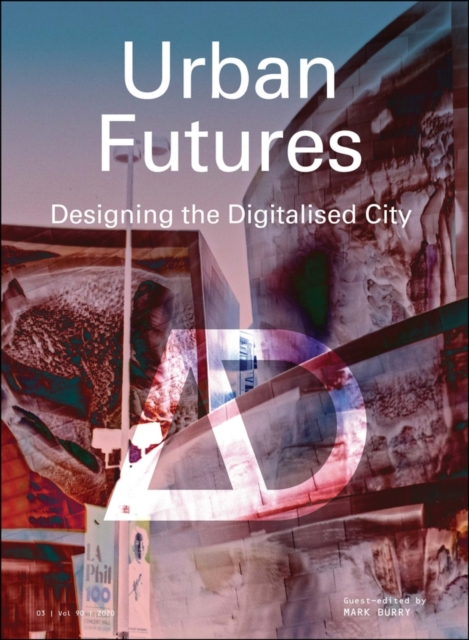
Urban futures
Given the rapid evolution of concepts such as smart cities, who are the architects riding the wave of new possibilities for urban design? How do contemporary agencies find pathways to understand the challenges and opportunities presented by evolving urban technology, and how does architecture engage with the expanding pool of associated disciplines? How should schools of architecture and urban design engage with radical digitalised urbanism?
This issue of AD claims that this is contested territory. The two-dimensionality of planners' urban construct is as limited as engineers' predilection to zero-in and solve problems. Urban Futures contends that society needs a much broader professional brush than has been applied in the past: interdisciplinary urban design professionals who can reach across the philosophy and mundanity of urban existence with a creative eye. The issue identifies a selection of internally resourceful visionaries who combine sociology, geography, logistics and systems theory with the practical realities and challenges of mobility, sustainable materials, food, water and energy supply, and waste disposal. Crucially, they seek to ensure better urban futures, and a civil and convivial urban experience for all city dwellers.
Contributors: Refik Anadol, Philip Belesky, Shajay Bhooshan, Jane Burry and Marcus White, Thomas Daniell, Vicente Guallart, Shan He, Wanyu He, Dan Hill, Justyna Karakiewicz, Tom Kvan, Areti Markopoulou, Ed Parham, Carlo Ratti, Ferran Sagarra, and Bige Tunçer.
Featured architects: Arup Digital Studio, Guallart Architects, Space10, Space Syntax, UNStudio, and XKool Technology.
eBook