
Catalogue Search | MBRL


Are you sure you want to remove the book from the shelf?

{{itemTitle}}
75
result(s) for
"Spooner, Fred"
Sort by:
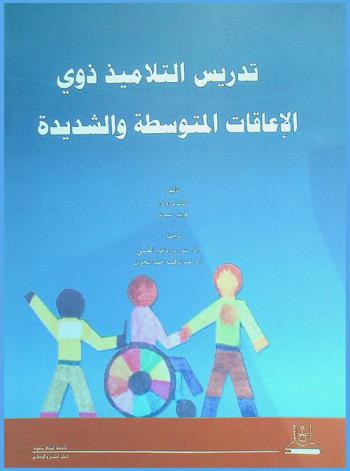
تدريس التلاميذ ذوي الإعاقات المتوسطة والشديدة
اشتمل هذا الكتاب على ثلاثة أبواب الأول منها تحت عنوان أصول التعلم والباب الثاني تحت عنوان محتوى التعليم العام، ويتناول الباب الثالث من الكتاب المهارات الحياتية وجودة الحياة كما يتناول الإحتياجات الحسية والبدنية واحتياجات الرعاية الصحية هو ما يكون مثيرا للتحدي نتيجة للحاجة إلى تحقيق التوازن بين التعليم والرعاية.
BOOK

Monstrous media/spectral subjects
Monstrous media/spectral subjects explores the intersection of monsters, ghosts, representation and technology in Gothic texts from the nineteenth century to the present. It argues that emerging media technologies from the phantasmagoria and magic lantern to the hand-held video camera and the personal computer both shape Gothic subjects and in turn become Gothicised.
In a collection of essays that ranges from the Victorian fiction of Wilkie Collins, Bram Stoker and Richard Marsh to the music of Tom Waits, world horror cinema and the TV series Doctor Who, this book finds fresh and innovative contexts for the study of Gothic. Combining essays by well-established and emerging scholars, it should appeal to academics and students researching both Gothic literature and culture and the cultural impact of new technologies.
eBook

A “Snapshot” of Current Practices: How Are Students With Intellectual and Developmental Disabilities Displaying Self-Determination
Although self-determination has received increased attention as a critical component in quality education programs, there is limited current research about how and in what way students are displaying self-determined behaviors. To that end, a 29-item questionnaire was developed and 118 school system personnel reported how a sample of students with intellectual and developmental disabilities in different grades employed self-determination strategies. Respondents were predominately White, female, had more than 10 years of experience, and largely worked with students with multiple disabilities at the elementary level. In all, the majority of students across grades were not taught specific self-determination skills. Also, students at the elementary level participated less in attending individualized education program (IEP) meetings or discussing their challenging behaviors than students at the secondary level, and typically received little or no instruction in self-determination. For those students who did receive instruction, self-instruction, self-monitoring, and self-evaluation were several of the strategies reported as being used by students to manage and regulate their behavior. The implications of the findings are discussed.
Journal Article

Inclusive Inquiry Science Using Peer-Mediated Embedded Instruction for Students with Moderate Intellectual Disability
There has been limited research on the acquisition of grade-aligned science skills for students with moderate intellectual disability, with even more restriction on academic skills in inclusive settings. This study examined the effects of peer-mediated time-delay instruction to teach inquiry science and use of a knowledge chart to students with moderate intellectual disability in an inclusive setting. Six general education peers implemented an embedded constant time-delay procedure during three science units with 5 students with moderate intellectual disability. All 5 students increased the number of correct science responses across all science units. Three students required additional support by the special education teacher to reach mastery. In addition, all 6 peers were able to implement the intervention with high fidelity, while maintaining science grades at preintervention levels. High levels of social validity were reported.
Journal Article

Peer-Mediated Interventions to Enhance Conversation Skills of Young Adults with Intellectual and Developmental Disabilities on a University Campus
Young adults with intellectual and developmental disabilities (IDD) on college campuses are vulnerable to exclusion and a lack of social participation. However, peers can provide meaningful supports to young adults with IDD in the area of social/communication skills. The purpose of this study was to enhance the conversation skills of four young adults with IDD (ages 22–23) during their regular lunch breaks on a university campus. The dependent variable was percent of conversational engagement during 10-min audio recorded sessions as measured using partial interval recording procedures. Typically developing peers served as peer coaches and provided structured or natural supports. Experiment 1 used an alternating treatments design to compare the effects of peer coaching alone
vs.
peer coaching + goal setting with two adjacent baseline conditions and a final student-choice condition. Results for Experiment 1 indicated peer coaching alone and the additive effects of goal setting was more effective than natural supports only. Experiment 2 used a withdrawal design to compare the effects of young adults with IDD speaking with fellow classmates with disabilities
vs.
peers without disabilities. Participants in Experiment 2 demonstrated higher levels of conversational engagement when speaking with peers without disabilities in a natural manner. Social validity of the different peer-mediated interventions was overall high for all participant types as reported on questionnaires and exit interviews. We provide implications for practice and suggestions for future research related to peer-mediated interventions for young adults with IDD on college and university campuses.
Journal Article

Using Community-Based Instruction with Students with Intellectual and Developmental Disabilities in Today's Classroom: A Systematic Review of Literature from 2010-2023
Community-based instruction (CBI) is often used to teach a myriad of skills across school, home, and community settings for students with disabilities (Fernandez et al., 2018). Despite the effectiveness of CBI interventions for students with intellectual and developmental disabilities (IDD), research in this area remains limited since the last review in 2010 (A. Walker et al., 2010). In the current investigation, we reviewed the literature on CBI programs and interventions for school-age (PreK-age 26) individuals with IDD from 2010-2023 to expand the available literature in this area. Data were collected related to participant demographics (e.g., disability, age, gender), study design elements (e.g., research design, independent and dependent variables), and educational setting and program (e.g., classroom setting, intervention utilized). We evaluated the quality of each study utilizing quality indicators established by the Council for Exceptional Children (2014) for single-case and group design. There were 25 studies that met the search criteria for this review that were coded across the research questions, indicating that the domains of CBI were not addressed equally across different grade spans and domains. Vocational and daily living skills were most often addressed with transition-age students (ages 14 and above in high school or postsecondary settings), often implemented by special educators using video modeling, visual supports, and technology-related intervention packages, and varied widely in the amount of training and support given to preparing students for community experiences. This remains a much-needed area of research for practitioners and scholars alike in several domains of CBI to enhance the outcomes for students with IDD across grade and age spans. Limitations and implications for research and practice also are discussed.
Journal Article

Using Explicit Instruction to Teach Science Descriptors to Students with Autism Spectrum Disorder
Science content is one area of general curriculum access that needs more investigation. Explicit instruction is effective for teaching students with high incidence disabilities a variety of skills, including science content. In this study, we taught three elementary aged students with autism spectrum disorder to acquire science descriptors (e.g., wet) and then generalization to novel objects, pictures, and within a science inquiry lesson via explicit instruction. A multiple probe across behaviors with concurrent replication across participants design measured the effects of the intervention. All three participants met criterion, some were able to generalize to novel objects, pictures, and objects within science inquiry lesson. Outcomes are discussed from the perspective of implications for practice and future research investigations.
Journal Article
Research on Reading Instruction for Individuals with Significant Cognitive Disabilities
This article presents the results of a comprehensive review of 128 studies on teaching reading to individuals with significant cognitive disabilities. The review compared these studies against the National Reading Panel's components of reading; although it revealed an inadequate consideration of the components of reading, it found strong evidence for teaching sight words using systematic prompting and fading. The reviewers considered not only the number of studies, but also indicators proposed for evidence-based practice and effect size. This study identified some high quality studies with strong effect size for comprehension and fluency, but only one phonics study was strong in both quality and effects. Additional research is needed to promote broader skills in literacy for this population.
Journal Article
A Meta-Analysis on Teaching Mathematics to Students with Significant Cognitive Disabilities
This article reports on a comprehensive literature review and meta-analysis of 68 experiments on teaching mathematics to individuals with significant cognitive disabilities. Most of the studies in the review addressed numbers and computation or measurement. Within the computation studies identified, most focused on counting, calculation, or number matching. For the measurement studies, nearly all focused on money skills. Of the 54 single subject design studies, 19 were classified as having all quality indicators for research design (13 representing the National Council of Teachers of Mathematics Measurement standard and 6 representing the Numbers and Operations standard). These studies offer strong evidence for using systematic instruction to teach mathematics skills and for using in vivo settings.
Journal Article
Using Time Delay to Teach Literacy to Students with Severe Developmental Disabilities
A review of the literature was conducted for articles published between 1975 and 2007 on the application of time delay as an instructional procedure to teach word and picture recognition to students with severe developmental disabilities in an effort to evaluate time delay as an evidence-based practice. A total of 30 experiments were analyzed using quality indicators for single-subject design research. In general, we found that time delay was an evidence-based practice for teaching picture and sight word recognition supported by standards for evidence-based practice proposed by Horner et al. (2005). We discuss lessons learned in summarizing a body of literature to define an evidence-based practice and suggestions for better defining the practice.
Journal Article