
Catalogue Search | MBRL


Are you sure you want to remove the book from the shelf?

{{itemTitle}}
109
result(s) for
"Spotte, Stephen"
Sort by:

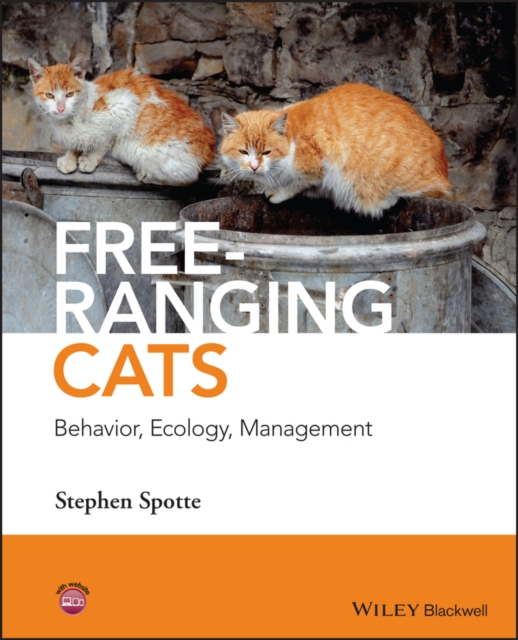
Free-ranging Cats
Feral and stray domestic cats occupy many different habitats. They can resist dehydration for months by relying exclusively on the tissue water of their prey allowing them to colonize remote deserts and other inhospitable places. They thrive and reproduce in humid equatorial rainforests and windswept subantarctic islands. In many areas of the world feral cats have driven some species of birds and mammals to extinction and others to the edge, becoming a huge conservation concern. With the control of feral and stray cats now a top conservation priority, biologists are intensifying efforts to understand cat behaviour, reproductive biology, use of space, intraspecies interaction, dietary requirements, prey preferences, and vulnerability to different management strategies.
This book provides the most comprehensive review yet published on the behavior, ecology and management of free-ranging domestic cats, whether they be owned, stray, or feral. It reviews management methods and their progress, and questions several widely accepted views of free-ranging cats, notably that they live within dominance hierarchies and are highly social.
Insightful and objective, this book includes:
* a functional approach, emphasizing sensory biology, reproductive physiology, nutrition, and space
partitioning;
* clear treatment of how free-ranging cats should be managed;
* extensive critical interpretation of the world's existing literature;
* results of studies of cats in laboratories under controlled conditions, with data that can also be
applied to pet cats.
Free-ranging Cats: Behavior, Ecology, Management is valuable to ecologists, conservation scientists, animal behaviorists, wildlife nutritionists, wildlife biologists, research and wildlife veterinarians, clinical veterinarians, mammalogists, and park and game reserve planners and administrators.
eBook

Societies of wolves and free-ranging dogs
\"Wolves are charismatic emblems of wilderness. Dogs, which descended from wolves, are models of urbanity. Do free-ranging dogs revert to pack living or are their societies only reminiscent of a wolfish heritage? Focusing on behavioral ecology, this is the first book to assess societies of both gray wolves and domestic dogs living as urban strays and in the feral state. It provides a comprehensive review of wolf genetics, particularly of New World wolves and their mixture of wolf, coyote and dog genomes. Spotte draws on the latest scientific findings across the specialized fields of genetics, sensory biology, reproductive physiology, space use, foraging ecology and socialization. This interdisciplinary approach provides a solid foundation for a startling and original comparison of the social lives of wolves and free-ranging dogs. Supplementary material, including a full glossary of terms, is available online at www.cambridge.org/9781107015197\"-- Provided by publisher.
Book

Societies of Wolves and Free-ranging Dogs
Wolves are charismatic emblems of wilderness. Dogs, which descended from wolves, are models of urbanity. Do free-ranging dogs revert to pack living or are their societies only reminiscent of a wolfish heritage? Focusing on behavioral ecology, this is the first book to assess societies of both gray wolves and domestic dogs living as urban strays and in the feral state. It provides a comprehensive review of wolf genetics, particularly of New World wolves and their mixture of wolf, coyote and dog genomes. Spotte draws on the latest scientific findings across the specialized fields of genetics, sensory biology, reproductive physiology, space use, foraging ecology and socialization. This interdisciplinary approach provides a solid foundation for a startling and original comparison of the social lives of wolves and free-ranging dogs. Supplementary material, including a full glossary of terms, is available online at www.cambridge.org/9781107015197.
eBook
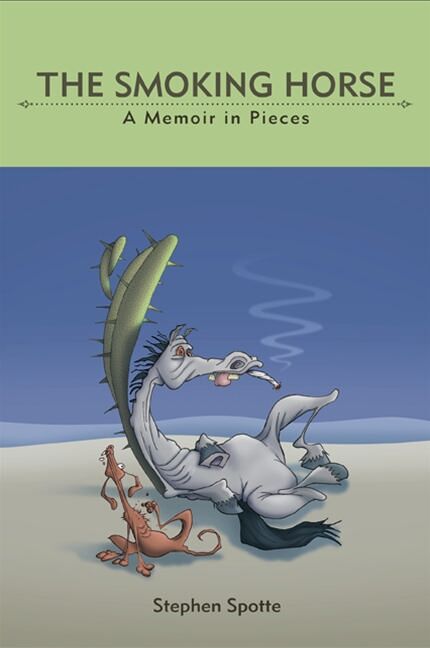
The Smoking Horse
In The Smoking Horse, marine biologist Stephen Spotte recounts his youth from the mid-1950s through the turbulent 1960s. After growing up in a coal camp in southern West Virginia, he was expelled from a Maryland boarding school and over four summers lived a bohemian life in Beach Haven, New Jersey, working variously as a lifeguard, clamdigger, dishwasher, laborer, and milkman. Beach Haven in the early sixties was a riotous community of artists, musicians, drunks, junkies, and those who had simply fallen through life's cracks. It was, someone said, a seaside Greenwich Village, and in fact it became a weekend destination of New York City bohemians abandoning the hot summer sidewalks to mill with itinerant beach bums, boat jockeys, New Jersey pineys, and Philadelphia hipsters. It was here that Spotte began a lifelong study of literature and the sea, always with an ear to life's fractured melodies. Torn between art and empiricism, he moved to New York, haunting Village coffee shops, listening to beat poets, and following New York's jazz scene, where ragged sages claimed enlightenment in Coltrane's sax. Following stints as a deckhand in the West Indies he returned to college and trained to become a marine biologist. His professional life began in Niagara Falls, New York, where the Great Lakes were dying after years of pollution, the citizens struggling to breathe air reminiscent of the coal camps. The end of the memoir finds him separated from his wife and wandering alone in the Mexican desert astride a skeletal, marijuana-dependent horse and trailed by a stray dog, still seeking the mythical place where reason and revelation intersect.
eBook

Free-ranging cats : behavior, ecology, and management / Stephen Spotte
Feral and stray domestic cats occupy many different habitats. They can resist dehydration for months by relying exclusively on the tissue water of their prey allowing them to colonize remote deserts and other inhospitable places. This book provides a comprehensive review on the behavior, ecology and management of free-ranging domestic cats.
eBook

Zoos in postmodernism : signs and simulation / Stephen Spotte
\"In his new book, Zoos in Postmodernism: Signs and Simulation, marine biologist Stephen Spotte lumps together public aquariums and zoological parks (which he collectively calls zoos) and treats them as cultural derivatives assessable using semiotics (the study of signs and their meanings) and Baudrillard's models of simulation. He concludes that only modernist zoos can exist in postmodern times, making captive animal displays anachronistic. Today's zoos are thus reminiscent of an era generally agreed to have ended with the 1950s. Unable to evolve and compete with contemporary entertainments, they can only be spectacles viewed passively.\" \"The putative mission of zoos - education and conservation - yield doubtful results, education because its information relies on description and exposition instead of narrative, conservation because only a few large, showy vertebrates receive the most effort. By controlling reproduction and restricting evolution, zoos reduce animals to artifacts - unattached ecological fragments - and ultimately revoke their ontological status as part of the natural world.\" \"Spotte's argument assumes manifestations that impinge on contemporary theories of art, film, literature, photography, and science, the whole anchored securely by the twin poles of semiotics and simulation. This willingness to grapple with high-level theory - and to take intellectual risks - sets Zoos in Postmodernism apart from other treatments of zoos in contemporary western literature.\"--BOOK JACKET.
eBook
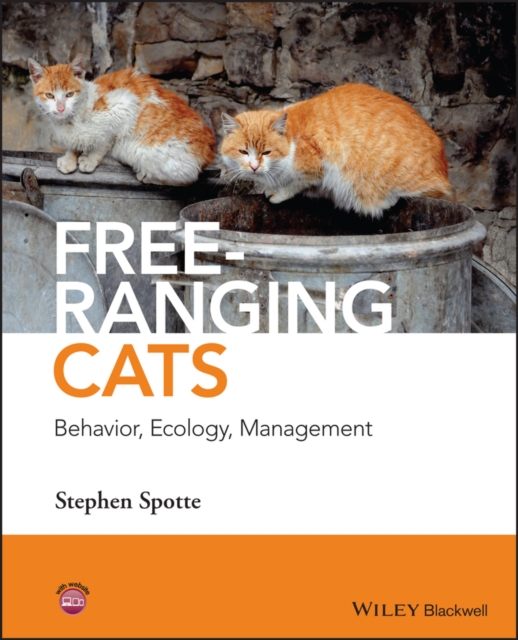
Free-ranging cats: biology, ecology, and management
Feral and stray domestic cats occupy many different habitats. They can resist dehydration for months by relying exclusively on the tissue water of their prey allowing them to colonize remote deserts and other inhospitable places. They thrive and reproduce in humid equatorial rainforests and windswept subantarctic islands. In many areas of the world feral cats have driven some species of birds and mammals to extinction and others to the edge, becoming a huge conservation concern. With the control of feral and stray cats now a top conservation priority, biologists are intensifying efforts to understand cat behaviour, reproductive biology, use of space, intraspecies interaction, dietary requirements, prey preferences, and vulnerability to different management strategies. This book provides the most comprehensive review yet published on the behavior, ecology and management of free-ranging domestic cats, whether they be owned, stray, or feral. It reviews management methods and their progress, and questions several widely accepted views of free-ranging cats, notably that they live within dominance hierarchies and are highly social. Insightful and objective, this book includes: a functional approach, emphasizing sensory biology, reproductive physiology, nutrition, and space partitioning; clear treatment of how free-ranging cats should be managed; extensive critical interpretation of the world's existing literature; results of studies of cats in laboratories under controlled conditions, with data that can also be applied to pet cats. Free-ranging Cats: Behavior, Ecology, Management is valuable to ecologists, conservation scientists, animal behaviorists, wildlife nutritionists, wildlife biologists, research and wildlife veterinarians, clinical veterinarians, mammalogists, and park and game reserve planners and administrators.
eBook