
Catalogue Search | MBRL


Are you sure you want to remove the book from the shelf?

{{itemTitle}}
29
result(s) for
"Spring, Joel H"
Sort by:

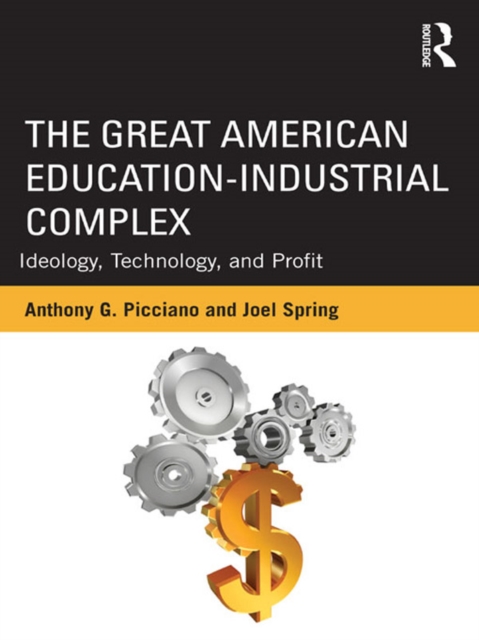
The Great American Education-Industrial Complex
The Great American Education-Industrial Complex examines the structure and nature of national networks and enterprises that seek to influence public education policy in accord with their own goals and objectives. In the past twenty years, significant changes have taken place in the way various interest groups seek to influence policies and practices in public education in the United States. No longer left to the experience and knowledge of educators, American education has become as much the domain of private organizations, corporate entities, and political agents who see it as a market for their ideas, technologies, and ultimately profits. Piccciano and Spring posit that educational technology is the vehicle whereby these separate movements, organizations, and individuals have become integrated in a powerful common entity, and detail how the educational-industrial complex has grown and strengthened its position of influence. This timely, carefully documented, well argued book brings together Picciano's perspective and expertise in the field of technology and policy issues and Spring's in the history and politics of education in a unique critical analysis of the education-industrial complex and its implications for the future.
eBook

Corporatism, Social Control, and Cultural Domination in Education: From the Radical Right to Globalization
Starting with the 1972 publication of his seminal work, Education and the Rise of the Corporate State, Joel Spring has been documenting and analyzing the politics of knowledge and education. Throughout his work he has explored the attempts to use education to advance the economic and political interests of dominant groups. The general term he uses for the relationship between schools and power is \"ideological management.\" His scholarly work first looked at the influence on American schooling of business and economic doctrines embodied in human capital theories and consumerism. The next step in his exploration of the politics of knowledge was to examine these issues in the context of globalization, leading to a proposed educational rights amendment to national constitutions and a new paradigm for education, both of which might ensure that schools are protected from ideological management by economic and political elites. Spring's indigenous background has strongly shaped his interest in the political and economic goals of schooling, particularly the attempts of those in power to use schools to destroy indigenous languages and cultures.
In this collection, Spring brings together 10 of his key writings, providing an overview not just of his own career but the larger contexts in which it is situated. In the Introduction he reviews the evolution and scope of his work and his earlier arguments and reflects on its central themes, which are reflected in the writings selected for this volume.
In the World Library of Educationalists, international scholars themselves compile career-long collections of what they judge to be their finest pieces - extracts from books, key articles, salient research findings, major theoretical and/practical contributions - so the world can read them in a single manageable volume. Readers will be able to follow the themes and strands of their work and see their contribution to the development of a field, as well as the d
eBook

How educational ideologies are shaping global society
In this book Joel Spring explores three major international educational ideologies that are shaping global society: neo-liberal educational ideology, human rights education, and environmentalism. Neo-liberal ideology reflects a rethinking of nationalist forms of education as the nation-state slowly erodes under the power of a growing global civil society. Traditional nationalist education attempts to mold loyal and patriotic citizens who are emotionally attached to symbols of the state, whereas the goal of neo-liberal educational ideology is to change nationalist education to serve the needs of the global economy. These changes are fueling a clash between the ideas of free-market and consumer-based neo-liberals and those of human rights and environmental educators. Human rights education is concerned with creating activist global citizens. It is rooted in the idea that inherent in human rights doctrines is a collective responsibility to ensure the rights of all people. Environmentalism is the most radical of the ideologies because it rejects the industrial and consumerist paradigm that has dominated most economic thought, including capitalism and communism. Spring synthesizes and analyzes the effect of these educational ideologies on shaping the future of the global society. In the concluding section, he compares the effect of these ideologies on global society with the possibility of a world divided between conflicting civilizations. How Educational Ideologies Are Shaping Global Society: Intergovernmental Organizations, NGOs, and the Decline of the Nation-State features: *a critical exploration of the transition of schooling from a function of the nation-state to a globalized economic and political system; *a discussion of the major organizations and trading blocs shaping the future globalization of educational policies; *an analysis of the major competing global ideologies of educa
eBook
Globalization of Education
Continuing Joel Spring's reportage and analysis of the intersection of global forces and education, this text offers a comprehensive overview and synthesis of current research, theories, and models related to the topic. Written in his signature clear, narrative style, Spring introduces the processes, institutions, and forces by which schooling has been globalized and examines the impact of these forces on schooling in local contexts. Significant conceptual frameworks are added to this Second Edition, specifically the \"economization of education,\" \"corporatization of education\" and the \"audit state.\" These concepts are embedded in the global educational plans of major organizations such as the World Bank, the Organization for Economic Development and Cooperation (OECD), World Economic Forum, and multinational corporations.
Globalization of Education, Second Edition features new and updated information on
The World Bank
OECD and the United Nations
The World Trade Organization and the Global Culture of Higher Education
Corporatization of Global Education
Religious and Indigenous Education Models
The Global Workforce: Migration and the Talent Auction
Globalization and Complex Thought
eBook


Corporatism, social control, and cultural domination in education
\"Starting with the 1972 publication of his seminal work, Education and the Rise of the Corporate State, Joel Spring has been documenting and analyzing the politics of knowledge and education. Throughout his work he has explored the attempts to use education to advance the economic and political interests of dominant groups. The general term he uses for the relationship between schools and power is \"ideological management.\" His scholarly work first looked at the influence on American schooling of business and economic doctrines embodied in human capital theories and consumerism. The next step in his exploration of the politics of knowledge was to examine these issues in the context of globalization, leading to a proposed educational rights amendment to national constitutions and a new paradigm for education, both of which might ensure that schools are protected from ideological management by economic and political elites. Spring´s indigenous background has strongly shaped his interest in the political and economic goals of schooling, particularly the attempts of those in power to use schools to destroy indigenous languages and cultures. In this collection, Spring brings together 10 of his key writings, providing an overview not just of his own career but the larger contexts in which it is situated. In the Introduction he reviews the evolution and scope of his work and his earlier arguments and reflects on its central themes, which are reflected in the writings selected for this volume.In the World Library of Educationalists, international scholars themselves compile career-long collections of what they judge to be their finest pieces extracts from books, key articles, salient research findings, major theoretical and/practical contributions so the world can read them in a single manageable volume. Readers will be able to follow the themes and strands of their work and see their contribution to the development of a field, as well as the development of the field itself. Contributors to the series include: Michael Apple, James A. Banks, Stephen J. Ball, Elliot Eisner, Howard Gardner, John Gilbert, Ivor F. Goodson, Peter Jarvis\"-- Provided by publisher.
Book