
Catalogue Search | MBRL


Are you sure you want to remove the book from the shelf?

{{itemTitle}}
87
result(s) for
"Springsteen, Bruce"
Sort by:
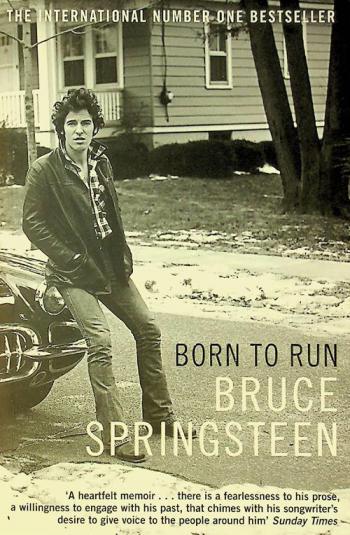
Born to run
In 2009, Bruce Springsteen and the E Street Band performed at the Super Bowl's half-time show. The experience was so exhilarating that Bruce decided to write about it. That's how this extraordinary autobiography began. Over the past seven years, Bruce Springsteen has privately devoted himself to writing the story of his life, bringing to these pages the same honesty, humour, and originality found in his songs. He describes growing up Catholic in Freehold, New Jersey, amid the poetry, danger, and darkness that fueled his imagination, leading up to the moment he refers to as \"The Big Bang\": seeing Elvis Presley's debut on The Ed Sullivan Show. He vividly recounts his relentless drive to become a musician, his early days as a bar band king in Asbury Park, and the rise of the E Street Band. With disarming candour, he also tells for the first time the story of the personal struggles that inspired his best work, and shows us why the song \"Born to Run\" reveals more than we previously realized.

Emission Reductions from Woody Biomass Waste for Energy as an Alternative to Open Burning
Woody biomass waste is generated throughout California from forest management, hazardous fuel reduction, and agricultural operations. Open pile burning in the vicinity of generation is frequently the only economic disposal option. A framework is developed to quantify air emissions reductions for projects that alternatively utilize bio-mass waste as fuel for energy production. A demonstration project was conducted involving the grinding and 97-km one-way transport of 6096 bone-dry metric tons (BDT) of mixed conifer forest slash in the Sierra Nevada foothills for use as fuel in a biomass power cogeneration facility. Compared with the traditional open pile burning method of disposal for the forest harvest slash, utilization of the slash for fuel reduced particulate matter (PM) emissions by 98% (6 kg PM/BDT biomass), nitrogen oxides (NO
x
) by 54% (1.6 kg NO
x
/BDT), nonmethane volatile organics (NMOCs) by 99% (4.7 kg NMOCs/BDT), carbon monoxide (CO) by 97% (58 kg CO/BDT), and carbon dioxide equivalents (CO
2
e) by 17% (0.38 t CO
2
e/BDT).Emission contributions from biomass processing and transport operations are negligible. CO
2
e benefits are dependent on the emission characteristics of the displaced marginal electricity supply. Monetization of emissions reductions will assist with fuel sourcing activities and the conduct of biomass energy projects.
Journal Article

Born to run
In 2009, Bruce Springsteen and the E Street Band performed at the Super Bowl's half-time show. The experience was so exhilarating that Bruce decided to write about it. That's how this extraordinary autobiography began. Over the past seven years, Bruce Springsteen has privately devoted himself to writing the story of his life, bringing to these pages the same honesty, humour, and originality found in his songs. He describes growing up Catholic in Freehold, New Jersey, amid the poetry, danger, and darkness that fueled his imagination, leading up to the moment he refers to as \"The Big Bang\": seeing Elvis Presley's debut on The Ed Sullivan Show. He vividly recounts his relentless drive to become a musician, his early days as a bar band king in Asbury Park, and the rise of the E Street Band. With disarming candour, he also tells for the first time the story of the personal struggles that inspired his best work, and shows us why the song \"Born to Run\" reveals more than we previously realized. Born to Run will be revelatory for anyone who has ever enjoyed Bruce Springsteen, but this book is much more than a legendary rock star's memoir. This is a book for workers and dreamers, parents and children, lovers and loners, artists, freaks, or anyone who has ever wanted to be baptized in the holy river of rock and roll. Rarely has a performer told his own story with such force and sweep. Like many of his songs (\"Thunder Road,\" \"Badlands,\" \"Darkness on the Edge of Town,\" \"The River,\" \"Born in the U.S.A.,\" \"The Rising,\" and \"The Ghost of Tom Joad,\" to name just a few), Bruce Springsteen's autobiography is written with the lyricism of a singular songwriter and the wisdom of a man who has thought deeply about his experiences.
Book

Probability-based accounting for carbon in forests to consider wildfire and other stochastic events: synchronizing science, policy, and carbon offsets
Forest carbon offset protocols reward measurable carbon stocks to adhere to accepted greenhouse gas (GHG) accounting principles. This focus on measurable stocks threatens permanence and shifts project-level risks from natural disturbances to an offset registry’s buffer pool. This creates bias towards current GHG benefits, where greater but potentially high-risk stocks are incentivized vs. medium-term to long-term benefits of reduced but more stable stocks. We propose a probability-based accounting framework that allows for more complete risk accounting for forest carbon while still adhering to International Organization for Standardization (ISO) GHG accounting principles. We identify structural obstacles to endorsement of probability-based accounting in current carbon offset protocols and demonstrate through a case study how to overcome these obstacles without violating ISO GHG principles. The case study is the use of forest restoration treatments in fire-adapted forests that stabilize forest carbon and potentially avoid future wildfire emissions. Under current carbon offset protocols, these treatments are excluded since carbon stocks are lowered initially. This limitation is not per se required by ISO’s GHG accounting principles. We outline how real, permanent, and verifiable GHG benefits can be accounted for through a probability-based framework that lowers stressors on a registry’s buffer pool.
Journal Article

Danny Clinch : still moving
This lavish monograph chronicles Danny Clinch's illustrious career with more than 200 photographs of the most important musicians of all time, along with his personal anecdotes and a written contribution by Bruce Springsteen.
Book

Carbon Life Cycle Assessment on California-Specific Wood Products Industries: Do Data Backup General Default Values for Wood Harvest and Processing?
Carbon life cycle assessments (C LCA) play a major role in greenhouse gas (GHG)-related forest management analytics for wood products and consist of several steps along a forest to disposal path. Yet, input values for wood product C LCAs frequently rely on potentially outdated generic datasets for wood product outputs and mill efficiencies. Assumptions regarding sawmill efficiencies and sawmill-specific wood product outputs have a direct and significant impact on wood product C LCAs because these variables affect the net carbon footprint of the finished product. The goal of this analysis was to evaluate how well standard wood product C LCA inputs and assumptions for the two initial wood products LCA steps (i) forest operations and (ii) wood processing represent the current state of the wood processing industry in California. We found that sawmill efficiencies and wood product outputs both support and deviate from lookup tables currently used in publications supporting the climate-forest policy dialogue. We recommend further analysis to resolve the major discrepancies in the carbon fraction stored in durable wood products and production-related emissions to improve C LCA metrics and advance forest-related climate policy discussions in California and elsewhere.
Journal Article


Someplace like America
In Someplace Like America, writer Dale Maharidge and photographer Michael S. Williamson take us to the working-class heart of America, bringing to life--through shoe leather reporting, memoir, vivid stories, stunning photographs, and thoughtful analysis--the deepening crises of poverty and homelessness. The story begins in 1980, when the authors joined forces to cover the America being ignored by the mainstream media--people living on the margins and losing their jobs as a result of deindustrialization. Since then, Maharidge and Williamson have traveled more than half a million miles to investigate the state of the working class (winning a Pulitzer Prize in the process). In Someplace Like America, they follow the lives of several families over the thirty-year span to present an intimate and devastating portrait of workers going jobless. This brilliant and essential study--begun in the trickle-down Reagan years and culminating with the recent banking catastrophe--puts a human face on today's grim economic numbers. It also illuminates the courage and resolve with which the next generation faces the future.
eBook

Someplace like America
In Someplace Like America, writer Dale Maharidge and photographer Michael S. Williamson take us to the working-class heart of America, bringing to life—through shoe leather reporting, memoir, vivid stories, stunning photographs, and thoughtful analysis—the deepening crises of poverty and homelessness. The story begins in 1980, when the authors joined forces to cover the America being ignored by the mainstream media—people living on the margins and losing their jobs as a result of deindustrialization. Since then, Maharidge and Williamson have traveled more than half a million miles to investigate the state of the working class (winning a Pulitzer Prize in the process). In Someplace Like America, they follow the lives of several families over the thirty-year span to present an intimate and devastating portrait of workers going jobless. This brilliant and essential study—begun in the trickle-down Reagan years and culminating with the recent banking catastrophe—puts a human face on today’s grim economic numbers. It also illuminates the courage and resolve with which the next generation faces the future.
eBook