
Catalogue Search | MBRL


Are you sure you want to remove the book from the shelf?

{{itemTitle}}
36
result(s) for
"Standish, Alex"
Sort by:

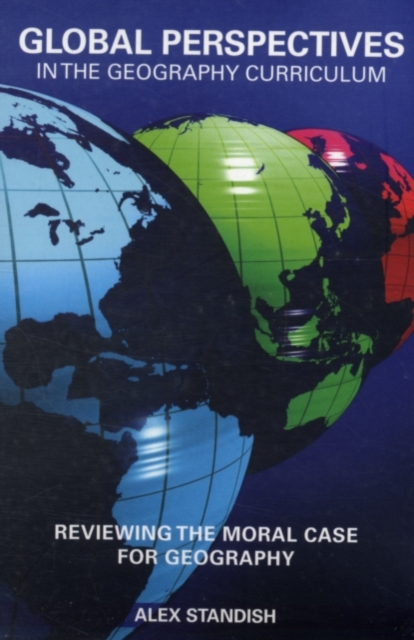
Global perspectives in the geography curriculum
‘For geographers across the globe this book provides the arguments for a return to the teaching of geography and why they should reject the politicisation of the subject by education policy makers and politicians. Standish’s careful critique shows the necessity of a depoliticised geography curriculum the irony of which would be that it would ensure that every child could point to Iraq, Iran and Afghanistan on a map.’
Prof. Dennis Hayes – Oxford Brookes University, UK
'A prescient and critical analysis of the changing face of geography teaching. This book deserves to be widely read and debated. Alex Standish's book puts current trends in geography teaching in historical and critical context. It comprises a forthright and timely defence of geographical education for its own sake.'
Dr Jim Butcher, FRSA, Department of Sport Science, Tourism and Leisure, Canterbury Christ Church University.
Since the early 1990s, educational policy makers and some subject leaders have been seeking to fundamentally change the teaching of geography in UK and US schools, from a subject which encourages students to explore spatial concepts, ideas and skills, to a more ethics based subject concerned with the promotion of environmentalism, cultural diversity and social justice. In this book the new approach is critically examined, within a historical and ideological context, addressing a number of fundamental questions:
Should geography be used as a tool for the delivery of citizenship ideals? How does this affect the intellectual and moral value of geographical education for young people?
If the state and teachers are taking more responsibility for the values, attitudes and emotional responses of students, how will they learn to develop these qualities for themselves?
If global perspectives shift the focus of education from learning about the outside world to learning about the self, what is its vision of social progress and conception of social change?
This book advocates a return to liberal models of education, arguing that the new approach to geography currently being promoted for schools fundamentally undermines the educational value of the subject, and the freedom of young people to shape the world in which they live.
A vital resource for teachers and student teachers alike, Global Perspectives in the Geography Curriculum<$> makes a significant contribution to the growing debate about the future direction of the discipline itself.
Alex Standish is Assistant Professor of Geography, Western Connnecticut State University, US.
‘This book not only sheds light upon how geography disciplines its subjects, but also on how society is disciplining the subject of geography.’ Dr Jonathan Pugh, Senior Academic Fellow in Territorial Governance and Director of \"The Space of Democracy and Democracy of Space\" network, University of Newcastle Upon Tyne.
'A prescient and critical analysis of the changing face of geography teaching. This book deserves to be widely read and debated. Alex Standish's book puts current trends in geography teaching in historical and critical context. It comprises a forthright and timely defence of geographical education for its own sake.' Dr Jim Butcher, FRSA, Department of Sport Science, Tourism and Leisure, Canterbury Christ Church University.
‘For geographers across the globe this book provides the arguments for a return to the teaching of geography and why they should reject the politicisation of the subject by education policy makers and politicians. Standish’s careful critique shows the necessity of a depoliticised geography curriculum the irony of which would be that it would ensure that every child could point to Iraq, Iran and Afghanistan on a map.’ Prof. Dennis Hayes – Oxford Brookes University, UK
Introduction 1. The Evolution of a Discipline and its Instrumental Applications 2. Geography’s Ethical Turn 3. From Counter-Cultural Movement to Global Values in the US Geography Curriculum 4. Global Citizenship and the Geography Curriculum in England and Wales 5. The Geography of Culture or Respecting Cultural Diversity? 6. Approaches to Teaching Global Issues 7. Global Issues in the Geography Curriculum 8. Global Advocacy and the Cosmopolitan Citizen in the Curriculum (with contributing material from Vanessa Pupavac) Conclusion
eBook

Time for geography to catch up with the world
This article makes the case that the subject of geography needs to change if we do not want another generation of students to leave school with an outdated view of the world (Rosling et al., 2018). Firstly, we need to ensure that resources and teaching do not present a binary view of developed versus developing countries, as is the case with some exam specifications. I call for the usage of more precise language to describe the bulk of countries that sit between low and high-income countries. Teachers are encouraged to make use of Rosling’s Four Income Levels as a graduated conceptual framework to help students understand the range of countries and living conditions experienced. Secondly, development theories need to transcend reductionist and diminished notions of development (such as the Millennium Development Goals (MDGs)) and include a deeper idea of progress – one that encompasses cultural growth, economic and political transformation and affords nations the freedom to chart their own paths.
Journal Article
What does leaving the European Union mean? Re-visiting the meaning of the nation state
In relation to the UK's exit from the European Union, there are many potentially fruitful angles that geographers can, and should, explore with pupils and students, including territory, sovereignty, culture and identity, economics and trade, politics and democracy, nations and supra-nationalism, and the changing regional geography of the UK/Europe. Here, Standish focuses mainly on the issue of the nation state and its relationship to people's sense of place. He suggests that Brexit provides an opportunity to re-visit and revamp the purposes and meaning of the nation state, and, in the process of so-doing, reinvigorate a genuinely inclusive politics for the UK.
Journal Article
Some important distinctions for geography educators
This article discusses the importance of distinctions in the field of geography education. The aim is to help clarify the meaning of terms that are regularly contested, including education, geography, curriculum and pedagogy. The purpose is not to argue that boundaries between these categories are fixed, or that they cannot ever be transcended. Rather, a case is made that understanding what is distínctive about each aids the teacher in effective classroom teaching. In geography, three approaches are identified: spatial, areal and humanenvironment relations. Learning geography means combining disciplinary approaches with knowledge and skills: the curriculum. The article concludes by recognising the ways in which education, geography, curriculum and pedagogy are intimately connected.
Journal Article

The London Geography Alliance: Re-connecting the school subject with the university discipline
The London Geography Alliance was established to provide a network of subject-based support to primary and secondary schools, by linking teachers and university lecturers. Workshops and fieldwork were conducted over a 17-month period to address different aspects of the geography curriculum. The effects of the project were evaluated using qualitative and quantitative methods. Primary school teachers improved their knowledge of geography and their confidence to identify and facilitate geographical learning. Secondary school teachers enhanced their subject knowledge, developed new ideas, schemes of work and resources for teaching, and improved their use of fieldwork techniques. The project showed how teaching in schools can be improved through making links to university disciplines.
Journal Article
Valuing (Adult) Geographic Knowledge
Standish discusses the purpose of the geography curriculum: acquisition of knowledge. Other values, such as concern for the environment, empathy, a sense of social justice, and respect for diversity, are about moralizing and have no place in a curriculum with goal of intellectual and personal development of the individual.
Journal Article
Constructing a Value Map
What does geography mean to you? Atlases and rocks, or green politics and citizenship? Go into any UK school today, and you will find that, for most pupils and teachers, it means the latter. Standish discusses the importance of constructing a value map for geography education.
Journal Article
