
Catalogue Search | MBRL


Are you sure you want to remove the book from the shelf?

{{itemTitle}}
96
result(s) for
"Starn, Orin"
Sort by:


Beyond the Gonzalo Mystique: Challenges to Abimael Guzmán’s Leadership inside Peru’s Shining Path, 1982–1992
From the moment it launched its armed insurgency in 1980 until the death of its former leader in September 2021, Peru’s Shining Path mesmerized observers. The Maoist group had a well-established reputation as a personality cult whose members were fanatically devoted to Abimael Guzmán, the messianic leader they revered as “Presidente Gonzalo.” According to this narrative, referred to here as the “Gonzalo mystique,” Shining Path zealots were prepared to submit to Guzmán’s authority and will—no matter how violent or suicidal—because they viewed him as a messiah-prophet who would usher in a new era of communist utopia. Drawing on newly available sources, including the minutes of Shining Path’s 1988–1989 congress, this article complicates the Gonzalo mystique narrative, tracing the unrelenting efforts by middle- and high-ranking militants to challenge, undermine, disobey, and even unseat Guzmán throughout the insurgency. Far from seeing their leader as the undisputed cosmocrat of the popular imagination, these militants recognized Guzmán for who he was: a deeply flawed man with errant ideas, including a dubious interpretation of Maoism, problematic military strategy, and a revolutionary path that was anything but shining. Desde el inicio de la lucha armada en 1980 hasta la muerte de su jefe máximo en septiembre de 2021, Sendero Luminoso ha llamado la atención a observadores tantos peruanos como internacionales. El grupo maoísta tenía una bien establecida reputación como un culto a la personalidad cuyos miembros eran fanáticamente devotos a su líder mesiánico, Abimael Guzmán, desde entonces conocido como el “Presidente Gonzalo.” Según esta narrativa, la cual llamaríamos la “mística Gonzalo,” los fanáticos senderistas eran dispuestos a someterse a cualquier acto violento o suicido para satisfacer los autoritarios impulsos del líder Guzmán, ya que a éste lo consideraban un mesías-profeta que les guiaría a una nueva utopía comunista. Este artículo se base en nuevas fuentes, entre ellas las actas del Primer Congreso senderista de 1988–1989, para así complicar la mística Gonzalo. Detalla los infatigables intentos, de parte los senderistas de medio-alto y alto rango, de desafiar, socavar, desobedecer, y hasta derribar al jefe de partido durante la lucha armada. Lejos de verlo como el cosmócrata de la opinión popular, estos militantes reconocían quién era de verdad: un defectuoso hombre con ideas errantes, un equivocado concepto del maoísmo, una problemática estrategia militar, y un sendero revolucionario que era lejos de luminoso.
Journal Article

HERE COME THE ANTHROS (AGAIN): The Strange Marriage of Anthropology and Native America
This article charts and tries to reckon with the relationship between anthropology and Native America. In an older time, most American anthropologists made their living studying Indians, this almost parasitic disciplinary dependence lasting well into the 20th century. Then came the turmoil of the 1960s and 1970s, the Red Power movement, and a period of estrangement between anthropologists and Native America. And now, quite unexpectedly, a tentative rapprochement has been taking place, albeit on very different terms with native anthropologists often at the forefront. This article focuses mostly on the United States, although also reflecting on new work about native peoples Canada and Latin America.
Journal Article
WRITING CULTURE AT 25: SPECIAL EDITOR'S INTRODUCTION
I was in graduate school in 1986 when James Clifford and George Marcus's Writing Culture appeared. It was instantly anthropology's most talked about book, and, in fact, the flagship text for the debates about reflexivity and representation that defined that whole decade in the discipline. You simply had to readand have an opinion aboutWriting Culture unless you wanted to appear as if youd been living under one of Raffles's proverbial antediluvian rocks. Those opinions were quite radically polarized. Neither Marcus nor Clifford ever identified as a postmodernist. That did not keep some critics from branding the two Writing Culture editors as the ringleaders of a sinister postmodern movement. Along with Marcus and Michael M. J. Fischer'sAnthropology as Cultural Critique (1986), Clifford's The Predicament of Culture (1988), and other influential new texts, the essays in Writing Culture seemed to threaten the old disciplinary principles of truth, science, and objectivity with the relativizing epistemic murk of newfangled literary theory and other dubious influences.1 Then as now, job interviews at AAA meetings were conducted in those horrible little curtained booths at the convention hotel. You had to be ready to be asked about your views of postmodernism as if it were self-evident what that notoriously slippery and by now antique-sounding term meant, let alone that one had to be for or against it. It sometimes felt as though someone might push the button to the trap door under your chair if you gave the wrong answer. Reprinted by permission of the American Anthropological Association and the University of California Press
Journal Article

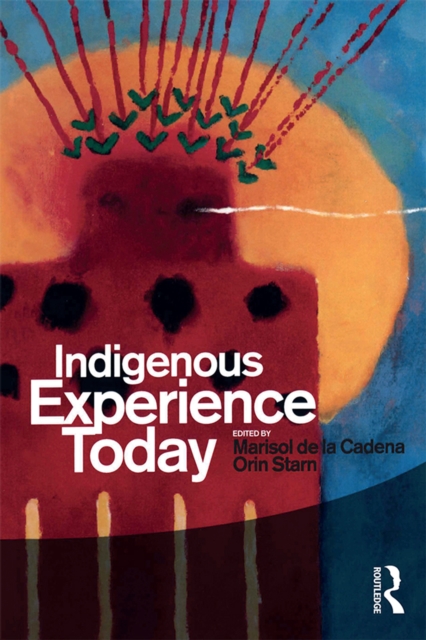
Indigenous Experience Today
A century ago, the idea of indigenous people as an active force in the contemporary world was unthinkable. It was assumed that native societies everywhere would be swept away by the forward march of the West and its own peculiar brand of progress and civilization. Nothing could be further from the truth. Indigenous social movements wield new power, and groups as diverse as Australian Aborigines, Ecuadorian Quichuas, and New Zealand Maoris, have found their own distinctive and assertive ways of living in the present world. Indigenous Experience Today draws together essays by prominent scholars in anthropology and other fields examining the varied face of indigenous politics in Bolivia, Botswana, Canada, Chile, China, Indonesia, and the United States, amongst others. The book challenges accepted notions of indigeneity as it examines the transnational dynamics of contemporary native culture and politics around the world.
eBook

Anthropology in and of MOOCs
The suddenness with which Massive Open Online Courses, or MOOCs, sprang upon us left many within the academy grasping for interpretations. Early proponents touted them as revolutionary tools that could enhance on-campus learning while also making high-quality education accessible to a vast global population, reforming a malfunctioning university system, and producing new kinds of data on how people learn. Critics countered that behind this latest techno-utopian fad lurked an all-too-familiar conservative agenda to downsize the university; the global ambitions of a few elite, resource-rich schools; Silicon Valley corporate interests; and the disciplinary priorities of science, technology, engineering, and mathematics (the STEM fields). With some critical distance, the eight scholars in this Vital Topics Forum draw upon their experiences as anthropologists involved in MOOCs and anthropologists doing studies of MOOCs to propel us beyond such facile responses. Doing what anthropologists do best, they employ contextually rich analysis to upend received wisdom about what MOOCs mean, provide processual accounts of how they are made, and offer first-hand observations of how students are using them on the ground. I begin with the caveat that this collection certainly does not capture all there is to say about MOOCs, even within our discipline: its focus is limited to cultural anthropology, even though our colleagues in other subfields have been actively involved in making MOOCs and debating their value (on archaeology, see Alcock et al. 2013). This forum also does not address the verbal aspects of computer-mediated communication that are most intriguing to me as a linguistic anthropologist. Finally, it leaves crucial issues related to labor conditions within the university relatively unexamined. Taken together, however, the essays here do begin to lay a conceptual groundwork for a cultural anthropological approach to MOOCs as a media world -- an orientation that links 'media production, circulation, and reception in broad and intersecting social and cultural fields: local, regional, national, transnational' while also attending to 'the impacts of media technologies themselves' (Ginsburg et al. 2002:6). Adapted from the source document.
Journal Article
