
Catalogue Search | MBRL


Are you sure you want to remove the book from the shelf?

{{itemTitle}}
997
result(s) for
"Stephens, Mark"
Sort by:

Yoga terapia : fundamentos, mâetodos y prâacticas para las enfermedades communes
Mark Stephens gives yoga teachers and students a practical resource for learning how to adapt yoga practices to best accommodate and heal a wide array of common injuries and ailments. Surveying historical writings on yoga, ayurveda, and other early approaches to health and healing, Stephens distills this received wisdom of ancient and modern practices for more insightful and practical application in today's world. He applies these insights to healing musculoskeletal injuries; promoting a healthy reproductive system; addressing mental, emotional, and behavioral difficulties; and working with a variety of physiological diseases and disorders, ranging from asthma and diabetes to stroke and vertigo. A final chapter suggests ways to use yoga to address health conditions in order to continue to live an extraordinary life.
Book
The Role of Housing Costs in Central Banks’ Inflation Targeting Regimes: The Cases of the Reserve Bank of Australia and the Bank of England
Since the 1990s it has become common for central banks to be charged with using interest rates to meet consumer price inflation (CPI) targets. This article examines the cases of the Reserve Bank of Australia (RBA) and the Bank of England (BoE) and finds that whereas the RBA’s CPI target includes a housing cost element, the BoE’s does not. Moreover, it finds that contrasting treatments of housing costs produce different results, depending on whether the index includes mortgage interest as a housing cost. Whilst central banks dislike CPIs that include an element of mortgage interest because of the apparently perverse outcome of increasing interest rates, they also lack credibility by excluding such an important element of the cost of living. Credibility demands that the 30-year consensus on inflation targeting by monetary policy be replaced by a broader set of tools – including fiscal policy – to control inflation.
Journal Article

Yoga for better sleep : ancient wisdom meets modern science
\"Learn simple yoga techniques--poses, meditations, and breathwork--to sleep better and longer, from master yoga teacher trainer and author, Mark Stephens\"-- Provided by publisher.
Book
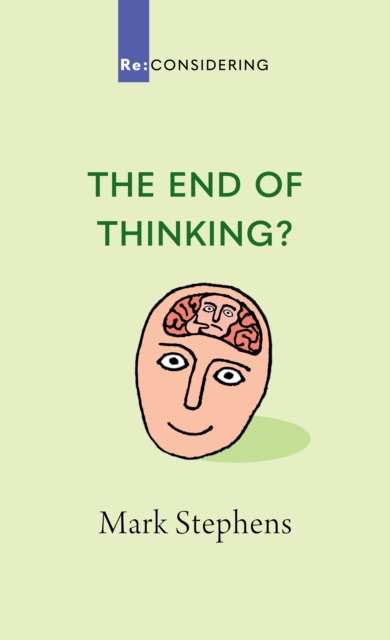
The End of Thinking?
Re:CONSIDERING invites you to look at what's familiar from an unfamiliar angle. To consider how we consider things - and how to do it better.What were you thinking?We all feel entitled to our opinion. Whether it be our take on politics, vaccines, parenting, or the value of religion, everybody wants to have their say - and everybody loves to be right.But do we know what it means to think well?Covering 'idiot brain', lobotomies, the difference between certainty and confidence, the nature of facts, and the virtue of intellectual hospitality, Mark Stephens invites you to consider not just what you think but how and why you think.Do we think only for ourselves, or also for the good of others?
eBook

Teaching trauma-sensitive yoga : a practical guide
\"A practical, hands-on, experienced-based guide for teaching trauma-sensitive yoga Canadian Forces veteran turned yoga teacher Brendon Abram combines his first-hand experience with PTSD in the field and years of teaching to offer this practical guide to bringing trauma-sensitive yoga to both clinical and studio settings. Drawing on his work with military veterans, first responders, and survivors of domestic and sexual abuse, Abram emphasizes the importance of respecting the uniqueness of every individual, and demonstrates how to use the foundational principles of yoga to create a safe experience. He explains that basic principles of yoga bring power to the practice and that breath, mindful movement, focused awareness, and acceptance of present moment experience form the foundation of any yoga offering, including trauma-sensitive yoga. He describes approaches to trauma sensitive yoga for both the clinical population and the general population in a studio setting, and delineates the differences between the two\"-- Provided by publisher.
Book

Cardiac Rehabilitation: Improving Function and Reducing Risk
Cardiac rehabilitation is a comprehensive multidisciplinary program individually tailored to the needs of patients with cardiovascular disease. The overall goals focus on improving daily function and reducing cardiovascular risk factors. Cardiac rehabilitation includes interventions aimed at lowering blood pressure and improving lipid and diabetes mellitus control, with tobacco cessation, behavioral counseling, and graded physical activity. The physical activity component typically involves 36 sessions over 12 weeks, during which patients participate in supervised exercise under cardiac monitoring. There are also intensive programs that include up to 72 sessions lasting up to 18 weeks, although these programs are not widely available. Additional components of cardiac rehabilitation include counseling on nutrition, screening for and managing depression, and assuring up-to-date immunizations. Cardiac rehabilitation is covered by Medicare and recommended for patients following myocardial infarction, bypass surgery, and stent placement, and for patients with heart failure, stable angina, and several other conditions. Despite proven benefits in mortality rates, depression, functional capacity, and medication adherence, rates of referral for cardiac rehabilitation are suboptimal. Groups less likely to be referred are older adults, women, patients who do not speak English, and persons living in areas where cardiac rehabilitation is not locally available. Additionally, primary care physicians refer patients less often than cardiologists and cardiothoracic surgeons.
Journal Article
Dental Problems in Primary Care
Oral health directly affects overall health and quality of life. More Americans lack dental insurance than medical insurance. Patients with poor oral health are more likely to have respiratory and cardiovascular diseases, adverse pregnancy outcomes, and diabetes mellitus. Early childhood caries is the most common chronic condition in American children. Certain illicit and prescription drugs increase the risk of enamel erosion and caries formation in adults. Incision and drainage is the treatment of choice for dental abscess. Risk factors for periodontal disease include smoking, diabetes, human immunodeficiency virus infection, use of certain medications, and genetic susceptibility. Patients with gingivitis typically present with swollen, erythematous gum tissue that bleeds easily with brushing or flossing. One in three children will have an injury to the primary teeth, and one in five 12-year-old children will have an injury to the permanent teeth. All dental fractures should be evaluated with imaging and managed in conjunction with a dental professional. Immediate reimplantation is the preferred treatment for avulsed permanent teeth. Primary care clinicians are well positioned to reduce rates of oral disease. Family physicians can incorporate oral health into routine practice through counseling about diet, oral hygiene, smoking cessation, and fluoride supplementation; application of fluoride varnish; and screening for dental disease.
Journal Article

Detection of Emerging through-Wall Cracks for Pipe Break Early Warning in Water Distribution Systems Using Permanent Acoustic Monitoring and Acoustic Wave Analysis
Smart water networks, created using Internet of Things (IoT) technologies, have been increasingly adopted by water utilities across the world. This research focuses on the use of smart water technologies for detecting newly formed through-wall pipe cracks and leaks in water distribution systems for the purpose of pipe break early warning and prevention. This research develops easy-to-implement algorithms for analysing the hydro-acoustic vibration wave files regularly collected by permanently installed accelerometers in a water network, and for generating alarms when small leaks from developing pipe cracks are detected. Descriptive features of the historical wave files are investigated for five sites where newly-formed pipe cracks were detected nearby. It is found that the median frequency (MF) and the root-mean-square (RMS) values derived from the wave files are useful indicators for detecting new cracks and leaks. The confidence of pipe crack detection in noisy city environments can be significantly increased by windowing each already short-duration wave file into a number of frames with even shorter durations, and analysing the behaviour of the MF and RMS values of all the frames to look for the persistence of the leak feature even when part of the signal is contaminated with interference. The results show that the developed technique can robustly detect new through-wall cracks and leaks in a timely manner, and is tolerant of interference from customer water use and transient environmental noise.
Journal Article

The Opaque Language of Sexuality: Medical Students’ and Providers’ Beliefs About Virginity
Although virginity is not a medical term and is instead socially constructed, it remains unknown what medical providers believe about the biological basis of virginity. This study explored providers’ and medical students’ beliefs about virginity and the potential impact of such beliefs on healthcare. This was a concurrent mixed-method survey study of 124 medical students and 216 healthcare providers (Registered Nurse, Physician Assistant, Nurse Practitioner, and Doctor of Medicine) at Penn State Health and The Pennsylvania State University College of Medicine. Participants rated their level of agreement with common misconceptions about virginity on a six-point Likert scale. Open-ended questions gave respondents the opportunity to define virginity and to describe terms like virgin and virginal in the context of sexual experience and the medical lexicon. We identified common themes in the qualitative data using thematic analysis. Frequencies of misconceptions and statistically significant demographic associations were identified in the quantitative data. Definitions of virginity were varied and vague, most with negative connotations. A majority of respondents said that virginity has no biological basis. Many participants identified downsides to use of terms like virgin, virginity, and virginal in medicine. The most prevalent misconceptions about virginity were related to the hymen. Seventeen percent of students and 26% of providers at least somewhat agreed that it was possible to determine whether a person has engaged in vaginal intercourse through a gynecological exam. Misconceptions about virginity persist in medicine and bias, even if unintended, may impact the quality-of-care people with vaginas receive. Language around sexual health should be specific, inclusive, clinically relevant, and free from judgment. Medical education must continue to work to eliminate the concept of a biological basis to virginity.
Journal Article

Tests, surgical masks, hospital beds, and ventilators: add big data to the list of tools to fight the coronavirus that are in short supply
Scanlon and Stephens discuss the need to add big data to the list of tools to fight the coronavirus that are in short supply in the US as of June 2020. Big data is used for critical decision making in the military and just about any other coordinated effort in the society, be it economic strategy or the operation of humanitarian efforts. The use of big data has been woefully absent in the nation's response to the COVID-19 pandemic, and in public health and health policy planning more generally, despite billions spent by the US government since the passage of the Health Information Technology for Economic and Clinical Health (HITECH) Act in 2009. Ideally, soldiers go into combat informed about the opponent's location, tactics, strengths, and weaknesses to the maximum degree possible from existing operational intelligence.
Journal Article