
Catalogue Search | MBRL


Are you sure you want to remove the book from the shelf?

{{itemTitle}}
54
result(s) for
"Stepto, Robert B"
Sort by:

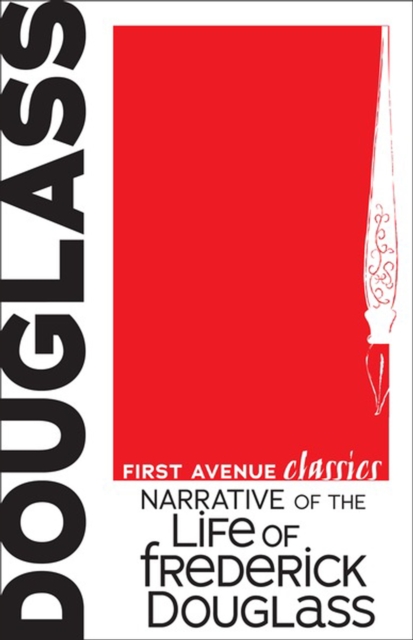
Narrative of the Life of Frederick Douglass
In 1817 or 1818, Frederick Douglass was born into slavery on a plantation in Maryland.As a young boy, he served in a household, but as he grew older, he faced increasingly brutal conditions and cruel owners.After many years, he escaped to freedom in New York City and began to publicly denounce slavery through writings and speeches.
eBook
Narrative of the Life of Frederick Douglass
A dramatic autobiography and powerful firsthand account of slavery, written by America's most influential abolitionist First published in 1845, Narrative of the Life of Frederick Douglass is an eye-opening depiction of American slavery. Part autobiography, part human-rights treatise, it describes the everyday horrors inflicted on captive laborers, as well as the strength and courage needed to survive. Born into slavery on a Maryland plantation in 1818, Frederick Douglass spent years secretly teaching himself to read and write—a crime for which he risked life and limb. After two failed escapes, Douglass finally, blessedly boarded a train in 1838 that would eventually lead him to New York City, and freedom. Few books have done more to change America's notion of African Americans than this seminal work. Beyond its historical and social relevancy, it is admired today for its gripping stories, intensity of spirit, and heartfelt humanity. This ebook has been professionally proofread to ensure accuracy and readability on all devices.
eBook
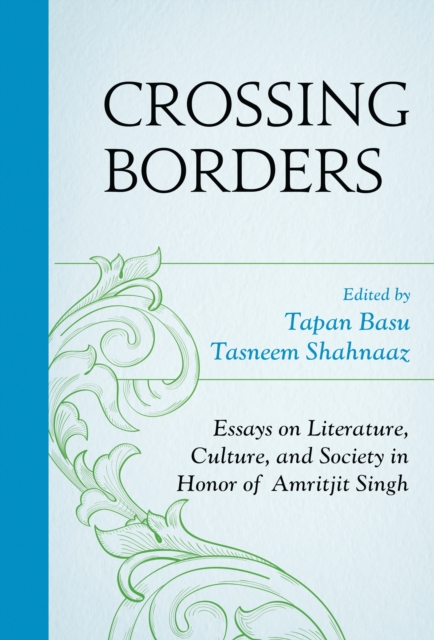
Crossing borders
Crossing Borders engages with the emergent field of borders studies, particularly in relation to North America, South Asia, and the transnational spaces they continue to embrace. While multicultural theory tends to emphasize specific and individual cultures, border studies examines the intersection of cultures and the resulting effects.
eBook

From Idlewild and Other Seasons
An excerpt from a collection of autobiographical essays is presented.
Journal Article
Let's Call Your Mama and Other Lies About Michael S. Harper
A writer recalls his first meeting with poet Michael S. Harper, at a writer's workshop at Stanford University in 1969. The two men became friends, corresponded regularly and collaborated on several projects.
Journal Article


I Thought I Knew These People: Richard Wright & the Afro-American Literary Tradition
Richard Wright has influenced, to some extent, every important black writer who has followed him. It is ironic that most critics & scholars have difficulties describing his place in the Afro-American literary tradition. It is suggested that Wright forces one to face a large literary-historical problem: to what extent may one qualify his place in the artistic tradition & also submit that he is irrefutably still a participant in it? Born of this problem are three questions that are dealt with in turn: (1) What was Wright's posture as an author, & how did it correspond with models provided by the tradition? (2) How do his works illuminate or complement Afro-American texts preceding them? (3) What has been his effect on contemporary literature & culture? One conclusion is that one's sense of Afro-American literary tradition can be sharpened by assaying Wright's departure from it. R. Johnson.
Journal Article