
Catalogue Search | MBRL


Are you sure you want to remove the book from the shelf?

{{itemTitle}}
105
result(s) for
"Stern, Tiffany"
Sort by:


Making Shakespeare
Making Shakespeare is a lively introduction to the major issues of the stage and print history, whilst also raising questions about what a Shakespeare play actually is. Tiffany Stern reveals how London, the theatre, the actors and the way in which the plays were written and printed all affect the 'Shakespeare' that we now read. Concentrating on the instability and fluidity of Shakespeare's texts, her book discusses what happened to a manuscript between its first composition, its performance on stage and its printing, and identifies traces of the production system in the plays we read. She argues that the versions of Shakespeare that have come down to us have inevitably been formed by the contexts from which they emerged; being shaped by, for example, the way actors received and responded to their lines, the props and music used in the theatre, or the continual revision of plays by the playhouses and printers. Allowing a fuller understanding of the texts we read and perform, Making Shakespeare is the perfect introduction to issues of stage and page. A refreshingly clear, accessible read, this book will allow even those with no expert knowledge to begin to contextualize Shakespeare's plays for themselves, in ways both old and new.
eBook

A jovial crew, or the merry beggars
A Caroline-era stage play first published in 1652, this comedy is about four noble lovers who join the beggar community for a pastoral life of song and dance, only to find that that the reality of vagabond life is quite different from its literary depiction. This edition includes critical commentary as well as appendixes on the play's six songs, and on rogue literature and cant.
Book

Taste and pheromonal inputs govern the regulation of time investment for mating by sexual experience in male Drosophila melanogaster
Males have finite resources to spend on reproduction. Thus, males rely on a ‘time investment strategy’ to maximize their reproductive success. For example, male Drosophila melanogaster extends their mating duration when surrounded by conditions enriched with rivals. Here we report a different form of behavioral plasticity whereby male fruit flies exhibit a shortened duration of mating when they are sexually experienced; we refer to this plasticity as ‘shorter-mating-duration (SMD)’. SMD is a plastic behavior and requires sexually dimorphic taste neurons. We identified several neurons in the male foreleg and midleg that express specific sugar and pheromone receptors. Using a cost-benefit model and behavioral experiments, we further show that SMD behavior exhibits adaptive behavioral plasticity in male flies. Thus, our study delineates the molecular and cellular basis of the sensory inputs required for SMD; this represents a plastic interval timing behavior that could serve as a model system to study how multisensory inputs converge to modify interval timing behavior for improved adaptation.
Journal Article
Shakespeare in parts
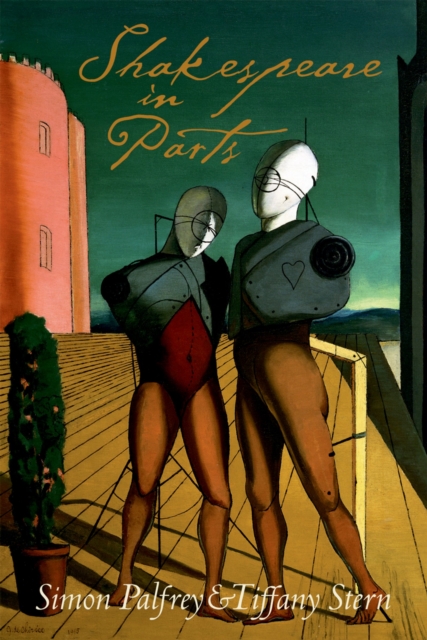
A combination of original theatre history and literary criticism, this book explores the original form in which Shakespeare's drama circulated. This was not the full play-text; it was not the public performance. It was the actor's part, consisting of the bare cues and speeches of each individual role. With group rehearsals rare or non-existent, the cued part alone had to furnish the actor with his character. But each such part-text was riddled with gaps and uncertainties. The actor knew what he was going to say, but not necessarily when, or why, or to whom; he may have known next to nothing of any other part. It demanded the most sensitive attention to the opportunities inscribed in the script, and to the ongoing dramatic moment. Here is where the young actor Shakespeare learnt his trade; here is where his imagination, verbal and technical, learnt to roam. As Shakespeare developed his playwriting, the apparent limitations of the medium were transformed into expressive opportunities. Both cue and speech become repositories of meaning and movement. Writing always for the same core group of players, Shakespeare could take — and insist upon — unprecedented risks. The result is onstage drama of astonishing immediacy. Starting with a comprehensive history of the part in early modern theatre, this book provides an insight into hitherto forgotten practices and techniques.
eBook


King Leir
Performed at the Globe Theater in 1605, King Leir is presumed to be a prime source for Shakespeare. Although the story is the same, in this anonymous version the ending is happy. This is the first time this fascinating work is published in a single-play edition
eBook

\The Forgery of some modern Author\?: Theobald's Shakespeare and Cardenio's \Double Falsehood\
Yet there is only weak information linking Shakespeare to \"Cardenio,\" while Theobald's putative texts, all of which are called Double Falshood (he never uses the name \"Cardenio\"), have no unambiguous pre- or post-Theobald history and seem to have varied in number (from one to four), age (from early modern to Restoration), and handwriting (from Shakespeare's to Downes's), depending on when and where they were described. [...] Malone at one point suggested that Fletcher's lost version of A Very Woman actually was Cardenio, although current guesses about the original play's date discount that theory.3 As for authorship, the treasury account offers little information, although the writer of \"Cardenno\" must have been employed by the King's Men.
Journal Article
Rehearsal from Shakespeare to Sheridan
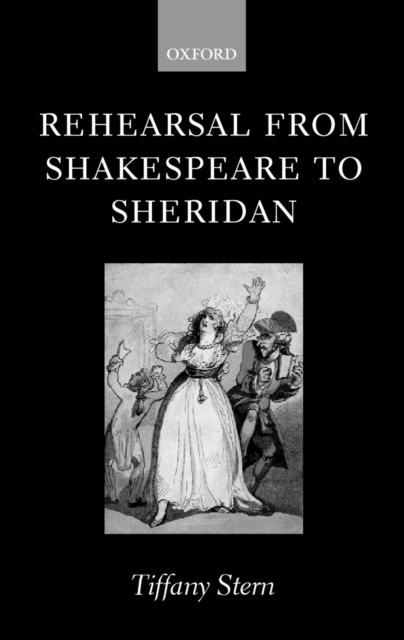
Attention is often given to the performance of a text, but not to the shaping process behind that performance. The question of rehearsal is seldom confronted directly, though important textual moments — like revision — are often attributed to it. What is more, up until now, facts about theatrical rehearsal have been considered irrecoverable. In this groundbreaking new study, the author gathers together two centuries' worth of historical material which shows how actors received and responded to their parts, and how rehearsal affected the creation and revision of plays. This is the first history of the subject, from the sixteenth century to the eighteenth. It examines the nature and changing content of rehearsal, drawing on a mass of autobiographical, textual, and journalistic sources, and in so doing throws new light on textual revision and transforms accepted notions of Renaissance, Restoration, and eighteenth-century theatrical practice.
eBook
