
Catalogue Search | MBRL


Are you sure you want to remove the book from the shelf?

{{itemTitle}}
633
result(s) for
"Steven Sanders"
Sort by:


Phylogenomic Analyses Support Traditional Relationships within Cnidaria
Cnidaria, the sister group to Bilateria, is a highly diverse group of animals in terms of morphology, lifecycles, ecology, and development. How this diversity originated and evolved is not well understood because phylogenetic relationships among major cnidarian lineages are unclear, and recent studies present contrasting phylogenetic hypotheses. Here, we use transcriptome data from 15 newly-sequenced species in combination with 26 publicly available genomes and transcriptomes to assess phylogenetic relationships among major cnidarian lineages. Phylogenetic analyses using different partition schemes and models of molecular evolution, as well as topology tests for alternative phylogenetic relationships, support the monophyly of Medusozoa, Anthozoa, Octocorallia, Hydrozoa, and a clade consisting of Staurozoa, Cubozoa, and Scyphozoa. Support for the monophyly of Hexacorallia is weak due to the equivocal position of Ceriantharia. Taken together, these results further resolve deep cnidarian relationships, largely support traditional phylogenetic views on relationships, and provide a historical framework for studying the evolutionary processes involved in one of the most ancient animal radiations.
Journal Article

Spider-Verse
\"Spinning out of the SPIDER-VERSE event, a team of Spiders finds themselves face-to-face with Battleworld!\"--Amazon.com.
Book

A family of unusual immunoglobulin superfamily genes in an invertebrate histocompatibility complex
Most colonial marine invertebrates are capable of allorecognition, the ability to distinguish between themselves and conspecifics. One long-standing question is whether invertebrate allorecognition genes are homologous to vertebrate histocompatibility genes. In the cnidarian Hydractinia symbiolongicarpus, allorecognition is controlled by at least two genes, Allorecognition 1 (Alr1) and Allorecognition 2 (Alr2), which encode highly polymorphic cell-surface proteins that serve as markers of self. Here, we show that Alr1 and Alr2 are part of a family of 41 Alr genes, all of which reside in a single genomic interval called the Allorecognition Complex (ARC). Using sensitive homology searches and highly accurate structural predictions, we demonstrate that the Alr proteins are members of the immunoglobulin superfamily (IgSF) with V-set and I-set Ig domains unlike any previously identified in animals. Specifically, their primary amino acid sequences lack many of the motifs considered diagnostic for V-set and I-set domains, yet they adopt secondary and tertiary structures nearly identical to canonical Ig domains. Thus, the V-set domain, which played a central role in the evolution of vertebrate adaptive immunity, was present in the last common ancestor of cnidarians and bilaterians. Unexpectedly, several Alr proteins also have immunoreceptor tyrosine-based activation motifs and immunoreceptor tyrosine-based inhibitory motifs in their cytoplasmic tails, suggesting they could participate in pathways homologous to those that regulate immunity in humans and flies. This work expands our definition of the IgSF with the addition of a family of unusual members, several of which play a role in invertebrate histocompatibility.
Journal Article
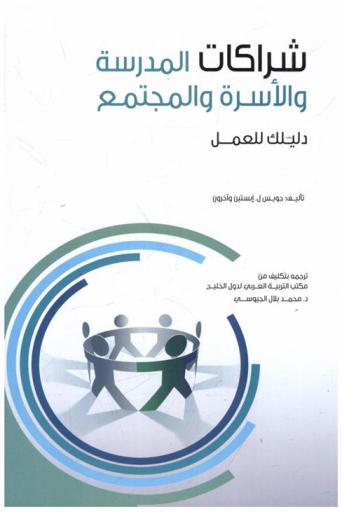
شراكات المدرسة والأسرة والمجتمع : دليلك للعمل =
كتاب ثري وعملي يشجعك على البدء في بناء شراكة فاعلة بين المدرسة والأسرة والمجتمع ويقدم لك مختلف الأدوات التي تحتاجها لتبدأ ستجد نموذجا مميزا لمساعدة كل مدرسة على بناء خطة العام للشراكة مع الأسر والمجتمع بالتفصيل ستحصل على خطوات تكوين فرق الشراكة في داخل المدرسة ستحصل على نماذج جاهزة للعمل أيضا قوائم بأنشطة هادفة يمكن تنفيذها وأثبتت جدواها عبر دراسات.
BOOK

Oligonucleotide-Mediated Genome Editing Provides Precision and Function to Engineered Nucleases and Antibiotics in Plants
Here, we report a form of oligonucleotide-directed mutagenesis for precision genome editing in plants that uses single-stranded oligonucleotides (ssODNs) to precisely and efficiently generate genome edits at DNA strand lesions made by DNA double strand break reagents. Employing a transgene model in Arabidopsis (Arabidopsis thaliana), we obtained a high frequency of precise targeted genome edits when ssODNs were introduced into protoplasts that were pretreated with the glycopeptide antibiotic phleomycin, a nonspecific DNA double strand breaker. Simultaneous delivery of ssODN and a site-specific DNA double strand breaker, either transcription activator-like effector nucleases (TALENs) or clustered, regularly interspaced, short palindromic repeats (CRISPR/Cas9), resulted in a much greater targeted genome-editing frequency compared with treatment with DNA double strand-breaking reagents alone. Using this site-specific approach, we applied the combination of ssODN and CRISPR/Cas9 to develop an herbicide tolerance trait in flax (Linum usitatissimum) by precisely editing the 5ʹ-ENOLPYRUVYLSHIKIMATE-3-PHOSPHATE SYNTHASE (EPSPS) genes. EPSPS edits occurred at sufficient frequency that we could regenerate whole plants from edited protoplasts without employing selection. These plants were subsequently determined to be tolerant to the herbicide glyphosate in greenhouse spray tests. Progeny (C1) of these plants showed the expected Mendelian segregation of EPSPS edits. Our findings show the enormous potential of using a genome-editing platform for precise, reliable trait development in crop plants.
Journal Article


Differential gene expression between functionally specialized polyps of the colonial hydrozoan Hydractinia symbiolongicarpus (Phylum Cnidaria)
Background
A colony of the hydrozoan
Hydractinia symbiolongicarpus
comprises genetically identical yet morphologically distinct and functionally specialized polyp types. The main labor divisions are between feeding, reproduction and defense. In
H. symbiolongicarpus
, the feeding polyp (called a gastrozooid) has elongated tentacles and a mouth, which are absent in the reproductive polyp (gonozooid) and defensive polyp (dactylozooid). Instead, the dactylozooid has an extended body column with an abundance of stinging cells (nematocysts) and the gonozooid bears gonophores on its body column. Morphological differences between polyp types can be attributed to simple changes in their axial patterning during development, and it has long been hypothesized that these specialized polyps arose through evolutionary alterations in oral-aboral patterning of the ancestral gastrozooid.
Results
An assembly of 66,508 transcripts (>200 bp) were generated using short-read Illumina RNA-Seq libraries constructed from feeding, reproductive, and defensive polyps of
H. symbiolongicarpus
. Using several different annotation methods, approximately 54% of the transcripts were annotated. Differential expression analyses were conducted between these three polyp types to isolate genes that may be involved in functional, histological, and pattering differences between polyp types. Nearly 7 K transcripts were differentially expressed in a polyp-specific manner, including members of the homeodomain, myosin, toxin and BMP gene families. We report the spatial expression of a subset of these polyp-specific transcripts to validate our differential expression analyses.
Conclusions
While potentially originating through simple changes in patterning, polymorphic polyps in
Hydractinia
are the result of differentially expressed functional, structural, and patterning genes.
The differentially expressed genes identified in our study provide a starting point for future investigations of the developmental patterning and functional differences that are displayed in the different polyp types that confer a division of labor within a colony of
H. symbiolongicarpus
.
Journal Article


Dysregulated Treg repair responses lead to chronic rejection after heart transplantation
Chronic rejection (CR) after organ transplantation is alloimmune injury manifested by graft vascular remodeling and fibrosis that is resistant to immunosuppression. Single-cell RNA-Seq analysis of MHC class II-mismatched (MHCII-mismatched) heart transplants developing chronic rejection identified graft IL-33 as a stimulator of tissue repair pathways in infiltrating macrophages and Tregs. Using IL-33-deficient donor mice, we show that graft fibroblast-derived IL-33 potently induced amphiregulin (Areg) expression by recipient Tregs. The assessment of clinical samples also confirmed increased expression of Areg by intragraft Tregs also during rejection. Areg is an EGF secreted by multiple immune cells to shape immunomodulation and tissue repair. In particular, Areg is proposed to play a major role in Treg-mediated muscle, epithelium, and nerve repair. Assessment of recipient mice with Treg-specific deletion of Areg surprisingly uncovered that Treg secretion of Areg contributed to CR. Specifically, heart transplants from recipients with Areg-deficient Tregs showed less fibrosis, vasculopathy, and vessel-associated fibrotic niches populated by recipient T cells. Mechanistically, we show that Treg-secreted Areg functioned to increase fibroblast proliferation. In total, these studies identify how a dysregulated repair response involving interactions between IL-33+ fibroblasts in the allograft and recipient Tregs contributed to the progression of CR.
Journal Article