
Catalogue Search | MBRL


Are you sure you want to remove the book from the shelf?

{{itemTitle}}
39
result(s) for
"Stirling, Kirsten"
Sort by:

Comparative essays on the poetry and prose of John Donne and George Herbert : combined lights
This book brings together ten essays on John Donne and George Herbert composed by an international group of scholars. The volume represents the first collection of its kind to draw close connections between these two distinguished early modern thinkers and poets who are justly coupled because of their personal and artistic association. The contributors' distinctive new approaches and insights illuminate a variety of topics and fields while suggesting new directions that future study of Donne and Herbert might take. Some chapters explore concrete instances of collaboration or communication between Donne and Herbert, and others find fresh ways to contextualize the Donnean and Herbertian lyric, carefully setting the poetry alongside discourses of apophatic theology or early modern political theory, while still others link Herbert's verse to Donne's devotional prose. Several chapters establish specific theological and aesthetic grounds for comparison, considering Donne and Herbert's respective positions on religious assurance, comic sensibility, and virtuosity with poetic endings.
eBook

Peter Pan's Shadows in the Literary Imagination
This book is a literary analysis of J.M. Barrie's Peter Pan in all its different versions -- key rewritings, dramatisations, prequels, and sequels -- and includes a synthesis of the main critical interpretations of the text over its history. A comprehensive and intelligent study of the Peter Pan phenomenon, this study discusses the book's complicated textual history, exploring its origins in the Harlequinade theatrical tradition and British pantomime in the nineteenth century. Stirling investigates potential textual and extra-textual sources for Peter Pan, the critical tendency to seek sources in Barrie's own biography, and the proliferation of prequels and sequels aiming to explain, contextualize, or close off, Barrie's exploration of the imagination. The sources considered include Dave Barry and Ridley Pearson's Starcatchers trilogy, Régis Loisel's six-part Peter Pan graphic novel in French (1990-2004), Andrew Birkin's The Lost Boys series, the films Hook (1991), Peter Pan (2003) and Finding Neverland (2004), and Geraldine McCaughrean's \"official sequel\" Peter Pan in Scarlet (2006), among others.
eBook
Ethically Speaking
As politics and cultures interact within an increasingly diverse Scotland, and differences in values become more evident across generations, the need for clear understanding and cooperation within and between communities becomes a pressing issue. This relates both to local and larger concerns: language, violence, morality, gender and sexuality, education, ethnicity, truth and lies. The chapters gathered here focus on significant Scottish writers of the late twentieth and early twenty first centuries, (Edwin Morgan, A.L. Kennedy, Liz Lochhead, John Burnside, Jackie Kay, Robin Jenkins, Muriel Spark, William McIlvanney, Ali Smith, James Kelman and others) and the communities described are certainly Scottish, but the issues raised are universal. Questions are asked about the relationship of the individual to others, and therefore, on a larger scale, about the means through which any community is both constructed and sustained: linguistically, spiritually, ethically. If their multiple voices evoke a \"zigzag of contradictions\", it is at any rate a creative zigzag which discovers, or uncovers, many contradictory aspects of life in modern Scotland that should particularly be brought to light in a re-emergent nation. Ethically speaking, Scottish writers point out the need to attend to many different narratives and retellings, in order that Scots might live more honestly and clear-sightedly with themselves and with the wider world.
eBook
Bella Caledonia
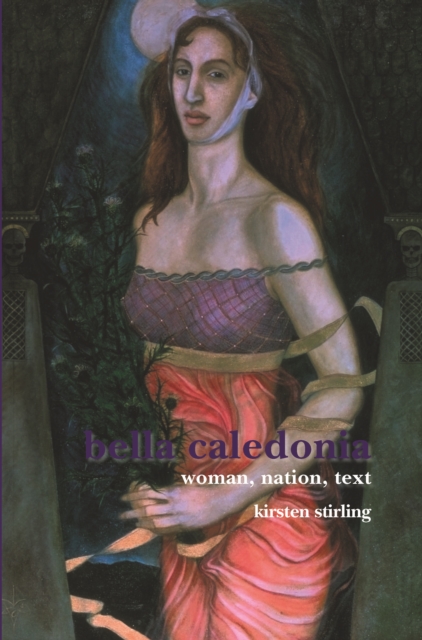
Bella Caledonia: Woman, Nation, Text looks at the widespread tradition of using a female figure to represent the nation, focusing on twentieth-century Scottish literature. The woman-as-nation figure emerged in Scotland in the twentieth century, but as a literary figure rather than an institutional icon like Britannia or France's Marianne. Scottish writers make use of familiar aspects of the trope such as the protective mother nation and the woman as fertile land, which are obviously problematic from a feminist perspective. But darker implications, buried in the long history of the figure, rise to the surface in Scotland, such as woman/nation as victim, and woman/nation as deformed or monstrous. As a result of Scotland's unusual status as a nation within the larger entity of Great Britain, the literary figures under consideration here are never simply incarnations of a confident and complete nation nurturing her warrior sons. Rather, they reflect a more modern anxiety about the concept of the nation, and embody a troubled and divided national identity. Kirsten Stirling traces the development of the twentieth-century Scotland-as-woman figure through readings of poetry and fiction by male and female writers including Hugh MacDiarmid, Naomi Mitchison, Neil Gunn, Lewis Grassic Gibbon, Willa Muir, Alasdair Gray, A.L. Kennedy, Ellen Galford and Janice Galloway.
eBook

Introduction
In Barrie's play Peter Pan, Peter's shadow takes centre stage before Peter himself-he remains a marginalized face at the nursery window until he makes his grand entrance. His shadow, meanwhile, is submitted to inspection by Mr and Mrs Darling, admired, misunderstood, and passed from hand to hand. Separated from its body and identity, the shadow hangs limp in Mrs Darling's hands. Similarly, a great many people today know Peter Pan only through the shadow he has cast over the popular imagination, without ever having read either of the texts by J.M. Barrie which first brought the character to life. Peter Pan is one of those literary texts (like Frankenstein and Jekyll and Hyde) whose name has passed into the English language and taken on a life of its own, independent of the work that generated it. \"Peter Pan\" connotes boyishness or eternal childhood, and may be used to describe \"an immature or emotionally undeveloped man,\" or, more positively, \"an adult who retains youthful features\" (OED). It has given its name to the \"Peter Pan collar,\" to the psychological phenomenon the \"Peter Pan syndrome\" (Kiley 1983), and most famously in recent years it was used to describe the late Michael Jackson as the \"Peter Pan of pop.\"
Book Chapter
Sequels
Many sequels to Peter Pan have been written in a wide range of genres and styles, formats and languages, and the list continues to grow (see Bibliography, section 2). Given the strange dual timelines of the real world and Neverland in Barrie's Peter Pan, the aging of Wendy in parallel with the static and unrepentant youthfulness of Peter, it is perhaps only appropriate that Barrie's character should repeatedly return and receive posthumous life after his author's death. All these returns to Neverland, these rescues, repetitions, and resurrections, remake Peter Pan (text and character) in a multitude of new forms. This \"constant dispersion of Peter Pan\" (Rose 1984: 6) has been part of the story of Barrie's text from the beginning. Barrie's narrative has been rewritten many times since 1904, and different hands will continue to reinterpret, correct, reify, or update Neverland for new generations. The projected chain of infinite return with which Barrie closes both Peter and Wendy and When Wendy Grew Up simultaneously encourages and discourages the production of allographic sequels.
1
The long line of Wendy's descendents eternally returning to Neverland to do the Spring Cleaning certainly opens up the promise of return, of continuing adventures (admittedly, domestic ones), and extends Peter's life beyond the original texts. On the other hand, in the ten lines or so that conclude Peter and Wendy, Barrie neatly sews up the future. It may not be the most satisfactory ending to the original story, but it restricts the creative possibilities for any sequel writer who chooses to respect Barrie's own ending and remain within the cycle of repetition and return thus predicted. All sequels are returns, in some sense-a return to the original characters or settings, and usually a revisitation of a familiar theme or plot line. The ending of Peter and Wendy virtually dictates that all sequels must literally be returns to Neverland, and yet Barrie has also already written the return to Neverland, since-crucially-in the original texts even the first approach to Neverland is 128already described as a return: \"you have often half seen it before\" (PP: 2.i. 26); \"strange to say, they all recognized it at once\" (PW: 105).
Book Chapter
Ending Peter Pan
If the origins, textual and otherwise, of Peter Pan are mysterious, its conclusions are even more so. Neither of the published versions of the story, Peter and Wendy (1911) or Peter Pan (1928), ends in a completely satisfactory way. The most important conflicts of the story-between Peter and Wendy, and even between Peter and Hook-are never wholly resolved, and the endings of both novel and play leave the reader with more questions than answers. This lack of resolution is most obvious in the play of 1928, where the curtain rises and falls several more times following what might seem to be the most natural ending: the children's return home and reunion with their parents. When Wendy narrates the story of the children's return in the Home Under the Ground scene, this \"return-to-reality\" (Gilead 1991: 277) indeed functions as the happy ending, though the rhetorical flourish with which she chooses to close may suggest that she too faced difficulties in bringing the story to a conclusion: \"pen cannot inscribe the happy scene over which we draw a veil\" (PP: 4.i. 183; cf. PW: 166). Barrie's pen, on the contrary, seems quite unable to stop inscribing, and the joyful spectacle of the children's return is followed by a scene showing the Darlings' house from outside, in which Wendy and Mrs Darling converse with Peter from a window, and finally by the elaborate Tree Tops scene, showing the Neverland a year later (PP: 5.ii. 108-64; 165-214). The play thus seems suspended between a fantasy ending and a domestic, \"real-world\" ending, or between ending and not ending at all. Humphrey Carpenter (1985: 180) suggests that \"there can be no ending, only a return to the beginning.\" But to describe the story as circular does not quite capture the sense of indecision that the multiple endings convey. The hesitation between real world and fantasy is not only evident in the published versions of the story, but also in the many drafts and revisions of Peter Pan which document Barrie's difficulties in concluding it. This hesitation affects the resolution of almost every conflict in the story.
Book Chapter
Wendy and Peter
Wendy may be read as the true hero of Peter Pan because her narrative trajectory leads her, like the heroes of many pantomimes and fairy tales, back to the real world and the next steps on her path to maturity. The trajectory of the other putative hero, Peter, takes him in the opposite direction-also a narrative of return, but of a return to Neverland and the refusal of maturity and adult sexuality. The names of the two potential heroes are united in the title of the 1911 novel, and the play too was provisionally titled \"Peter and Wendy\" in early 1904 (Birkin 1979: 103-4). But the illusion of unity in the title, and the suggestion of some sort of romantic union, soon disintegrate. Not only does the male lead refuse to take on his romantic role, but the fantasy worlds, and therefore the subconscious desires, of the two title characters prove to be irremediably opposed. This is dramatized both through the opposed stories told by Wendy and Peter in Neverland and through Peter's transformation of the symbolism of Pan's phallic pipes. Even without Barrie's explicit association of Neverland with the mind in Peter and Wendy (73-4), his story would be irresistible material for psychoanalytic criticism. Yet attempts to impose a Freudian Oedipal reading on Peter Pan tend to be problematic. Just as Peter resists being incorporated into a relationship with Wendy, his relationship with Captain Hook resists a straight Oedipal interpretation. A reading of Neverland as the unconscious nonetheless reveals many disturbing elements in the \"unexplored patches\" of the island that become \"dark and threatening by bedtime\" (PW: 106), including a deep-seated fear of female sexuality which underlies the irreconcilable trajectories of Wendy and Peter.
Book Chapter
Imagining Barrie
Many critics and authors of prequels have tried-and failed-to tease out Peter's origins from clues in Barrie's texts. An inevitable alternative is to seek origins for the boy who would not grow up in Barrie's own biography. As Peter Hollindale (2005: 199) puts it, the play Peter Pan and the narrative of Barrie's life are \"two co-existent stories, each with the capacity to distort or confuse our understanding of the other.\" Jane Yolen's biography of Barrie, Lost Boy: The Story of the Man Who Created Peter Pan (2010), written for children and illustrated by Steve Adams, demonstrates very clearly how these two stories may be juxtaposed and intertwined. Each double page contains text and full-page illustration telling the story of Barrie's life-clearly introduced as a story, with the words \"Once upon a time\"-and also a smaller inset picture illustrating a quotation from one of Barrie's works. Thus the story of Barrie's mother and his childhood is accompanied by the line \"Boy, why are you crying?\" from Peter and Wendy; the production of Barrie's first play Bandelero the Bandit for the dramatic club at Dumfries Academy is paralleled by Peter Pan's crow \"Oh, the cleverness of me!\" (Yolen 2010: [9; 14]). Two knowing quotations from the second chapter of Peter Pan in Kensington Gardens on Yolen's title pages comment on the process of literary creation and interpretation: firstly \" ... no one could say whether it is more his story or mine\" (KG: 13) and then \"Solomon ... listened quietly to Peter's adventures, and then told him their true meaning\" (KG: 16). All but two of Yolen's quotations from Barrie's works are from the various versions of the Peter Pan story, showing how closely Barrie's creation has come to be identified with episodes from his own life story.
1
Book Chapter
Before Peter Pan: Loisel
Peter Pan is an enigma in all of the texts that bear his name, and in the 1928 play script Barrie multiplies details that distinguish him from other \"boys and girls, of whom he is not one\" (PP: 4.i. 279). He is weightless, strangely intangible, and his nature is far from defined. \"Pan, who and what art thou?\" asks Hook in frustration, and Peter's answer, \"I'm youth, I'm joy, I'm a little bird that has broken out of the egg\" (PP: 5.i. 196-8; cf. PW: 203) is nicely calculated to give no actual information to his interrogator. None of Peter's accounts of his origins can be trusted. Alison Kavey (2009: 98) rightly points out that Peter's first account of himself to Wendy-\"I ran away the day I was born ... I don't ever want to be a man. So I ran away to Kensington Gardens and lived a long long time among the fairies\" (PP: 1.i. 399-400; cf. PW: 92)-is \"entirely made up in response to an inappropriate intrusion of the real world into Neverland and the riddle of his existence.\" Barrie's texts leave many questions deliberately unresolved, but there is clearly a story there to be told for anyone tempted to illuminate Peter's shadowy origins.
Book Chapter