
Catalogue Search | MBRL


Are you sure you want to remove the book from the shelf?

{{itemTitle}}
10
result(s) for
"Stolz, Thomas, editor"
Sort by:

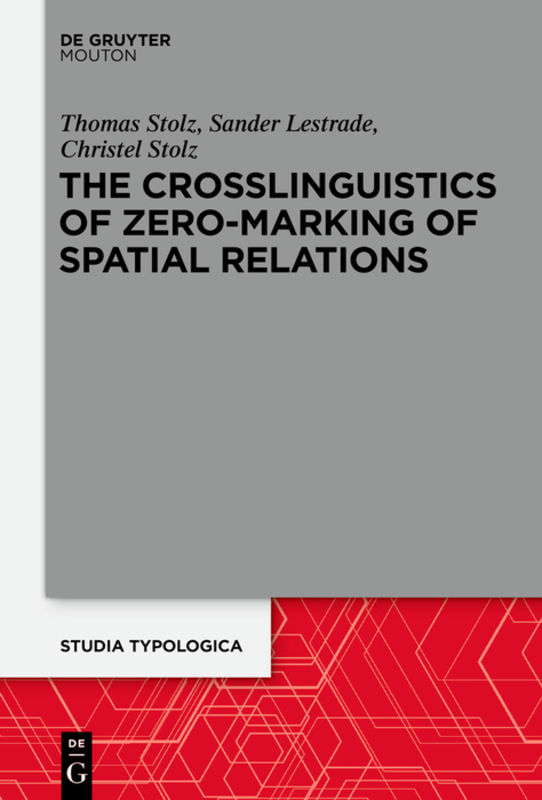
The Crosslinguistics of Zero-Marking of Spatial Relations
'Studia typologica' ist der Titel der Beihefte zur Zeitschrift 'Sprachtypologie und Universalienforschung/Language Typology and Universals (STUF)'. In den 'Studia typologica' werden Beitrge verffentlicht, die vielversprechende neue Themen im Bereich der allgemein-vergleichenden Sprachwissenschaft ansprechen. Insbesondere empirisch gut fundierte Beitrge mit crosslinguistischer Orientierung, die neue Problemstellungen auf innovative Art prsentieren, sind in den 'Studia typologica' willkommen. Die Beiheftereihe untersttzt nachdrcklich Studien zu weniger gut erforschten Sprachen und/oder Phnomenen. Von groem Interesse fr die 'Studia typologica' sind auch areal-typologische Arbeiten sowie Beitrge, die sich dem Zusammenspiel von Sprachkontakt und Sprachtypologie widmen. Die 'Studia typologica' sind theorie- und modellbergreifend als Forum fr typologisch ausgerichtete Forschungsarbeiten gedacht. Die Beihefte umfassen sowohl Monographien als auch thematisch homogene Sammelbnde. Alle eingehenden Manuskripte werden begutachtet (double blind). Die Publikationssprache ist Englisch.
eBook
Spatial interrogatives in Europe and beyond : where, whither, whence
\"This book provides a functional-typological account of the paradigm of the spatial interrogatives where, whither, and whence. Data from some 450 languages from all parts of the world and all language families are studied to determine the patterns of the paradigm-internal organization in terms of morphological mismatches. Special attention is given to the differential complexity of the constructions which are used as spatial interrogatives\"-- Provided by publisher.
Book
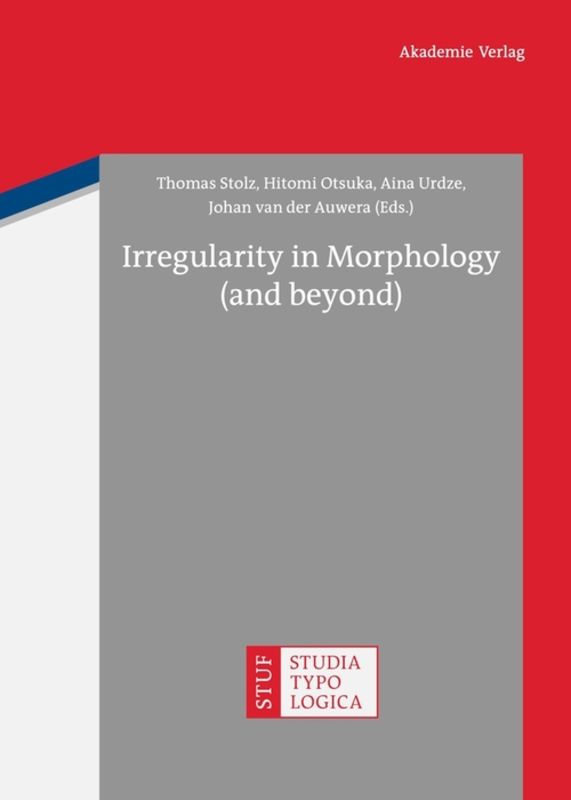
Irregularity in Morphology (and beyond)
Irregularität als sprachwissenschaftliches Konzept ist bisher nur unzureichend erforscht. Die Aufsätze dieses Sammelbandes widmen sich der Irregularität in der Flexions-, Derivations- und Kompositionsmorphologie und leisten damit einen Beitrag zum besseren Verständnis von Irregularität. Die Beiträge zielen darauf ab herauszufinden, wo Regelhaftigkeit in der Irregularität liegt, wie regelhafter Lautwandel Irregularität erzeugt, wie Paradigmen funktionieren (speziell in Bezug auf Suppletivismus und \"Overabundance\") und wie die irreguläre Morphologie mit Syntax und Pragmatik zusammenspielt. Irregularität wird sowohl aus diachroner als auch aus synchroner Sicht beleuchtet. Einige Studien wählen eine psycholinguistische Herangehensweise. Untersuchungssprachen reichen von Latein und seinen Tochtersprachen Französisch, Katalanisch und Italienisch über Englisch, Deutsch, Griechisch, Russisch und Türkisch bis hin zu Thompson Salish und einigen irokesischen Sprachen. Die im Sammelband diskutierten Theorien reichen von der kanonischen Typologie über die Distributed Morphology, die Whole Word Morphology und die Minimalistische Morphologie bis hin zu prozeduralen und deklarativen Modellen.
eBook
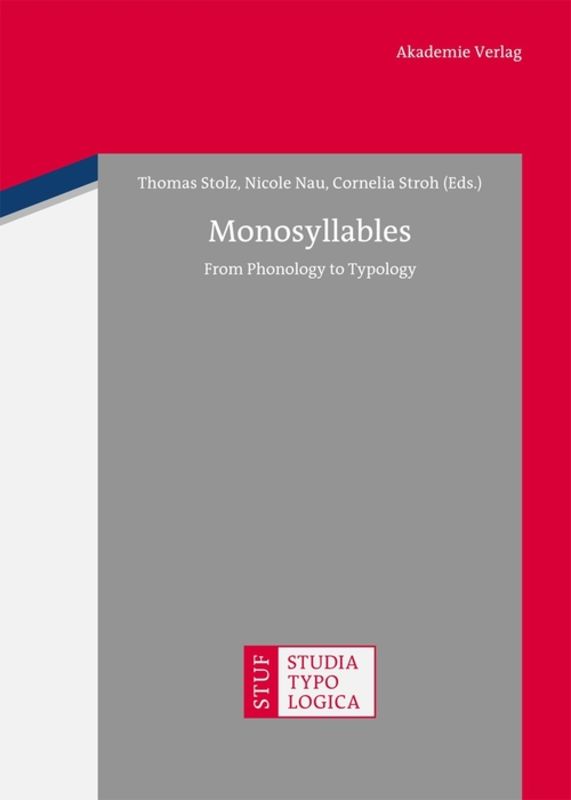
Monosyllables
Dieser Band versammelt zehn Aufsätze, in denen Monosyllaba in verschiedenen Sprachen Asiens, Afrikas und Europas aus unterschiedlichsten Perspektiven betrachtet werden. Einsilber sind in fast allen Sprachen der Welt vertreten. Sprachen wie das Chinesische bevorzugen bekanntermaßen diesen Silbentyp. In anderen, wie z. B. den Bantusprachen, muss ein Wort aus mindestens zwei Silben bestehen. In den europäischen Sprachen rücken Einsilber gerade erst in den Fokus linguistischen Interesses. Die Beiträge dieses Bandes beschäftigen sich sowohl mit phonetischen und phonologischen als auch mit morphologischen und funktionalen Aspekten von Einsilbern. Der Fokus richtet sich auf das Zusammenwirken von Silben- und Wortstruktur, wie auch auf die phonologischen und morphologischen Regeln der Wohlgeformtheit. Es wird sowohl die Entwicklung von Einsilbern in Sprachen, die diesen Silbentyp bevorzugen (ostasiatische Sprachen, aber auch Dänisch), als auch ihre spezielle Rolle als Ausnahmeform innerhalb des Lexikons und bei speziellen Wortformen wie z.B. den Imperativen diskutiert. Methodisch reicht die Spannweite von experimenteller Phonetik, über quantitative Linguistik und Analysen von Einzelsprachen bis hin zu großangelegten typologischen Vergleichen.
eBook
Vergleichende Kolonialtoponomastik
Koloniale und Postkoloniale Linguistik / Colonial and Postcolonial Linguistics (KPL/CPL) provides the platform for a new research program which is currently taking shape in the realm of linguistics, viz. \"Colonial and Postcolonial Linguistics\". This new sub-discipline of linguistics is inspired by the work carried out within the framework of Missionary Linguistics and by the recent discussion about language, linguistics and colonialism. The integration of these two perspectives in one approach makes \"Colonial and Postcolonial Linguistics\" special. KPL/CPL serves the purpose of making accessible to the interested public (linguists, historians, native speakers of the object languages, etc.) and commenting upon those texts the topic of which are languages of the former European possessions in overseas and which were written during the European colonial era. The focus is on hitherto unpublished manuscripts and texts which nowadays are hard to come by. KPL/CPL also investigate in what ways the cultural and political discourse of the (post-)colonial times is reflected in the contemporary linguistic contributions dedicated to the languages of the colonized peoples. The new series publishes monographs and collections of articles. All incoming manuscripts are peer-reviewed (double blind). The languages of publication are preferably English and German.
eBook
Spatial interrogatives in Europe and beyond : where, whither, whence
The extant generalizations about the grammar of space rely heavily on the analyses of declarative sentences.There is a need to check whether these generalizations also hold in the domain of interrogation.To this end this book analyzes data from some 450 languages (including non-standard varieties).
eBook
Benennungspraktiken in prozessen kolonialer raumaneignung
Koloniale und Postkoloniale Linguistik / Colonial and Postcolonial Linguistics (KPL/CPL) provides the platform for a new research program which is currently taking shape in the realm of linguistics, viz. \"Colonial and Postcolonial Linguistics\". This new sub-discipline of linguistics is inspired by the work carried out within the framework of Missionary Linguistics and by the recent discussion about language, linguistics and colonialism. The integration of these two perspectives in one approach makes \"Colonial and Postcolonial Linguistics\" special. KPL/CPL serves the purpose of making accessible to the interested public (linguists, historians, native speakers of the object languages, etc.) and commenting upon those texts the topic of which are languages of the former European possessions in overseas and which were written during the European colonial era. The focus is on hitherto unpublished manuscripts and texts which nowadays are hard to come by. KPL/CPL also investigate in what ways the cultural and political discourse of the (post-)colonial times is reflected in the contemporary linguistic contributions dedicated to the languages of the colonized peoples. The new series publishes monographs and collections of articles. All incoming manuscripts are peer-reviewed (double blind). The languages of publication are preferably English and German.
eBook
Morphologies in Contact
Dieser Sammelband greift den Begriff der Kontaktmorphologie (Contact Morphology) auf, der 1996 von David Wilkins geprägt wurde. Bisher gehen die meisten Sprachkontaktstudien davon aus, dass morphologische Strukturen selten entlehnt werden, da eine Kopie morphologischer Strukturen einen intensiven und langandauernden Sprachkontakt mit vorausgehender massiver Entlehnung von Lexemen und Funktionswörtern voraussetzt. Arbeiten zu morphologischen Veränderungen sehen Sprachkontakt dagegen häufig als entscheidende Ursache für die Auflösung des morphologischen Systems an. Im vorliegenden Band wird untersucht, inwieweit diese Herangehensweisen der Phänomenologie der Kontaktmorphologie gerecht werden können. Die 14 Artikel geben Aufschluss über die Veränderung morphologischer Strukturen unter Sprachkontaktbedingungen. Es werden empirische Daten aus 40 Sprachen weltweit präsentiert und neue theoretische Konzepte diskutiert. Der Band markiert den Beginn eines internationalen Forschungsprogramms, das Morphologie im Sprachkontakt unter den unterschiedlichsten Blickwinkeln untersucht und so den Weg ebnet für die Etablierung von Kontaktmorphologie als eigenständige wissenschaftliche Disziplin.
eBook
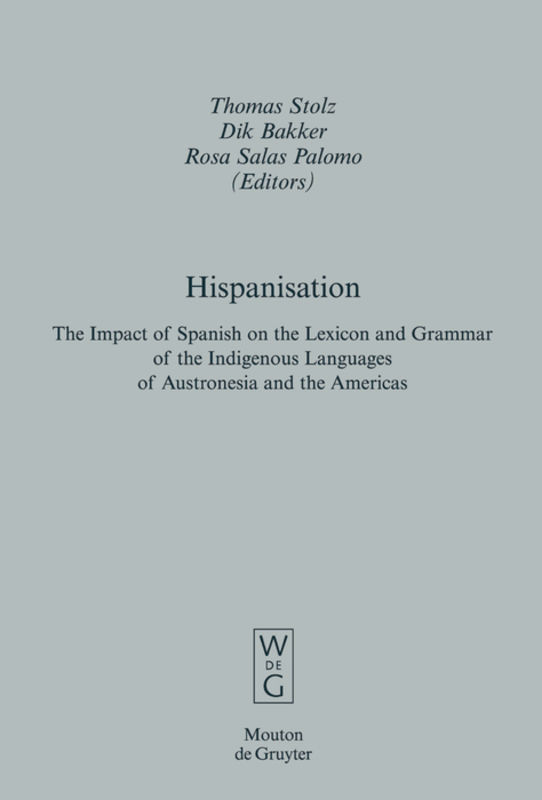
Hispanisation
Literally hundreds of languages world-wide have experienced direct or indirect Hispanisation during the heyday of the Spanish colonial empire. The number of languages which continue to borrow from Spanish on a daily basis is considerable especially in Latin America. This volume gives the reader a better idea of the range of contact constellations in which Spanish functions as the donor language. Moreover, the contributions to this collection of articles demonstrate that it is not only possible to compare the contact-induced processes in the (Hispanised) languages of Austronesia and the Americas. It is emphasized that one can draw far-reaching conclusions from the presented borrowing facts for the theory of language contact in general. The volume is divided into two sections according to geographical principles: section I is devoted to contacts of Spanish in Latin America. Two contributions look at the Hispanisation of varieties of Nahuatl (Classical Nahuatl studied by Anne Jensen and modern varieties studied by José Antonio Flores Farfán). Martina Schrader-Kniffki discusses Spanish-Zapotec contacts and their relations to language mixing and purism. Luciano Giannelli and Raoul Zamponi address the issue of Hispanisms in Kuna, a language from Panama. For South America, Jorge Gómez-Rendón discusses whether or not there are constraints on lexical borrowing from Spanish into Imbabura Quichua. Suzanne Dikker studies the intertwined language Media Lengua in her attempt at redefining the notion of relexification. Section II focuses on the impact of Spanish on the languages of Austronesia and South-East Asia. Steven Roger Fischer shows that the heavy Hispanisation of Rapanui is currently being reverted. Steve Pagel compares Hispanisation processes and their results in the Mariana Islands and on Rapa Nui. The second comparative study is by Patrick O. Steinkrüger who reviews a variety of Philippinian languages and their degrees of Hispanisation. The attitudes of native speakers of Chamorro as to Hispanisms is the topic of the study by Rosa Salas Palomo and Thomas Stolz. The volume is especially interesting for students of language contact. But also scholars with a background in Romance linguistics or Hispanic philology will find the assembled articles very useful, as well as Austronesianists and Amerindianists.
eBook