
Catalogue Search | MBRL


Are you sure you want to remove the book from the shelf?

{{itemTitle}}
8
result(s) for
"Stoneman, Richard, author"
Sort by:

The Greek experience of India : from Alexander to the Indo-Greeks
An exploration of how the Greeks reacted to and interacted with India from the third to first centuries BCE0When the Greeks and Macedonians in Alexander's army reached India in 326 BCE, they entered a new and strange world. They knew a few legends and travelers' tales, but their categories of thought were inadequate to encompass what they witnessed. The plants were unrecognizable, their properties unknown. The customs of the people were various and puzzling. While Alexander's conquest was brief, ending with his death in 323 BCE, the Greeks would settle in the Indian region for the next two centuries, forging an era of productive interactions between the two cultures. The Greek Experience of India explores the various ways that the Greeks reacted to and constructed life in India during this fruitful period. From observations about botany and mythology to social customs, Richard Stoneman examines the surviving evidence of those who traveled to India. Most particularly, he offers a full and valuable look at Megasthenes, ambassador of the Seleucid king Seleucus to Chandragupta Maurya, and provides a detailed discussion of Megasthenes's now-fragmentary book Indica. Stoneman considers the art, literature, and philosophy of the Indo-Greek kingdom and how cultural influences crossed in both directions, with the Greeks introducing their writing, coinage, and sculptural and architectural forms, while Greek craftsmen learned to work with new materials such as ivory and stucco and to probe the ideas of Buddhists and other ascetics.
Book

The Ancient Oracles
For more than a thousand years, Greeks from all walks of life consulted oracles for guidance received directly from the gods. This colorful and wide-ranging survey encompasses the entire history of Greek oracles and focuses fresh attention on philosophical, psychological, and anthropological aspects of oracular consultation. It also examines how Greek oracles' practices were distinctive compared to those of their neighbors, especially in Egypt, Babylon, and Israel.
Richard Stoneman weaves a fascinating historical tapestry, taking into account the different kinds of oracles (healers, advisors, prophets, and others), their most important sanctuaries, debates about them among ancient thinkers, and Christian attacks on them. Delving into the reasons behind the oracles' enduring position at the heart of Greek culture, Stoneman offers fresh insights into pagan religious practice and the history of Greek intellectual and spiritual life.
eBook

Pindar
Richard Stoneman shows that Greek melic poet Pindar's works, while at first seeming obscure and fragmentary, reward further study.
BOOK

Ancient Historiography on War and Empire
In the ancient Greek-speaking world, writing about the past meant balancing the reporting of facts with shaping and guiding the political interests and behaviours of the present. Ancient Historiography on War and Empire shows the ways in which the literary genre of writing history developed to guide empires through their wars. Taking key events from the Achaemenid Persian, Athenian, Macedonian and Roman ‘empires’, the 17 essays collected here analyse the way events and the accounts of those events interact. Subjects include: how Greek historians assign nearly divine honours to the Persian King; the role of the tomb cult of Cyrus the Founder in historical narratives of conquest and empire from Herodotus to the Alexander historians; warfare and financial innovation in the age of Philip II and his son, Alexander the Great; the murders of Philip II, his last and seventh wife Kleopatra, and her guardian, Attalos; Alexander the Great’s combat use of eagle symbolism and divination; Plutarch’s juxtaposition of character in the Alexander-Caesar pairing as a commentary on political legitimacy and military prowess, and Roman Imperial historians using historical examples of good and bad rule to make meaningful challenges to current Roman authority. In some cases, the balance shifts more towards the ‘literary’ and in others more towards the ‘historical’, but what all of the essays have in common is both a critical attention to the genre and context of history-writing in the ancient world and its focus on war and empire.
eBook

Alexander the Great : a life in legend
Alexander the Great precipitated immense historical change in the Mediterranean and Near Eastern worlds. This text gathers together hundreds of the colourful Alexander legends that have been told and retold around the globe.
BOOK
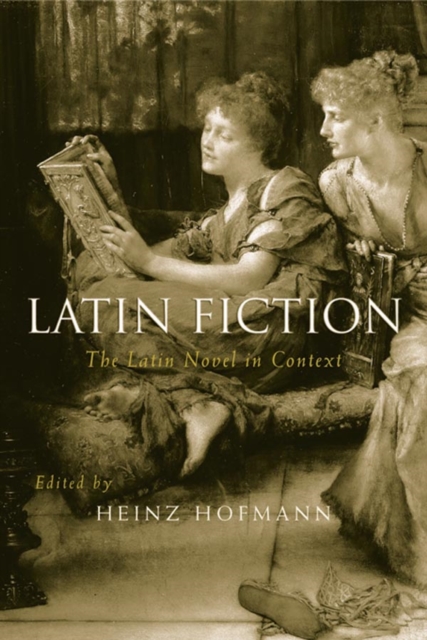
Latin Fiction
Latin Fiction provides a chronological study of the Roman novel from the Classical period to the Middle Ages, exploring the development of the novel and the continuity of Latin culture. Essays by eminent and international contributors discuss texts including:
*
Petronius, Satyrica and Cena Trimalchionis
*
Apuleius, Metamorphose(The Golden Ass) and The Tale of Cupid and Psyche
*
The History of Apollonius of Tyre
*
The Trojan tales of Dares Phrygius and Dictys Cretensis
*
The Latin Alexander
*
Hagiographic fiction
*
Medieval interpretations of Cupid and Pysche, Apollonius of Tyre and the Alexander Romance
For any student or scholar of Latin fiction, or literary history, this will definitely be a book to add to your reading list.
eBook


History matters : essays on economic growth, technology, and demographic change
Combining theoretical work with careful historical description and analysis of new data sources, History Matters makes a strong case for a more historical approach to economics, both by argument and by example. Seventeen original essays, written by distinguished economists and economic historians, use economic theory and historical cases to explore how and why \"history matters.\" The chapters, which range in subject matter from the economic theory of irreversible investment to the nineteenth-century decline in U.S. rural fertility to the English poor law reform, are unified by three themes. The first explores the significance, causes, and consequences of path dependence in the evolution of technology and institutions. The second relates to the ways in which economic and political behavior are profoundly shaped and constrained by the cultural and political context inherited from history at a particular point in time. The final theme demonstrates the importance of integrating economic theory into historical research in the gathering and interpretation of data. William A. Sundstrom is Professor of Economics at Santa Clara University. Timothy W. Guinnane is Professor of Economics at Yale University. Warren C. Whatley is Professor of Economics at the University of Michigan.
eBook