
Catalogue Search | MBRL


Are you sure you want to remove the book from the shelf?

{{itemTitle}}
202
result(s) for
"Styron, William"
Sort by:
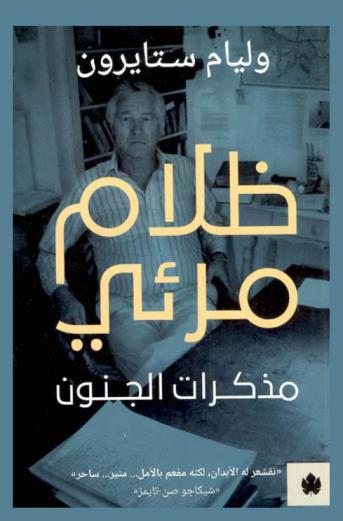
ظلام مرئي : مذكرات الجنون /
في صيف عام 1985، أحس الروائي الأمريكي الشهير وليام ستايرون بالشلل، من جراء مشاعر السخط، والاستياء، واللامبالاة، واليأس، وفقدان القدرة على الكلام والمشي، التي تملكته حينما سقط في قبضة اكتئاب متقدم، أبتلع حياته وتركه على حافة الانتحار. في هذه المذكرات المبهرة، يصف الروائي الكبير هبوطه المدمر في الكآبة، فيأخذنا في رحلة غير مسبوقة إلى عالم الجنون، مليئة بتأملات كاشفة لمرض يصيب الملايين، لكن ما زال يساء فهمه على نطاق واسع. هذا النص المؤثر والشجاع، الذي ترجمه بتمكن أنور الشامي، هو صورة حميمة لعذاب ستايرون في محنته وفي سبيله إلى التعافي.
Book

Jimmy in the House
Published in The New York Times, December 20, 1987, Sunday, Late City Final Edition Section 7; Page 30, Column 2; Book Review Desk.
Journal Article

My generation : collected nonfiction
\"Including significant previously uncollected material, My Generation is the definitive gathering of the fruits of this beloved writer's five decades of public life. Here is the William Styron unafraid to peer into the darkest corners of the 20th century or to take on the complex racial legacy of the United States. But here too is Styron writing about his daily walk with his dog, musing on the Modern Library's \"100 Greatest Books,\" and offering personal insight into the extraordinary array of noted contemporary figures he interacted with over the course of an illustrious career. These are the people and events, tragic and joyful, historical and intimate, that aroused Styron's unrivalled curiosity\"-- Provided by publisher.
Book


Looking Back: A Conversation with William Styron
An interview with writer William Styron from Jul 29, 1998 is presented. He discusses, among other things, how he translates his life and experiences into art and how he sees that artistic journey and the decisions he makes in turning memory into fiction.
Journal Article

A Wheel of Evil Come Full Circle: The Making of \Sophie's Choice\
Styron discusses his relationship with Hannah Arendt and how their conversations affected his work on the novel \"Sophie's Choice.\"
Journal Article

Holocaust Fiction
Examining the controversies that have accompanied the publication of novels representing the Holocaust, this compelling book explores such literature to analyze their violently mixed receptions and what this says about the ethics and practice of millennial Holocaust literature. The novels examined, including some for the first time, are:
* Time's Arrow by Martin Amis * The White Hotel by D.M. Thomas * The Painted Bird by Jerzy Kosinski * Schindler's List by Thomas Keneally * Sophie's Choice by William Styron * The Hand that Signed the Paper by Helen Darville.
Taking issue with the idea that the Holocaust should only be represented factually, this compelling book argues that Holocaust fiction is not only legitimate, but an important genre that it is essential to accept. In a growing area of interest, Sue Vice adds a new, intelligent and contentious voice to the key debates within Holocaust studies.
Sue Vice is Reader in English Literature at the University of Sheffield, and set up Britain's first Holocaust Studies MA. Her publications include Introducing Bakhtin (1997).
'Now we may well wish that extracts from these diaries should appear in the National Curriculum - certainly there is nothing in the realm of home-grown 'Holocaust fiction' that comes anywhere near them for detailed fascination and capacity for enlightenment.' - Piotr Kuhiwczak, The Cambridge Quarterly, Vol. 30 (2) 2001
eBook

THE LITERARY EYE; Death Row
I recently met him, and he said, call me Shabaka. Shabaka - born Joseph Green Brown in Charleston, S.C. - had been convicted for the 1973 murder, robbery and rape of a Tampa white woman. ''Shabaka,'' a name he took before going to prison, means ''uncompromising'' in Swahili. As it happened, a juror at his trial had sent an affidavit to Shabaka's minister, asserting that a jury member had advocated the chair for Shabaka, a former Black Panther, because ''that nigger's been nothing but trouble since he came down here, and he'll be trouble until we get him off the streets.'' In the years that followed, ugly details came to light: During the first trial, the prosecutor had concealed F.B.I. evidence showing that the fatal bullet could not have been fired from Shabaka's gun. Shabaka based his new claim on this fact and on his assertion that the prosecutor had allowed a crucial witness to lie while also misleading the jury in his closing argument.
Newspaper Article