
Catalogue Search | MBRL


Are you sure you want to remove the book from the shelf?

{{itemTitle}}
323
result(s) for
"Sullivan, Luke"
Sort by:

Hey, Whipple, Squeeze This
The classic guide to creating great advertising now covers all media: Digital, Social, and Traditional Hey Whipple, Squeeze This has helped generations of young creatives make their mark in the field. From starting out and getting work, to building successful campaigns, you gain a real-world perspective on what it means to be great in a fast-moving, sometimes harsh industry. You'll learn how to tell brand stories and create brand experiences online and in traditional media outlets, and you'll learn more about the value of authenticity, simplicity, storytelling, and conflict. Advertising is in the midst of a massive upheaval, and while creativity is still king, it's not nearly enough. This book is an essential resource for advertising professionals who need up-to-date digital skills to reach the modern consumer. Turn great ideas into successful campaigns Work effectively in all media channels Avoid the kill shots that will sink any campaign Protect your work Succeed without selling out Today's consumer has seen it all, and they're less likely than ever to even notice your masterpiece of art and copy, let alone internalize it. Your job is to craft a piece that rises out of the noise to make an impact. Hey Whipple, Squeeze This provides the knowledge to create impressive, compelling work.
eBook

Thirty Rooms to Hide In
Author Luke Longstreet Sullivan has a simple way of describing his new memoir: \"It's likeThe Shining. . . only funnier.\" And as this astonishing account reveals, the comment is accurate.Thirty Rooms to Hide
Intells the story of Sullivan's father and his descent from being one of the world's top orthopedic surgeons at the Mayo Clinic to a man who is increasingly abusive, alcoholic, and insane, ultimately dying alone on the floor of a Georgia motel. For his wife and six sons, the years prior to his death were years of turmoil, anger, and family dysfunction; but somehow, they were also a time of real happiness for Sullivan and his five brothers, full of dark humor and much laughter.
Through the 1950s and 1960s, the six brothers had a wildly fun and thoroughly dysfunctional childhood living in a forbidding thirty-room mansion, known as the Millstone, on the outskirts of Rochester, Minnesota. The many rooms of the immense home, as well as their mother's loving protection, allowed the Sullivan brothers to grow up as normal, mischievous boys. Against a backdrop of the times-the Cold War, the Cuban Missile Crisis, fallout shelters, JFK's assassination, and the Beatles-the cracks in their home life and their father's psyche continue to widen. When their mother decides to leave the Millstone and move the family across town, the Sullivan boys are able to find solace in each other and in rock 'n' roll.
AsThirty Rooms to Hide
Infollows the story of the Sullivan family-at times grim, at others poignant-there is a wonderful, dark humor that lifts the narrative. Tragic, funny, and powerfully evocative of the 1950s and 1960s,Thirty Rooms to Hide Inis a tale of public success and private dysfunction, personal and familial resilience, and the strange power of humor to give refuge when it is needed most, even if it can't always provide the answers.
eBook

It Makes You Forget: A Re-Evaluation of Alcoholism in Stephen King’s The Shining
Stephen King’s 1977 horror novel sold well and generated a film adaptation that is still discussed and critiqued to this day. However, that adaptation does two major injustices to the novel: it downplays Jack Torrance’s alcoholism, and the first point does not matter since it has managed almost complete replacement of the novel in terms of cultural memory.Contrary to popular belief, Jack Torrance’s alcoholism was not written as a conscious reflection of the author’s alcoholism. Where King aimed to write a new American Gothic novel, based on his ideas of authors like Edgar Allan Poe, denoted by its opening quote and references throughout. This thesis posits that instead he crafted a hotel that reflected all of his own fears, trauma, and shame into a narrative that captured the horror of the mid-century domestic violence and addiction while attempting to channel the otherworldly.
Dissertation

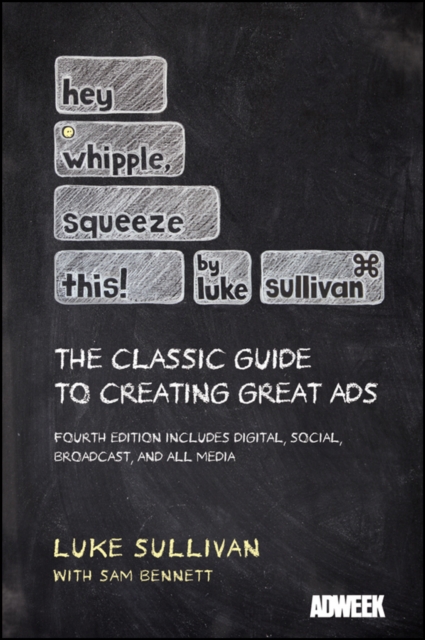
Hey, Whipple, Squeeze This
The classic (and irreverent) bestselling guide to creating great advertising Hey Whipple, Squeeze This has inspired a generation of ad students, copywriters, and young creatives to make their mark in the industry. But students need new guidance to ply their craft now in the digital world. This new fourth edition explains how to bring brand stories into interactive, dynamic places online, in addition to traditional television, radio, print, and outdoor ads. Creativity is still king, but this new edition contains: Important new chapters and updates that bring Whipple into the new digital world New content and examples for how to use social media and other emerging platforms Illustrate what's changing in the new world of advertising-and what isn't Hey Whipple, Squeeze This! will help sharpen your writing chops, unleash your creativity, and help raise the level of your work from hack to master craftsman.
eBook

PTU-066 Management of helicobacter pylori infection in patients with upper GI bleeding: compliance with guidelines
IntroductionAcute upper gastrointestinal bleeding (AUGIB) is a common complication of peptic ulcer disease (PUD) defined as not only peptic ulceration but also erosive gastritis and duodenitis, Helicobacter pylori (H. pylori) infection is the major cause of PUD. NICE guidelines recommend that patients identified with PUD should be tested and treated for H pylori if infected. Post-eradication testing is mandated to confirm successful eradication. The aim of this study was to determine compliance with national guidelines for the management of H. pylori in those with PUD-associated AUGIB.MethodsRetrospective data were collected on all patients presenting to the Royal Free Hospital, London, with non-variceal AUGIB between 1 January and 31 December 2017. Prospective data were collected between 1 February and 1 April 2018. Compliance with guidelines was judged using predetermined criteria and classified as: poor (<67% compliance); moderate (67–75%); good (>75%); or excellent (>90%).ResultsA total of 203 patients presented with non-variceal AUGIB during 2017, of whom 148 underwent endoscopy. Sixty-seven of those endoscoped met criteria for H. pylori testing but only 35 (52.2%) were investigated despite an absence of active bleeding or high-risk stigmata (compliance poor) (table 1). Of the 32 cases not tested, 22 exhibited overt ulceration at endoscopy, with the remaining cases demonstrating erosive changes. Four of the 55 non-endoscoped patients were tested for H pylori by other means. Overall, 15 (38.5%) of the 39 patients investigated tested positive for H pylori; 14 (93.3%) were prescribed eradication therapy (compliance excellent) while a further five patients were treated empirically. Of the 19 treated patients, only nine (47.4%) underwent post-eradication testing (compliance poor); all however tested negative. Prospective compliance rates in 36 patients exhibited similar poor compliance although samples were small (table 1).Abstract PTU-066 Table 1Management of H. pylori and compliance with associated NICE guidelines Management Step NICE Guideline Study Eligible (n) Performed (n) Compliance (%) Endoscopic detection Test for H. pylori if evidence of PUD R 67 35 Poor (52.2%) P 9 5 Poor (55.6%) Eradication therapy Offer those testing positive eradication therapy R 15 14 Excellent (93.3%) P 3 2 Poor (66.7%) Post-Eradication Testing Re-test using a C13 urea breath test. R 19 8 Poor (42.1%) P 2 0 Poor (0%) R = Retrospective, P = ProspectiveConclusionApproximately 50% of patients presenting with AUGIB with endoscopic features of PUD were not tested for H. pylori. Almost 40% of those who were tested were infected. Post-eradication investigation rates were particularly low. No clear explanation for this level of non-compliance with guidelines is apparent but enforcement is clearly warranted.
Journal Article
Analysis of the Impact of Automaker Strategies on Lithium Price Elasticity Using a Novel Bottom-Up Demand Model
A global transportation paradigm shift towards electrification is underway that is rapidly redefining how billions travel. To reduce possible disruptions to the electric vehicle transition, an understanding of the demand and supply of key critical materials, materials with a high risk of supply chain disruption, is essential. There are key gaps in understanding how automaker electrification strategies will influence materials demand over time. This presents materials suppliers with risks when making decisions on new mine openings, a process that can take many years before new ore is extracted. As a result, materials prices experience significant volatility such as with lithium, which has seen 6x price swings in the past five years. Informed by semi-structured interviews with major automakers, this research applies technical insights of current and emerging battery chemistries to bottom-up economic demand modelling to generate forecasts of lithium demand and price elasticity of that demand. Detailed analysis on automaker electrification strategies, regional breakdown, vehicle class composition, and selected battery chemistries creates an industry-wide evaluation of the possible short- and long-run impacts of high lithium prices. This research provides insights for decision makers in industry and government to optimize electrification strategies that minimize vulnerability to lithium price disruptions. I present three recommendations to automakers, suppliers, and policymakers: (1) accelerate investment in new battery technology, (2) adopt aggressive and flexible rollout strategies that offer wide options for range and drivetrain, and (3) improve strategic communication between suppliers and automakers to narrow forecasts on supply and demand.
Dissertation
PTU-067 Helicobacter pylori resistance: a complex socioeconomic problem?
Introduction Helicobacter pylori (H. pylori) infection is the primary cause of peptic ulcer disease and is globally prevalent. Although eradication therapy is effective, emerging antibiotic resistance rates are of considerable concern. H. pylori infection is more prominent in deprived populations but the effects of ethnicity and social determinants of health on H. pylori resistance is unclear. The aim of this study was to establish the significance of socioeconomic and ethnic influences on H. pylori resistance.MethodsThe study population comprised of patients with recurrent/previous H. pylori infection plus current dyspeptic symptoms referred to the Royal Free Hospital, London, from 1 January 2017 to 1 September 2018, for endoscopic investigations. Gastro/duodenal biopsy samples were sent for culture and sensitivity testing. Demographic and clinical data were collected. Self-reported ethnic origin was recorded. Deprivation was analysed on a postcode basis, using the 2015 English Indices of Deprivation, by means of average decile ranking (1–10). Ethnic and socioeconomic differences between patients exhibiting resistance and those fully sensitive/culture negative were explored.ResultsA total of 107 patients, including 26 children, (61.7% female; median (range) age 37.5 (4–81) years; 43.9% Caucasian, 39.2% Asian), were sampled. Five were excluded (3 contaminated, 2 inappropriate samples). Forty of the remaining 102 samples yielded positive cultures; of these 6/40 were fully sensitive but 34 (33% of total sample) displayed antibiotic resistance, most commonly to metronidazole (91.2%), and/or clarithromycin (77.4%). Dual resistance was present in 52.9%. Resistance to amoxicillin (n=2) and levofloxacin (n=3) was also identified. The remaining 62 samples were culture negative. There were no differences in the age or sex distributions between the two cohorts. Likewise, there was no significant difference in the ethnic distribution between patients displaying antibiotic resistance and those sensitive/culture negative (Asian 47% vs. 35% Chi2P=0.25) (figure 1A). Deprivation analysis showed very similar average decile rankings in both patient groups although distribution was skewed to the deprived end of each domain in both (figure 1B).ConclusionOne-third of biopsy samples referred for sensitivity testing, during the study period, exhibited antibiotic resistance, most commonly to first and second line eradication therapies. No significant differences were observed in ethnicity or in deprivation between patients exhibiting resistance and those sensitive/culture negative. However, trends identified in this study need to be further explored.Abstract PTU-067 Figure 1 Comparative analysis of resistant vs. sensitive/no culture cohorts. (A) Ethnicity (B) Deprivation
Journal Article
Hey Whipple Squeeze This! By Luke Sullivan: The Classic Guide to Creating Great Ads, Fourth Edition
The classic (and irreverent) bestselling guide to creating great advertisingHey Whipple, Squeeze This has inspired a generation of ad students, copywriters, and young creatives to make their mark in the industry. But students need new guidance to ply their craft now in the digital world. This new fourth edition explains how to bring brand stories into interactive, dynamic places online, in addition to traditional television, radio, print, and outdoor ads.Creativity is still king, but this new edition contains:Important new chapters and updates that bring Whipple into the new digital worldNew content and examples for how to use social media and other emerging platformsIllustrate what's changing in the new world of advertising—and what isn'tHey Whipple, Squeeze This! will help sharpen your writing chops, unleash your creativity, and help raise the level of your work from hack to master craftsman.
eBook