
Catalogue Search | MBRL


Are you sure you want to remove the book from the shelf?

{{itemTitle}}
418
result(s) for
"Sutter, Paul S."
Sort by:

Cleaning Up the Bomb Factory
Housewives, hard hats, and an Ohio town's restoration of
the radioactive wasteland in its backyard In 1984, a
uranium leak at Ohio's outdated Fernald Feed Materials Production
Center highlighted the decades of harm inflicted on Cold War
communities by negligent radioactive waste disposal. Casey A.
Huegel tells the story of the unlikely partnership of grassroots
activists, regulators, union workers, and politicians that
responded to the event with a new kind of environmental movement.
The community group Fernald Residents for Environmental Safety and
Health (FRESH) drew on the expertise of national organizations
while maintaining its autonomy and focus on Fernald. Leveraging
local patriotism and employment concerns, FRESH recruited
blue-collar allies into an innovative program that fought for both
local jobs and a healthier environment. Fernald's transformation
into a nature reserve with an on-site radioactive storage facility
reflected the political compromises that left waste sites improved
yet imperfect. At the same time, FRESH's outsized influence
transformed how the government scaled down the Cold War weapons
complex, enforced health and safety standards, and reckoned with
the immense environmental legacy of the nuclear arms race. A
compelling history of environmental mobilization, Cleaning Up
the Bomb Factory details the diverse goals and mixed successes
of a groundbreaking activist movement.
eBook

People of the Ecotone
Winner of the 2023 Hal K. Rothman Book Prize for best book in western environmental history from the Western History AssociationIndigenous power in a significant cultural and ecological borderlandIn People of the Ecotone, Robert Morrissey weaves together a history of Native peoples with a history of an ecotone to tell a new story about the roots of the Fox Wars, among the most transformative and misunderstood events of early American history. To do this, he also offers the first comprehensive environmental history of some of North America’s most radically transformed landscapes—the former tallgrass prairies—in the period before they became the monocultural “corn belt” we know today.Morrissey situates the complex rise and fall of the Illinois, Meskwaki, and Myaamia peoples from roughly the collapse of Cahokia (thirteenth to fourteenth century CE) to the mid-eighteenth century in the context of millennia-long environmental shifts, as changes to the climate shifted bison geographies and tribes adapted their cultures to become pedestrian bison hunters. Tracing dynamic chains of causation from microscopic viruses to massive forces of climate, from the deep time of evolution to the specific events of human lifetimes, from local Illinois village economies to market forces an ocean away, People of the Ecotone offers new insight on Indigenous power and Indigenous logics.
eBook

Nature’s Agents or Agents of Empire?
This essay examines the role that entomological workers played in U.S. public health efforts during the construction of the Panama Canal (1904–1914). Entomological workers were critical to mosquito control efforts aimed at the reduction of tropical fevers such as malaria. But in the process of studying vector mosquitoes, they discovered that many of the conditions that produced mosquitoes were not intrinsic to tropical natureper sebut resulted from the human‐caused environmental disturbances that accompanied canal building. This realization did not mesh well with an American ideology of tropical triumphalism premised on the notion that the Americans had conquered unalloyed tropical nature in Panama. The result, however, was not a coherent counternarrative but a set of intra‐administrative tensions over what controlling nature meant in Panama. Ultimately, entomological workers were loyal not just to the U.S. imperial mission in Panama but also to a modernist culture of science and to the workings of mosquito ecology as they understood them.
Journal Article

The World with Us: The State of American Environmental History
Environmental history has come cut of the wilderness and found its way into almost every American landscape. Although American environmental historians retain a foundational interest in the power of capitalism to transform the natural world, they have focused in new ways on the state as a force for environmental change. They have begun to utilize innovative approaches to health, disease, and the body; have renewed their interest in agriculture; and have become much more comfortable in the human-built world. They have engaged race, ethnicity, class, gender, sexuality, and other categories of analysis; have moved with American historiography in transnational directions; have made the environ- mental sciences proper subjects of inquiry as well as methodological informants; and have explored the rich cultural dimensions of human-environmental interactions. Here, Sutter takes on a selective tour of this expansive field, paying particular attention to questions of environmental causation and the ways environmental historians have replaced the once-firm categories of nature and culture with various approaches to environmental hybridity. That hybrid turn, he suggests, has been analytically essential, yet it has also left the field at a moral crossroads.
Journal Article

Putting the Intellectual Back in Environmental History
At its birth, American environmental history had strong connections with intellectual history. Books such as Roderick Nash's Wilderness and the American Mind and Donald Worster's Nature's Economy made the rise of preservationist and ecological thinking central to the field's early identity. But during the last several decades, as intellectual historians have engaged in their own soul-searching, American environmental historians retreated from engagement with intellectual history in favor of a “cultural turn.” In some ways, this retreat was surprising, because environmental historians became more circumspect about the very approaches that intellectual historians were questioning in their own scholarly practices: whether we could generalize from elite sources, disengage ideas from their social or cultural contexts, separate out a distinct intellectual realm and its exemplary intellects from histories of popular knowledge, or locate such a thing as an “American mind.” The second generation of American environmental historians continued to study environmental ideas, of course, but with less willingness to venerate canonical environmental thinkers and more interest in how American ideas of nature were socially and culturally constructed. As environmental historians became more critical of environmentalist ideas—finding in them signs of class position, racial formation, consumer status, and uncritical borrowings from science—we tended to become suspicious of the realm of ideas in general. Despite these parallels within our fields, the moment compelled environmental historians to turn away from intellectual history. One sad result is that environmental historians do not seem to have stayed abreast of intellectual historiography. Another, if my cursory review of this journal's recent tables of contents is any indication, is that environmental topics seem peripheral to the field of intellectual history. For the sake of both fields, it's time to restore the fragmented habitats that have isolated our subdisciplines.
Journal Article

art of managing longleaf
Greenwood Plantation in the Red Hills region of southwest Georgia includes a rare one-thousand-acre stand of old-growth longleaf pine woodlands, a remnant of an ecosystem that once covered close to ninety million acres across the Southeast. The Art of Managing Longleaf documents the sometimes controversial management system that not only has protected Greenwood's \"Big Woods\" but also has been practiced on a substantial acreage of the remnant longleaf pine woodlands in the Red Hills and other parts of the Coastal Plain. Often described as an art informed by science, the Stoddard-Neel Approach combines frequent prescribed burning, highly selective logging, a commitment to a particular woodland aesthetic, intimate knowledge of the ecosystem and its processes, and other strategies to manage the longleaf pine ecosystem in a sustainable way. The namesakes of this method are Herbert Stoddard (who developed it) and his colleague and successor, Leon Neel (who has refined it). In addition to presenting a detailed, illustrated outline of the Stoddard-Neel Approach, the book-based on an extensive oral history project undertaken by Paul S. Sutter and Albert G. Way, with Neel as its major subject-discusses Neel's deep familial and cultural roots in the Red Hills; his years of work with Stoddard; and the formation and early years of the Tall Timbers Research Station, which Stoddard and Neel helped found in the pinelands near Tallahassee, Florida, in 1958. In their introduction, environmental historians Sutter and Way provide an overview of the longleaf ecosystem's natural and human history, and in his afterword, forest ecologist Jerry F. Franklin affirms the value of the Stoddard-Neel Approach.
eBook
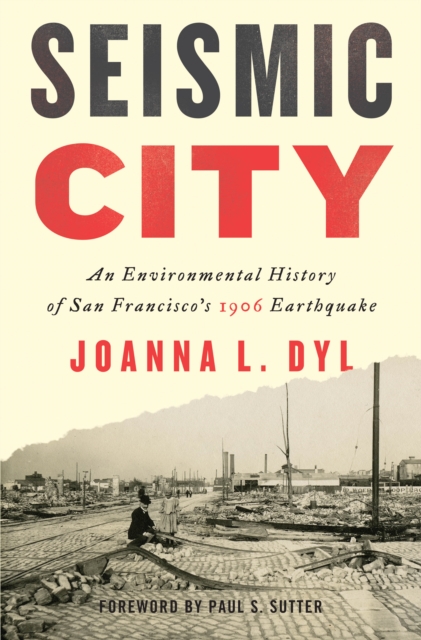
Seismic City
On April 18, 1906, a 7.8-magnitude earthquake shook the San Francisco region, igniting fires that burned half the city. The disaster in all its elements — earthquake, fires, and recovery — profoundly disrupted the urban order and challenged San Francisco’s perceived permanence.The crisis temporarily broke down spatial divisions of class and race and highlighted the contested terrain of urban nature in an era of widespread class conflict, simmering ethnic tensions, and controversial reform efforts. From a proposal to expel Chinatown from the city center to a vision of San Francisco paved with concrete in the name of sanitation, the process of reconstruction involved reenvisioning the places of both people and nature. In their zeal to restore their city, San Franciscans downplayed the role of the earthquake and persisted in choosing patterns of development that exacerbated risk.In this close study of the 1906 San Francisco earthquake, Joanna L. Dyl examines the decades leading up to the catastrophic event and the city’s recovery from it. Combining urban environmental history and disaster studies, Seismic City demonstrates how the crisis and subsequent rebuilding reflect the dynamic interplay of natural and human influences that have shaped San Francisco.
eBook

\The First Mountain to Be Removed\: Yellow Fever Control and the Construction of the Panama Canal
One of the most important achievements of the US era of canal building in Panama was the successful control of yellow fever, a disease that had plagued the region for centuries and had undone the French canal building effort two decades earlier. Indeed, many US commentators depicted the successful control of yellow fever as a form of tropical conquest. This essay argues, to the contrary, that yellow fever control was a process of reengineering urban Panama and of disciplining an urban Panamanian population that was largely immune to yellow fever.
Journal Article
Nature Is History
Sutter reveals that writing \"The World with Us: The State of American Environmental History\" was a long and trying process. He tells that he was challenged not only by the sheer volume of recent work in American environmental history but also by its geographical, temporal, thematic, and methodological breadth. He was also initially daunted because he felt the need to be comprehensive. At a certain point, however, he realizes that the round table format, with responses from distinguished colleagues, could be equally liberating and intimidating, allowing him to make his peace with a selective and personal tour of the field. The respondents have carried some of the water that he could not, and they have pointed to weaknesses in his approach. Here, he answers each of the respondents who commented on his article.
Journal Article

What Gullies Mean: Georgia's \Little Grand Canyon\ and Southern Environmental History
[...] during the interwar years, scholars such as Avery O. Craven, Lewis Cecil Gray, and Arthur R. Hall offered a soil-centric interpretation of the southern agricultural past, pioneering southern environmental history without quite knowing it.5 More recently, a number of agricultural and environmental historians have returned our attention to a tradition of agricultural reform that made soil culture central to antebellum southern politics.6 But, strikingly, neither environmental nor southern historians have yet tackled the history of massive soil erosion in the tobacco and cotton South, a history that coincided with wrenching social and racial transformations in southern society. The Tuskegee and Oconee National Forests, for instance, were cobbled together from submarginal crop lands purchased under the auspices of the Bankhead-Jones Farm Tenant Act of 1937, and they were the sites of New Deal land utilization projects, intensive efforts to reform and modernize agricultural practices and household economies among some of the region's poorest residents and most degraded soils.98 In other words, it has not been unusual in the South for an area with a legacy of extreme degradation to become a landscape of conservation; one might argue that such a transformation has been closer to the rule than the exception.
Journal Article