
Catalogue Search | MBRL


Are you sure you want to remove the book from the shelf?

{{itemTitle}}
18
result(s) for
"Sutton, David, author"
Sort by:

Business continuity in a cyber world : surviving cyberattackes
\"Until recently, if it has been considered at all in the context of business continuity, cyber security may have been thought of in terms of disaster recovery and little else. Recent events have shown that cyberattacks are now an everyday occurrence, and it is becoming clear that the impact of these can have devastating effects on organizations whether large or small, public or private sector. Cybersecurity is one aspect of information security, since the impacts or consequences of a cyberattack will inevitably damage one or more of the three pillars of information security: the confidentiality, integrity or availability of an organization's information assets. The main difference between information security and cyber security is that while information security deals with all types of information assets, cyber security deals purely with those which are accessible by means of interconnected electronic net- works, including the Internet. Many responsible organizations now have robust information security, business continuity and disaster recovery programs in place, and it is not the intention of this book to re-write those, but to inform organizations about the kind of precautions they should take to stave off successful cyberattacks and how they should deal with them when they arise in order to protect the day-to-day businesses.\"--Publisher website.
Book
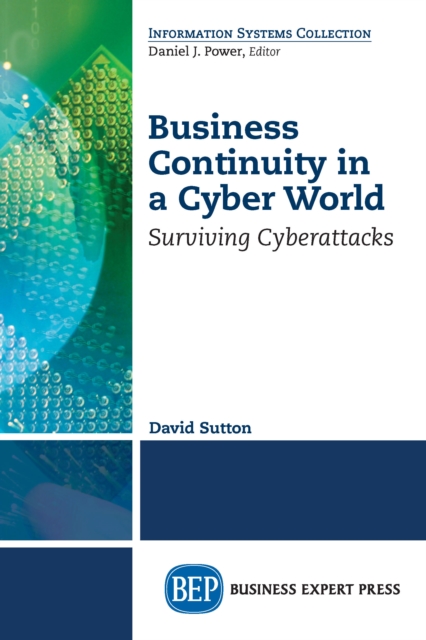
Business continuity in a cyber world
Until recently, if it has been considered at all in the context of business continuity, cybersecurity may have been thought of in terms of disaster recovery and little else. Recent events have shown that cyberattacks are now an everyday occurrence, and it is becoming clear that the impact of these can have devastating effects on organizations whether large and small, and whether in the public or the private sector. Cybersecurity is one aspect of information security, since the impacts or consequences of a cyberattack will inevitably damage one or more of the three pillars of information security: the confidentiality, integrity, or availability of an organization's information assets. The main difference between information security and cybersecurity is that while information security deals with all types of information assets, cybersecurity deals purely with those that are accessible by means of interconnected electronic networks, including the Internet. Many responsible organizations now have robust information security, business continuity, and disaster recovery programs in place, and it is not the intention of this book to rewrite those, but to inform organizations about the kind of precautions they should take to stave off successful cyberattacks and how they should deal with them when they arise in order to protect their day-to-day business.
eBook

Hollywood Blockbusters
Certain Hollywood movies are now so deeply woven into the cultural fabric that lines of their dialogue - for example, 'Make him an offer he can't refuse' - have been incorporated into everyday discourse. The films explored in this book, which include The Godfather, Jaws, The Big Lebowski, Field of Dreams and The Village, have become important cultural myths, fascinating windows into the schisms, tensions, and problems of American culture. Hollywood Blockbusters: The Anthropology of Popular Movies uses anthropology to understand why these movies have such enduring appeal in this age of fragmented audiences and ever-faster spin cycles. Exploring key anthropological issues from ritual, kinship, gift giving and totemism to literacy, stereotypes, boundaries and warfare, this fascinating book uncovers new insights into the significance of modern film classics for students of Film, Media, Anthropology and American Cultural Studies.
eBook

Hollywood blockbusters: the anthropology of popular movies
Why do 'Jaws', 'Field of Dreams', 'The Big Lebowski', and 'The Godfather' remain strikingly popular in this age of fragmented audiences and ever-faster spin cycles? \"Hollywood Blockbusters: The Anthropology of Popular Movies\" argues that these films continue to captivate audiences because they play upon underlying tensions and problems in American culture, much like the myths that anthropologists study in non-Western contexts. In making this argument, the authors employ and extend anthropological theories about ritual, kinship, gift giving, power, egalitarianism, literacy, metalinguistics, stereotypes, and the mysteries of the Other. The results - original insights into modern film classics, American culture, and anthropological theory - will appeal to students of Film, Media, Anthropology, Sociology, and Cultural Studies.
eBook

American Statesmanship
This book, much needed in our public discourse, examines
some of the most significant political leaders in American
history.
With an eye on the elusive qualities of political greatness,
this anthology considers the principles and practices of diverse
political leaders who influenced the founding and development of
the American experiment in self-government. Providing both breadth
and depth, this work is a virtual \"who's who\" from the founding to
modern times. From George Washington to Frederick Douglass and
Elizabeth Cady Stanton to FDR and Ronald Reagan, the book's
twenty-six chapters are thematically organized to include a brief
biography of each subject, his or her historical context, and the
core principles and policies that led to political success or
failure. A final chapter considers the rhetorical legacy of Bill
Clinton, George W. Bush, Barack Obama, and Donald Trump. Nearly all
readers agree that statesmanship makes a crucial difference in the
life of a nation and its example is sorely needed in America today.
These concise portraits will appeal to experts as well as history
buffs. The volume is ideal for leadership and political science
classroom use in conjunction with primary sources.
Contributors: Kenneth L. Deutsch, Gary L. Gregg II, David
Tucker, Sean D. Sutton, Bruce P. Frohnen, Stephanie P. Newbold,
Phillip G. Henderson, Michael P. Federici, Troy L. Kickler,
Johnathan O'Neill, H. Lee Cheek, Jr., Carey Roberts, Hans
Schmeisser, Joseph R. Fornieri, Peter C. Myers, Emily Krichbaum,
Natalie Taylor, Jean M. Yarbrough, Christopher Burkett, Will
Morrisey, Elizabeth Edwards Spalding, Patrick J. Garrity, Giorgi
Areshidze, William J. Atto, David B. Frisk, Mark Blitz, Jeffrey
Crouch, and Mark J. Rozell.
eBook
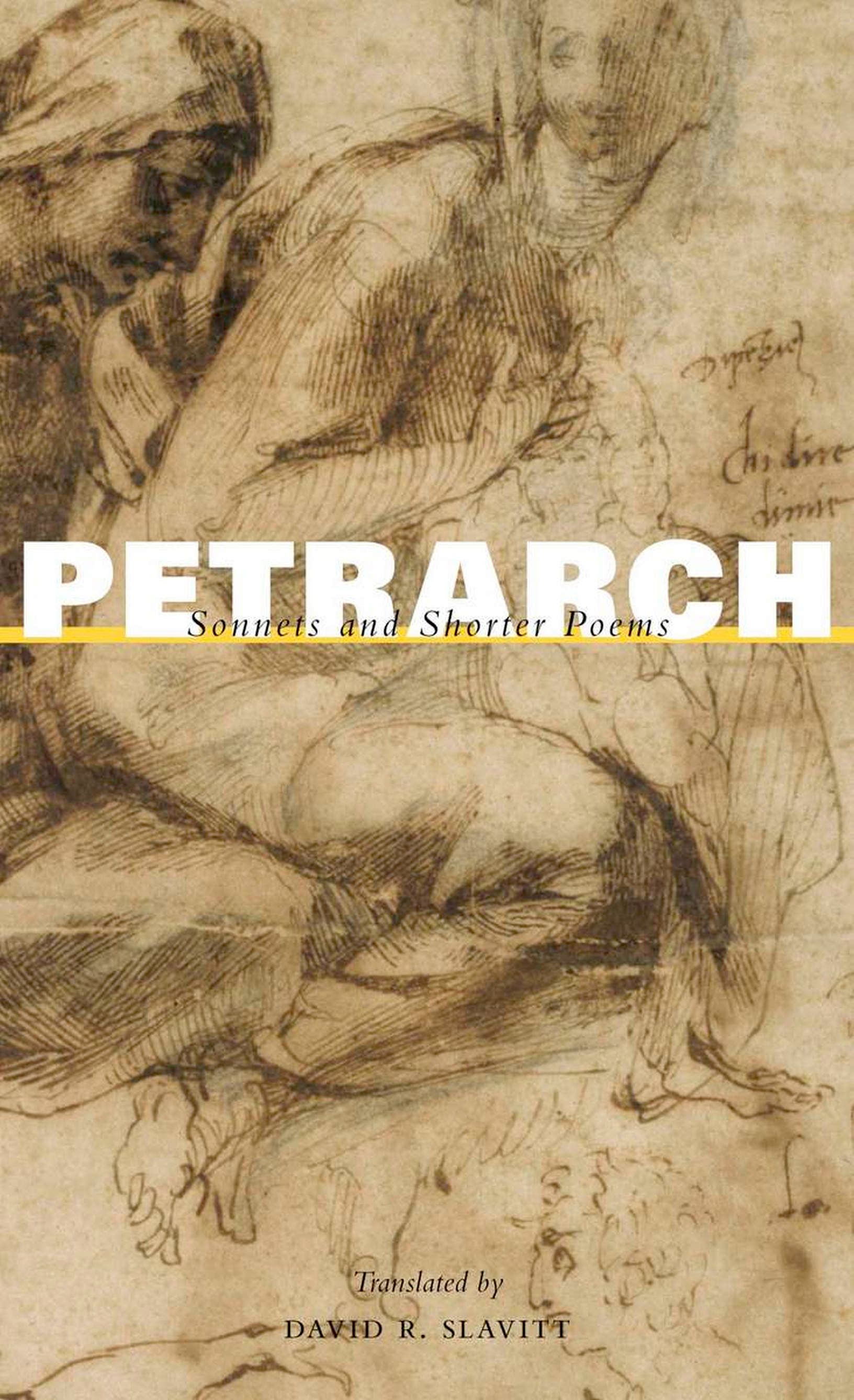
Sonnets and Shorter Poems
In Petrarch’s hands, lyric verse was transformed from an expression of courtly devotion into a way of conversing with one’s own heart and mind. David Slavitt renders the sonnets in Il Canzoniere, along with the shorter madrigals and ballate, in a sparkling and engaging idiom and in rhythm and rhyme that do justice to Petrarch’s achievement.
eBook

The Metabolism of Desire: The Poetry of Guido Cavalcanti
The fact that Cavlacanti?s friend, Dante Alighieri, was a supremely fine poet ought not blind us to Cavalcanti?s own, rather different excellence. Both men were attracted to the dolce stil nuovo, the ?sweet new style? that emerged in thirteenth-century Florence. While Dante?s poetry was devoted to his childhood sweetheart, Beatrice, Cavalcanti?s poetry had more the tang of real-world experience: he struggled against unruly passions and sought instead to overcome love ? a source of torment and despair. It is chiefly through the translations of Rossetti and Pound that English-speaking readers have encountered Cavalcanti?s work. Pound?s famous translation, now viewed by some as antiquated, is remarkably different from the translation provided here in the graceful voice of poet David Slavitt. Working under the significant restraints of Cavalcanti?s elaborate formal structures, Slavitt renders an English translation faithful to the original poetry in both rhyme and rhythm.
eBook

Orlando Furioso
The appearance of David R. Slavitt's translation of Orlando Furioso (\"Mad Orlando\"), one of the great literary achievements of the Italian Renaissance, is a publishing event. With this lively new verse translation, Slavitt introduces readers to Ariosto's now neglected masterpiece - a poem whose impact on Western literature can scarcely be exaggerated. Slavitt's translation captures the energy, comedy, and great fun of Ariosto's Italian.
eBook

The Theban Plays of Sophocles
In this needed and highly anticipated new translation of the Theban plays of Sophocles, David R. Slavitt presents a fluid, accessible, and modern version for both longtime admirers of the plays and those encountering them for the first time. Unpretentious and direct, Slavitt's translation preserves the innate verve and energy of the dramas, engaging the reader-or audience member-directly with Sophocles' great texts. Slavitt chooses to present the plays not in narrative sequence but in the order in which they were composed-Antigone,Oedipus Tyrannos,Oedipus at Colonus-thereby underscoring the fact that the story of Oedipus is one to which Sophocles returned over the course of his lifetime. This arrangement also lays bare the record of Sophocles' intellectual and artistic development.Renowned as a poet and translator, Slavitt has translated Ovid, Virgil, Aeschylus, Aristophanes, Ausonius, Prudentius, Valerius Flaccus, and Bacchylides as well as works in French, Spanish, Portuguese, and Hebrew. In this volume he avoids personal intrusion on the texts and relies upon the theatrical machinery of the plays themselves. The result is a major contribution to the art of translation and a version of the Oedipus plays that will appeal enormously to readers, theater directors, and actors.
eBook
The whole school library handbook 2
This new edition of an ALA bestseller remains an indispensable all-in-one resource for everything related to the school library media center. Articles from dozens of respected authors and experts, culled from popular journals such as Knowledge Quest and School Library Journal, cover everything of interest to the contemporary school librarian, including Professional development and career guidance Information on collection development and school library resources such as books, periodicals, e-mail discussion groups, databases, websites, and more Programming, partnering, promoting, and collaborating for student success Innovative ways to use technology like social networking and e-books in service of education Tips for analyzing and strengthening ongoing programs Building and maintaining healthy relationships with stakeholders Covering a wide range of important information in one handy volume, this stimulating handbook is a must-have for every school librarian.
eBook