
Catalogue Search | MBRL


Are you sure you want to remove the book from the shelf?

{{itemTitle}}
1,667
result(s) for
"Swan, J."
Sort by:
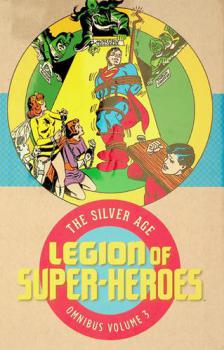
Legion of Super-Heroes, the Silver Age omnibus
\"Now collected in an oversize omnibus edition for the first time, DC proudly presents the LEGION OF SUPERH-HEROES: THE SILVER AGE OMNIBUS! Originally introduced in 1958, the Legion of Super-Heroes is a team of super-powered teenagers from the disparate worlds of the 30th century's United Planets. Each hero had his or her own powers, unique to their planets of origin; together, they stood against evil across the galaxy. Together with 20th century hero Superboy, this team--originally made up of Saturn Girl, Lightning Lad and Cosmic Boy, but soon numbering in the dozens--fought for justice as they dealt with adolescent insecurities.\"-- Provided by publisher.
Book


Unifying scrambling, thermalization and entanglement through measurement of fidelity out-of-time-order correlators in the Dicke model
Scrambling is the process by which information stored in local degrees of freedom spreads over the many-body degrees of freedom of a quantum system, becoming inaccessible to local probes and apparently lost. Scrambling and entanglement can reconcile seemingly unrelated behaviors including thermalization of isolated quantum systems and information loss in black holes. Here, we demonstrate that fidelity out-of-time-order correlators (FOTOCs) can elucidate connections between scrambling, entanglement, ergodicity and quantum chaos (butterfly effect). We compute FOTOCs for the paradigmatic Dicke model, and show they can measure subsystem Rényi entropies and inform about quantum thermalization. Moreover, we illustrate why FOTOCs give access to a simple relation between quantum and classical Lyapunov exponents in a chaotic system without finite-size effects. Our results open a path to experimental use FOTOCs to explore scrambling, bounds on quantum information processing and investigation of black hole analogs in controllable quantum systems.
The scrambling of quantum information in a many-body system leads to the emergence of statistical mechanics and chaotic behaviour. Here the authors establish quantitative relationships between experimentally-measureable correlators, the Rényi entropy and Lyapunov exponents in the Dicke model.
Journal Article

Shattered time: can a dissipative time crystal survive many-body correlations?
We investigate the emergence of a time crystal (TC) in a driven dissipative many-body spin array. In this system the interplay between incoherent spin pumping and collective emission stabilizes a synchronized non-equilibrium steady state which in the thermodynamic limit features a self-generated time-periodic pattern imposed by collective elastic interactions. In contrast to prior realizations where the time symmetry is already broken by an external drive, here it is only spontaneously broken by the elastic exchange interactions and manifest in the two-time correlation spectrum. Employing a combination of exact numerical calculations and a second-order cumulant expansion, we investigate the impact of many-body correlations on the TC formation and establish a connection between the regime where it is stable and where the system features a slow growth rate of the mutual information. This observation allows us to conclude that the TC studied here is an emergent semi-classical out-of-equilibrium state of matter. We also confirm the rigidity of the TC to single-particle dephasing. Finally, we discuss an experimental implementation using long lived dipoles in an optical cavity.
Journal Article

Cavity-mediated collective spin-exchange interactions in a strontium superradiant laser
Ensembles of atoms have emerged as powerful simulators of many-body dynamics. Engineering controllable interactions between the atoms is crucial, be it direct or through a mediator. Norcia et al. developed a flexible alternative to existing atomic simulators in a system consisting of strontium atoms placed in an optical cavity. Two atomic states connected by a clock transition each served as an effective spin, with long-range spin-exchange interactions mediated by the cavity photons. With improvements, the setup is expected to be amenable to simulating nonequilibrium quantum dynamics and to have applications in metrology. Science , this issue p. 259 Engineered interactions between strontium atoms in an optical cavity lead to the emergence of a many-body energy gap. Laser-cooled and quantum degenerate atoms are being pursued as quantum simulators and form the basis of today’s most precise sensors. A key challenge toward these goals is to understand and control coherent interactions between the atoms. We observe long-range exchange interactions mediated by an optical cavity, which manifest as tunable spin-spin interactions on the pseudo spin-½ system composed of the millihertz linewidth clock transition in strontium. This leads to one-axis twisting dynamics, the emergence of a many-body energy gap, and gap protection of the optical coherence against certain sources of decoherence. Our observations will aid in the future design of versatile quantum simulators and the next generation of atomic clocks that use quantum correlations for enhanced metrology.
Journal Article

AAV serotype 2/1-mediated gene delivery of anti-inflammatory interleukin-10 enhances neurogenesis and cognitive function in APP+PS1 mice
Brain inflammation is a double-edged sword. It is required for brain repair in acute damage, whereas chronic inflammation and autoimmune disorders are neuropathogenic. Certain proinflammatory cytokines and chemokines are closely related to cognitive dysfunction and neurodegeneration. Representative anti-inflammatory cytokines, such as interleukin (IL)-10, can suppress neuroinflammation and have significant therapeutic potentials in ameliorating neurodegenerative disorders such as Alzheimer's disease (AD). Here, we show that adeno-associated virus (AAV) serotype 2/1 hybrid-mediated neuronal expression of the mouse
IL-10
gene ameliorates cognitive dysfunction in amyloid precursor protein+ presenilin-1 bigenic mice. AAV2/1 infection of hippocampal neurons resulted in sustained expression of IL-10 without its leakage into the blood, reduced astro/microgliosis, enhanced plasma amyloid-β peptide (Aβ) levels and enhanced neurogenesis. Moreover, increased levels of IL-10 improved spatial learning, as determined by the radial arm water maze. Finally, IL-10-stimulated microglia enhanced proliferation but not differentiation of primary neural stem cells in the co-culture system, whereas IL-10 itself had no effect. Our data suggest that
IL-10
gene delivery has a therapeutic potential for a non-Aβ-targeted treatment of AD.
Journal Article

effects of exercise and physical activity participation on bone mass and geometry in postmenopausal women: a systematic review of pQCT studies
The cumulative risk of fracture for a postmenopausal woman over the age of 50 can reach up to 60%. Exercise has the potential to modify fracture risk in postmenopausal women through its effects on bone mass and geometry; however, these effects are not well characterized. To determine the effects of exercise on bone mass and geometry in postmenopausal women, we conducted a systematic review of the literature. We included all randomized controlled trials, cross-sectional studies, and prospective studies that used peripheral quantitative computed tomography to assess the effects of exercise on bone mass and geometry in this population. Exercise effects appear to be modest, site-specific, and preferentially influence cortical rather than trabecular components of bone. Exercise type also plays a role, with the most prominent mass and geometric changes being observed in response to high-impact loading exercise. Exercise appears to positively influence bone mass and geometry in postmenopausal women. However, further research is needed to determine the types and amounts of exercise that are necessary to optimize improvements in bone mass and geometry in postmenopausal women and determine whether or not these improvements are capable of preventing fractures.
Journal Article
Bang-bang shortcut to adiabaticity in the Dicke model as realized in a Penning trap experiment
We introduce a bang-bang shortcut to adiabaticity for the Dicke model, which we implement via a two-dimensional array of trapped ions in a Penning trap with a spin-dependent force detuned close to the center-of-mass drumhead mode. Our focus is on employing this shortcut to create highly entangled states that can be used in high-precision metrology. We highlight that the performance of the bang-bang approach is comparable to standard preparation methods, but can be applied over a much shorter time frame. We compare these theoretical ideas with experimental data which serve as a first step towards realizing this theoretical procedure for generating multi-partite entanglement.
Journal Article

Ecology of domestic dogs Canis familiaris as an emerging reservoir of Guinea worm Dracunculus medinensis infection
Global eradication of human Guinea worm disease (dracunculiasis) has been set back by the emergence of infections in animals, particularly domestic dogs Canis familiaris. The ecology and epidemiology of this reservoir is unknown. We tracked dogs using GPS, inferred diets using stable isotope analysis and analysed correlates of infection in Chad, where numbers of Guinea worm infections are greatest. Dogs had small ranges that varied markedly among villages. Diets consisted largely of human staples and human faeces. A minority of ponds, mostly <200 m from dog-owning households, accounted for most dog exposure to potentially unsafe water. The risk of a dog having had Guinea worm was reduced in dogs living in households providing water for animals but increased with increasing fish consumption by dogs. Provision of safe water might reduce dog exposure to unsafe water, while prioritisation of proactive temephos (Abate) application to the small number of ponds to which dogs have most access is recommended. Fish might have an additional role as transport hosts for Guinea worm, by concentrating copepods infected with worm larvae.
Journal Article
Bell correlations between momentum-entangled pairs of 4He atoms
Nonlocal entanglement between pair-correlated particles is a highly counter-intuitive aspect of quantum mechanics, where measurement on one particle can instantly affect the other, regardless of distance. While the rigorous Bell’s inequality framework has enabled the demonstration of such entanglement in photons and atomic internal states, no experiment has yet involved motional states of massive particles. Here we report the experimental observation of Bell correlations in motional states of momentum-entangled ultracold helium atoms. Momentum-entangled pairs are first generated via
s
-wave collisions. Using a Rarity-Tapster interferometer and a Bell-test framework, we observe atom-atom correlations required for violation of a Bell inequality. This result shows the potential of ultracold atoms for fundamental tests of quantum mechanics and opens new avenues to studying gravitational effects in quantum states.
Momentum-entangled atom pairs are used to demonstrate quantum non-locality, where changing one atom in an entangled pair instantly alters the state of the other atom. This result paves the way to study interactions between quantum states and gravity.
Journal Article