
Catalogue Search | MBRL


Are you sure you want to remove the book from the shelf?

{{itemTitle}}
29
result(s) for
"Swenson-Wright, John"
Sort by:

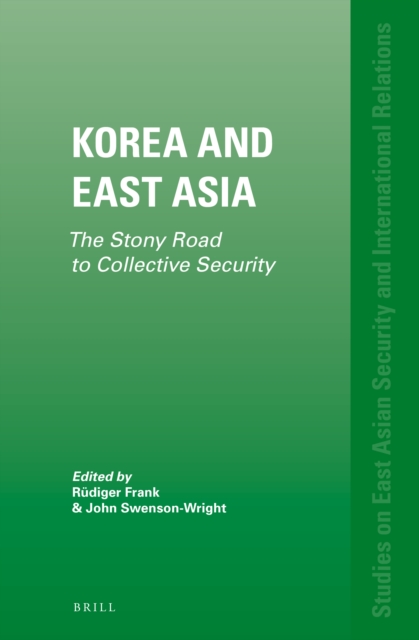
Korea and East Asia
This book critically addresses the potential of the liberal concept of collective security to provide a solution to conflict in East Asia, with a focus on the Korean peninsula.
eBook

Japan's foreign policy: Maverick moves on defence
At a moment of great international uncertainty, Japan is to elect a new government on 9 Nov. Faced with the nuclear threat from North Korea & challenges over Iraq, Prime Minister Junichiro Koizumi will need all his maverick leadership skills if he is to extend his authority. Adapted from the source document.
Magazine Article
Pacific Century
While there is no mistaking the challenge that Japan faces on the economic front, a pessimistic outlook is arguably less valid where the country's foreign and security policies are concerned. The present environment, both in terms of external opportunities--particularly the improved relationship with Washington--and domestic factors, offers perhaps the best post-war opportunity for the government to radically redefine its security approach.
Magazine Article

Diplomatic options are limited - war could be catastrophic
What can be done to move the parties back from the brink of a mutually devastating conflict? A calibrated military response from the South and its allies is overly risky and threatens loss of civilian and military life on a huge scale, as well as massive economic dislocation - the ripple effects of which would be felt throughout the region and the world. Sanctions have been tried many times before and always fail. This leaves diplomacy as the only creditable option - and a long-term process of engagement between the international community and North Korea.
Newspaper Article

North Korea got blast of publicity it craved
John Swenson-Wright believes North Korea's rocket launch was a cynical exercise aimed at reminding the world that it remains a potent nuclear threat South Korean women in the capital Seoul read newspapers reporting North Korea's firing of a rocket over Japan yesterday Second, Mr [Obama]'s new bold diplomatic push for a nuclear-free world, signalled through his speech in Prague, gives the US a potentially new moral authority that the Bush administration lacked, and this may help in crafting a more coordinated global diplomatic approach to the North Korean nuclear challenge. Yesterday's missile launch undoubtedly makes this task more difficult in the short term, since critics of engagement will be quick to denounce such initiatives as 'rewarding' North Korea's 'bad behaviour'.
Newspaper Article
North Korea got blast of publicity it craved
The likely response from America and its allies will be to signal their displeasure forcefully via the United Nations, but to also patiently allow the post missile-test 'dust to settle' and then redouble their diplomatic initiatives. Second, Mr [Obama]'s new bold diplomatic push for a nuclear-free world, signalled through his speech in Prague, gives the US a potentially new moral authority that the Bush administration lacked, and this may help in crafting a more coordinated global diplomatic approach to the North Korean nuclear challenge. Yesterday's missile launch undoubtedly makes this task more difficult in the short term, since critics of engagement will be quick to denounce such initiatives as 'rewarding' North Korea's 'bad behaviour'.
Newspaper Article
North Korea got blast of publicity it craved
The likely response from America and its allies will be to signal their displeasure forcefully via the United Nations, but to also patiently allow the post missile-test 'dust to settle' and then redouble their diplomatic initiatives. Second, Mr [Obama]'s new bold diplomatic push for a nuclear-free world, signalled through his speech in Prague, gives the US a potentially new moral authority that the Bush administration lacked, and this may help in crafting a more coordinated global diplomatic approach to the North Korean nuclear challenge. Yesterday's missile launch undoubtedly makes this task more difficult in the short term, since critics of engagement will be quick to denounce such initiatives as 'rewarding' North Korea's 'bad behaviour'.
Newspaper Article