
Catalogue Search | MBRL


Are you sure you want to remove the book from the shelf?

{{itemTitle}}
87
result(s) for
"Tabachnick, David"
Sort by:

The great reversal : how we let technology take control of the planet
\"Every day, we are presented with new technologies that can influence human thought and action, such as psychopharmaceuticals, new generation performance enhancing drugs, elective biotechnology, and gastric bypass surgery. Have we let technology go too far in this respect? In The Great Reversal, David Edward Tabachnick contends that this question may not be unique to contemporary society. Through an assessment of the great works of philosophy and politics, Tabachnick explores the largely unrecognized history of technology as an idea.
Book

ON RAWLSIAN CONTRACTUALISM AND THE PRIVATE LAW
Shifts in academic paradigms are rare. Still, it was not long ago that the values taken to govern the private law were thought to be distinct from the values governing taxation and transfer. This was thought to be true, although for different reasons, in both philosophical and economic accounts of private law. The question was, for example, whether the law of contract and tort is properly governed by the values of autonomy and corrective justice or by distributive concerns instead. The conventional, indeed, the nearly 'universal' view of Rawlsianism - the overwhelmingly dominant theory of liberalism and distributive justice - was that the private law lies beyond the scope of Rawls's two principles of justice. Simply put, for Rawlsianism, the private law was not thought to be the province of distributive concerns. In more academic terms, the private law is not properly understood to be subject to Rawls’s range-limited principles of justice. There has been a welcome academic shift in perspective with regard to Rawls and the private law. This shift points to the conclusion that despite decades of international debate, there is a Rawlsian account of the private law satisfactory to contractualist theory of its kind. If we are correct, this account conflicts with important aspects of alternative approaches to private law, theoretical and doctrinal. Whether the Rawlsian account is fully satisfactory to those committed to alternative approaches is an open question; but if not, that is, in our view, a question that should be addressed to the acceptability of Rawlsianism itself.
Journal Article

Enduring empire : ancient lessons for global politics
Explores ways in which ancient theories of empire can inform our understanding of present-day international relations.
Book

Challenging Theocracy
Commonly perceived as a direct threat to the practice of liberal democracy, the global reemergence of theocratic claims to political rule is a misunderstood development of twenty-first-century politics. Analyzing the relationship between religion and politics throughout the Middle East, Africa, and the United States, as well as classical and medieval political philosophical sources, Challenging Theocracy critiques the contemporary formation of theocracy.
Providing an account of the origins and influence of theocracy, the chapters in this volume explore ancient texts that articulate the theocratic political ideas that continue to bubble under the surface of political life today. In an effort to consider how regimes extend beyond their immediate institutional and legal forms and find their foundation in timeless ideas, the contributors examine ancient and modern political thought to better understand their persistent power and impact on global politics.
eBook

Enduring Empire
An exploration of the ways in which ancient theories of empire can inform our understanding of present-day international relations,Enduring Empireengages in a serious discussion of empire as it relates to American foreign policy and global politics.
eBook

Challenging Theocracy
Analyzing the relationship between religion and politics
throughout the Middle East, Africa, and the United States, as well
as classical and medieval political philosophical sources,
Challenging Theocracy critiques the contemporary formation
of theocracy and the persistence of theocratic ideas around the
world.
eBook

Two Models of Ownership: How Commons Has Co-Existed with Private Property
This article challenges the claim by many historians that the rise of capitalism requires the destruction of common property systems. In contrast to the English case in which commons were enclosed, French peasants used their common property system to regulate the market, provide a rural safety net and a democratic check on elites, while urban industry developed. European battles over common property replayed in surprising ways in colonial African countries such as Sierra Leone, and echoes reemerge today. The West African country of Guinea tests two possible paths to development of a market society: the English path and the French path. Interviews with key government officials collected in 1993 help explain why Guinea, despite adopting a land law in 1992 inspired by the English path, has so far failed to widely apply the law and, in fact, is following the French path. The United States pursued a policy of replacing American Indian common property systems with exclusive individual property rights. Nonetheless, Indian common property survives in the form of recent recognition of Indian offreservation hunting and fishing rights. The Menominee reservation successfully resisted the destruction of its common property system and today participates in the market in a manner that preserves reservation ecology, democratic government, and Menominee cultural identity. Rethinking the meaning of French, African, and U. S. accommodation to common property systems offers important lessons for contemporary development policies in Africa and around the world.
Journal Article
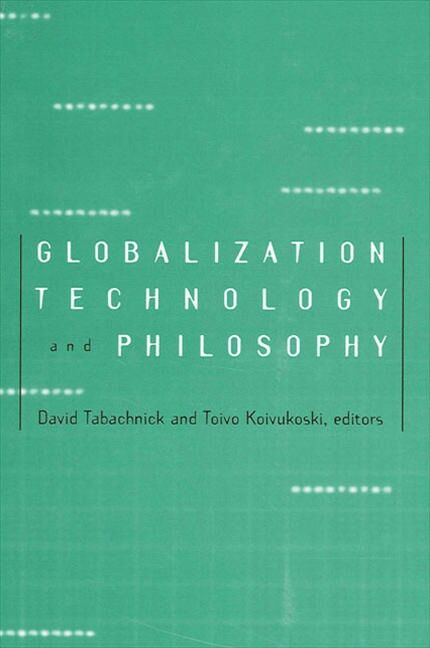
Globalization, Technology, and Philosophy
Rather than focusing on political, economic, or social manifestations of technology and globalization, this book examines these related phenomena from a philosophical perspective. Prominent thinkers from philosophy, sociology, and political science reflect on a variety of important topics and individuals, including the Internet, citizenship, individuality, the human condition, spirituality, Nietzsche, Heidegger, Kojève, and Strauss. The contributors ask whether political community and citizenship are still possible in an age of technology and globalization, and what it means to be human in a globalized technological society.
eBook

MAXIMIZING INTELLECTUAL PROPERTY: OPTIMALITY, SYNCHRONICITY, AND DISTRIBUTIVE JUSTICE
Distributive accounts of law are undergoing a renaissance; an unprecedented paradigm shift away from the wealth-maximizing approach to law and legal theory and toward a distributive view.2 In line with this shift, this Article breaks new ground in providing a needed framework for a distributive theory of intellectual property law and innovation policy and articulates an appealing, egalitarian alternative to wealth- or welfare-maximizing accounts of intellectual property and innovation policy. Intellectual property has traditionally been understood as the legal doctrine surrounding copyrights, patents, and trade secrets.5 But legal institutions well beyond these areas of law are crucial to setting optimal incentives surrounding innovation and the governance and control of knowledge goods; this broader range of legal institutions can be described as innovation policy. To take another example, in the context of accidents, tort law is ideally understood as justified by the backward-looking value of corrective justice,12 or as instantiating roughly optimal deterrence, so as to efficiently reduce, spread, and distribute accident costs.13 The ongoing debate over the structure of private law is no longer strictly confined to a dispute over wealth maximization on the one hand and autonomy or corrective justice on the other. [...]recent pathbreaking legal scholarship has come to forcefully reject this view, despite longstanding entrenchment.23 This scholarship has recast the role that legal rules play in achieving overarching ideals of equality and distributive justice.24 Leading legal scholars have explicitly endorsed a broad role for distributive values in the construction of non-tax and transfer legal rules, arguing, for example, that the regulatory rules of administrative agencies-in addition to the rules of taxation and transfer-may serve as the proper domain of distributive justice.25 More expansively still, this growing literature has endorsed a distributive role for the private law in bankruptcy,26 contract,27 property,28 tort,29 and trusts and estates.30 An important paradigm shift appears to be upon the legal academy.
Journal Article

Intellectual Property Doctrine and Midlevel Principles
Recent scholarship on intellectual property (\"IP\") law argues that doctrinal and theoretical sophistication in IP requires an understanding of \"midlevel\" principles, purportedly constitutive of IP's positive law. Proponents of this line of scholarship claim these principles serve as a bridge, connecting IP doctrine and practice with deeper foundational philosophical principles. They assert that such midlevel principles—the principles of proportionality, non-removal, dignity, and efficiency, for instance—explain, predict, and justify IP cases. According to this scholarship, IP doctrine, case outcomes, and statutes are suffused with midlevel principles. In turn, the scholarship treats midlevel principles as consistent with broadly conflicting foundational accounts of property entitlement, from Lockean liberalism on the economic right, to Rawlsian egalitarianism on the left. The result is an account of IP law that unifies practice and the positive law with facially conflicting accounts of foundational property theories. This Essay argues that such claims to IP unification—however revolutionary—are untenable. Drawing from prominent IP cases, including cases addressing the patentability of DNA, this Essay demonstrates that midlevel principles are not rigorously embodied in the positive law of IP and therefore cannot serve to explain or predict case outcomes. Further, these midlevel principles conflict with important liberal \"foundational\" accounts of property, thereby calling into question the justificatory force such principles might hold. Moreover, contrary to Professor Robert P. Merges's view, different foundational principles, whether maximizing wealth, net aggregate value, or the position of the least well-off, will yield different substantive outcomes in IP cases. Accordingly, this Essay shows that any project conjoining this set of midlevel principles with maximizing distributive principles cannot be sustained. A sophisticated understanding of IP, its theory, and crucially its legal doctrine and practice, does not, and should not, include midlevel principles understood to be consistent with such variously competing foundations. Instead, this Essay acknowledges that courts deciding IP cases often invoke forward-looking foundational principles, whether aimed at utility or distributive justice.
Journal Article