
Catalogue Search | MBRL


Are you sure you want to remove the book from the shelf?

{{itemTitle}}
637
result(s) for
"Talbott, Strobe"
Sort by:
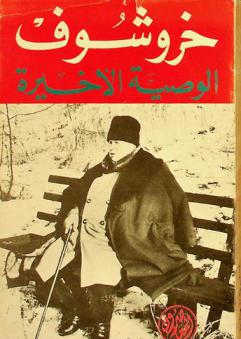
خروشوف : الوصية الأخيرة
يتناول هذا الكتاب مذكرات الزعيم السوفييتي (خروشوف) ويستعرض الكتاب في طياته المحتويات التالية : مدخل، مقدمة، تمهيد، القسم الأول : المواطنون والرفاق، ويشمل : 1-المارشال جوكوف والفريق المناوئ للحزب، 2-الأسطول : سقوط الأميرال كوزنتسوف، 3-قاذفات القنابل والصواريخ، 4-أرباب الفكر العلمي، 5-النخبة الخلاقة، 6-إسكان الشعب، 7-إطعام الشعب، 8-بولونيا : كسب حليفة، 9-أوروبا الشرقية : عقد حلف، 10-نقطة سوداء في الحلف، 11-الصين. القسم الثاني : السياسة الخارجية والرحلات... إلى آخر موضوعات الكتب.
Book

Clinton and Yeltsin
When leaders in the Kremlin have surprised the world, it has almost always been bad news. The notable exception came in the final fifteen years of the twentieth century. The last leader of the USSR, Mikhail Gorbachev, and his protégé-turned-rival-and-successor, Boris Yeltsin, the first president of the Russian Federation, set about to democratize society. They wanted to permit freedom of speech and the press, eradicate repression, and cooperate with the West, particularly the United States. As the first American president elected after the end of the Cold War, Bill Clinton made his relationship with Yeltsin a priority. Yeltsin reciprocated. The two...
Journal Article

The Marshall Plan and the Shaping of American Strategy
How the United States helped restore a Europe battered by World War II and created the foundation for the postwar international order Seventy years ago, in the wake of World War II, the United States did something almost unprecedented in world history: It launched and paid for an economic aid plan to restore a continent reeling from war. The European Recovery Plan—better known as the Marshall Plan, after chief advocate Secretary of State George C. Marshall—was in part an act of charity but primarily an act of self-interest, intended to prevent postwar Western Europe from succumbing to communism. By speeding the recovery of Europe and establishing the basis for NATO and diplomatic alliances that endure to this day, it became one of the most successful U.S. government programs ever. The Brookings Institution played an important role in the adoption of the Marshall Plan. At the request of Arthur Vandenberg, chairman of the Senate Foreign Relations Committee, Brookings scholars analyzed the plan, including the specifics of how it could be implemented. Their report gave Vandenberg the information he needed to shepherd the plan through a Republican-dominated Congress in a presidential election year. In his foreword to this book, Brookings president Strobe Talbott reviews the global context in which the Truman administration pushed the Marshall Plan through Congress, as well as Brookings' role in that process. The book includes Marshall's landmark speech at Harvard University in June 1947 laying out the rationale for the European aid program, the full text of the report from Brookings analyzing the plan, and the lecture Marshall gave upon receiving the Nobel Peace Prize in 1953. The book concludes with an essay by Bruce Jones and Will Moreland that demonstrates how the Marshall Plan helped shape the entire postwar era and how today's leaders can learn from the plan's challenges and successes.
eBook

Engaging India
On May 11, 1998, three nuclear devices detonated under the Thar Desert in India shook the surrounding villages -and the rest of the world. The immediate effect was to plunge U.S.-India relations, already vexed by decades of tension and estrangement, into a new crisis. The situation deteriorated further when Pakistan responded in kind two weeks later, testing a nuclear weapon for the first time. Engaging India is the firsthand story of the diplomacy conducted between the United States and the two South Asian neighbors after the nuclear tests. In this book, the American point man for the dialogue takes us behind the scenes of one of the most suspenseful and consequential diplomatic dramas of our time, reconstructing what happened -and why -with narrative verve, rich human detail, and penetrating analysis. From June 1998 to September 2000, in what was the most extensive dialogue ever between the United States and India, Deputy Secretary of State Strobe Talbott and Indian Minister of External Affairs Jaswant Singh met fourteen times in seven countries on three continents. They discussed both the immediate items on the security and nonproliferation agenda, as well as their wider visions for the U.S.-India relationship and the potential for economic and strategic cooperation between the two countries. As the relationship improved over the course of the talks, the United States was to able play a role in averting the possibility of nuclear war over the contested territory of Kashmir in the summer of 1999 -the specifics of which are included for the first time in this book, told in way only a protagonist can. The Talbott-Singh diplomacy laid the groundwork for the transformational visit of President Bill Clinton to India in March 2000 and helped end fifty years of estrangement between the world's two largest democracies. As pursuit of Islamic militants continues across South Asia, the increased cooperation established by Talbott and Singh will be an invaluable asset for current and future leaders of both countries. This book provides, for the first time, an insider's perspective on the ground-breaking efforts to build a cordial relationship between the United States and India. The general reader will find it accessible, and more important, an indispensable tool for understanding America's current role in South Asia, and the prospects for improved relations.
eBook

Engaging India
In this revised edition of the highly praised Engaging India, Strobe Talbott updates his bestselling diplomatic account of America's parallel negotiations with India and Pakistan over nuclear proliferation in the late 1990s. The update looks at recent nuclear dealings between India and the United States, including Indian Prime Minister Manmohan Singh's 2005 visit to America. Under the highly controversial agreement that emerged, the United States would give India access to U.S. nuclear technology and conventional weapons systems. In exchange, India would place its civilian nuclear program under international monitoring and continue the ban on nuclear testing. Praise for the hardback edition \"A fascinating study of how diplomatic dialogue can slowly broaden to include subtle considerations of the domestic politics and foreign policies of both countries involved.\" Foreign Affairs \"An important addition to the literature of modern diplomatic history.\" -Choice \"Detailed and revealing... an honest behind-the-scenes look at how countries make and defend policies... A must-read for any student of diplomacy.\" -Outlook (India) \"A rapidly engrossing work and a welcome addition to modern world history shelves.\" -Reviewer's Bookwatch \"A highly engaging book; lucid, informative and at times, amusing.\" -International Affairs
eBook
Fast Forward
\"Those of us alive today are the first generation to know that we live in the Age of Global Warming. We may also be the last generation to have any chance of doing something about it. Our forebears had the excuse of ignorance. Our descendants will have the excuse of helplessness. We have no excuse.\" -From Chapter One
Fast Forwardis equal parts science primer, history lesson, policy prescription, and ethical treatise. This pithy and compelling book makes clear what we know and don't know about global warming; why the threat demands prudent and urgent action; why the transition to a low-carbon economy will be the most difficult political and economic transaction in history; and how it requires nothing less than a revolution in our sense of civic responsibility.
William Antholis and Strobe Talbott guide the reader through two decades of climate change diplomacy, explaining the national and international factors that have influenced and often impeded the negotiations. Their brisk narrative includes behind-the-scenes coverage of Barack Obama's impromptu meeting with key leaders in Copenhagen that broke a logjam and salvaged an agreement. The near-disaster of that summit demonstrated how the United Nations cannot move forward fast enough to produce a global deal. Instead, the \"Big Four\" of the United States, the European Union, China, and India must drive the next stage of the process. Antholis and Talbott also recommend a new international mechanism modeled on the General Agreement on Tariffs and Trade that would monitor national commitments and create incentives for other countries to coordinate their efforts to cut emissions.
Antholis and Talbott put their recommendations for immediate congressional and diplomatic action into the larger context of our obligation to future generations. They note that this theme is stressed by a diverse coalition of religious leaders who are calling for ambitious political action on climate change. The world we leave to our children and grandchildren is not an abstraction, or even just a legacy; we must think about what kind of world that will be in deciding how live -and act -today.
eBook

Fast Forward: Ethics and Politics in the Age of Global Warming
Clearly establishes how and why global warming is a major threat and why urgent action is needed, including the history of domestic and global negotiations on global warming and the players who must be involved in finding a solution to climate change to protect future generations
eBook

The Soviet Mind
\"Berlin's great powers of observation combine with his great knowledge and literary gifts to provide us with a fascinating series of insights.\"-Geoffrey RiklinGeorge Kennan, the architect of U.S. policy toward the Soviet Union, called Isaiah Berlin \"the patron saint among the commentators of the Russian scene.\" InThe Soviet Mind, Berlin proves himself worthy of that accolade. Although the essays in this book were originally written to explore tensions between Soviet communism and Russian culture, the thinking about the Russian mind that emerges is as relevant today under Putin's post-communist Russia as it was when this book first appeared more than a decade ago.This Brookings Classic brings together Berlin's writings about the Soviet Union. Among the highlights are accounts of Berlin's meetings with Russian writers in the aftermath of the war; a celebrated memorandum written for the British Foreign Office in 1945 about the state of the arts under Stalin; Berlin's account of Stalin's manipulative \"artificial dialectic\"; portraits of Pasternak and poet Osip Mandel'shtam; Berlin's survey of Russian culture based on a visit in 1956; and a postscript reflecting on the fall of the Berlin Wall and other events in 1989.Henry Hardy prepared the essays for publication; his introduction describes their history. In his revised foreword, Brookings' Strobe Talbott, a longtime expert on Russia and the Soviet Union, relates the essays to Berlin's other work.The essays and other pieces inThe Soviet Mind-including a new essay, \"Marxist versus Non-Marxist Ideas in Soviet Policy\"-represent Berlin at his most brilliant and are invaluable for policymakers, students, and anyone interested in Russian politics and thought-past, present, and future.
eBook
US Leadership and the Balkan Challenge: Remarks by Deputy Secretary of State Strobe Talbott
White House Staff and Office Files - National Security Council - Democracy/Human Rights - Halperin, Mort -Bosnia War Crimes Tribunal
eBook

Good Intentions, Bad Outcomes: Social Policy, Informality, and Economic Growth in Mexico
Despite various reform efforts, Mexico has experienced economic stability but little growth. Today more than half of all Mexican workers are employed informally, and one out of every four is poor. Good Intentions, Bad Outcomes argues that incoherent social programs significantly contribute to this state of affairs and it suggests reforms to improve the situation. Over the past decade, Mexico has channeled an increasing number of resources into subsidizing the creation of low-productivity, informal jobs. These social programs have hampered growth, fostered illegality, and provided erratic protection to workers, trapping many in poverty. Informality has boxed Mexico into a dilemma: provide benefits to informal workers at the expense of lower growth and reduced productivity or leave millions of workers without benefits. Former finance official Santiago Levy proposes how to convert the existing system of social security for formal workers into universal social entitlements. He advocates eliminating wage-based social security contributions and raising consumption taxes on higher-income households to simultaneously increase the rate of growth of GDP, reduce inequality, and improve benefits for workers. Go od Intentions, Bad Outcomes considers whether Mexico can build on the success of Progresa-Oportunidades, a targeted poverty alleviation program that originated in Mexico and has been replicated in over 25 countries as well as in New York City. It sets forth a plan to reform social and economic policy, an essential element of a more equitable and sustainable development strategy for Mexico.
eBook