
Catalogue Search | MBRL


Are you sure you want to remove the book from the shelf?

{{itemTitle}}
121
result(s) for
"Talisse, Robert B"
Sort by:

Overdoing democracy : why we must put politics in its place
\"'The cure for democracy's ills is more democracy.' This popular adage is false. Contemporary democracy faces problems that derive from the tendency among citizens to overdo democracy. In this book, Robert Talisse argues that even in a democracy, politics must be put in its place\"-- Provided by publisher.
Book

Pragmatism Deflated
In Cambridge Pragmatism, Cheryl Misak rounds out the distinctive narrative regarding Anglo-American philosophy in the 20th Century that she initiated in her 1995 book on Verificationism and subsequently developed significantly in her 2013 The American Pragmatists. In this brief essay, I address Cambridge Pragmatism in the context of the broader historical account she has been developing.
Journal Article


Happiness and goodness : philosophical reflections on living well
\"How should we evaluate the success of each person's life? Countering the prevalent philosophical perspective on the subject, Steven M. Cahn and Christine Vitrano defend the view that our well-being is dependent not on particular activities, accomplishments, or awards but on finding personal satisfaction while treating others with due concern\"--Amazon.com.
BOOK
Deweyan Democracy and the Rawlsian Problematic: A Reply to Joshua Forstenzer
In “Deweyan Democracy, Robert Talisse, and the Fact of Reasonable Pluralism,” Joshua Forstenzer defends Deweyan democracy against my argument that it fails an intuitive test for political legitimacy proposed by John Rawls. In this brief reply, I argue that although Forstenzer offers an attractive interpretation of Deweyan democracy, his defense nonetheless does not succeed, but arguably exacerbates the original difficulty.
Journal Article
Pragmatism, Truth, and Politics
This paper defends a Peircean account truth in politics and ethics. It also sets out a novel epistemic conception of democracy. Roughly, if we are to aim at truth, we must take into account all the relevant experience and sustain the conditions under which prevailing arrangements may be contested, an idea which is aligned with democratic politics. Along the way, it identifies a mistake inspired by Dewey and one by Peirce and shows how these mistakes are manifest in contemporary political philosophy.
Journal Article
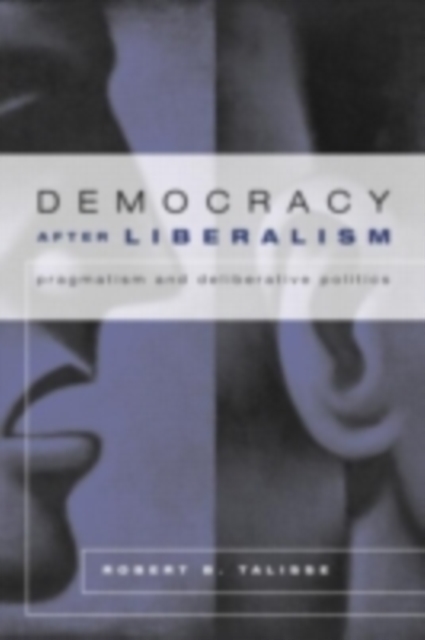
Democracy After Liberalism
This book critically evaluates liberalism, the dominant attempt in the tradition of political philosophy to provide a philosophical foundation for democracy, and argues for a conception of deliberative democracy to meet this need.
Robert Talisse is Assistant Professor of PHilosophy at Vanderbilt University. He has written several books including On Dewey (2000), On Rawls (2001) and On James (2004). He is also the co-editor of the forthcoming American Philosophy: An Encyclopedia (Routledge).
eBook
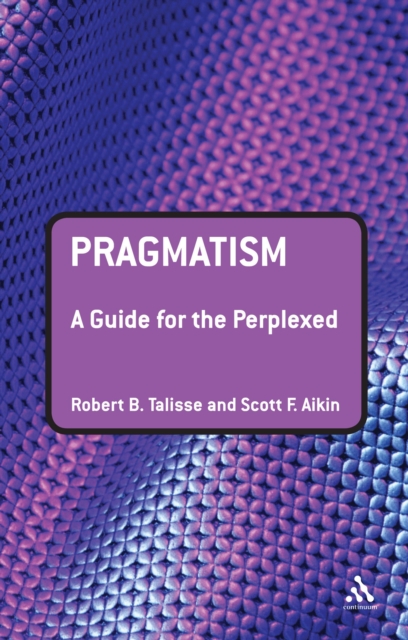
Pragmatism : a guide for the perplexed
The recent revival of interest in pragmatism has reintroduced into mainstream philosophy the insights and arguments of great American philosophers such as C.S. Peirce, William James and John Dewey. But it has also led to the use of the term 'pragmatism' in a huge variety of contexts, such that students and readers can find this fascinating subject confusing. Pragmatism: A Guide for the Perplexed seeks to dispel some of the ambiguity surrounding the term 'pragmatism'. The book offers a clear and thorough account of this important philosophical movement. Thematically structured, it lays out the historical development and surveys the key thinkers. Crucially, it concentrates on the ways in which pragmatists, both contemporary and historical, have attempted to address some of the most important problems in philosophy. Geared towards the specific requirements of students who need to have a sound understanding of pragmatism, the book serves as an ideal companion to study of this most important and influential of movements.
eBook
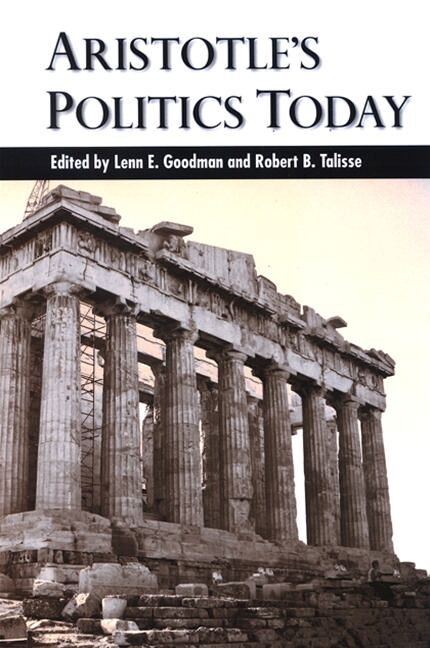
Aristotle's Politics Today
According to Aristotle, man's essential sociality implies a distinctive conception of politics, one in which all political associations exist for the sake of the moral perfection of human beings. This stands in sharp contrast with the modern view of politics that man is not \"by nature\" political; rather, man chooses to create political associations for the sake of securing the protection of his life and property. Many political theorists have begun to express doubts about this modern view, calling for a return to Aristotle's vision of a politics that is deeply moral. In Aristotle's Politics Today, distinguished political philosophers representing a diversity of approaches examine the meaning, relevance, and implications of Aristotle's political thought for contemporary social and political theory. The contributors engage a broad range of topics, including Aristotle's views on constitutionalism, the extension of Aristotelian ideas to issues in international relations, the place of Aristotelian virtue in modern democratic politics, and Aristotle's conception of justice.
eBook