
Catalogue Search | MBRL


Are you sure you want to remove the book from the shelf?

{{itemTitle}}
2
result(s) for
"Tanguay, Liane, 1976-"
Sort by:

Hijacking history : American culture and the war on terror
\"In Hijacking History, Liane Tanguay unravels the ideology behind an American enterprise unprecedented in scope, ambition, and brazen claim to global supremacy: the War on Terror. She argues that the fears, anxieties, and even the hopes encoded in American popular culture account for the public's passive acceptance of the Bush administration's wars overseas and violation of many of the rights, privileges, and freedoms they claimed to defend. In her analysis, Tanguay critically examines the neoconservative contention that the current system of liberal-democratic capitalism represents the peak of human evolution - a claim that creates the impression of a \"post-historical\" age. Establishing a continuity between the \"post-historical\" imaginary and the attacks of 9/11, the book examines the links between shifting justifications for the war, renewed militarism, and capitalist globalization. Reviewing a wide range of media including Hollywood films, network television, and presidential rhetoric, Tanguay calls for a revival of politics in popular culture and rejects the politics of fear as disseminated by mass media. A timely retrospective on the War on Terror, Hijacking History examines popular representations of US military action and dissects both the logic and the aesthetics by which the dominant discourses strive to justify war, while revealing how some of those forces can ultimately contribute to an ideology of resistance.\"--Publisher's website.
Book
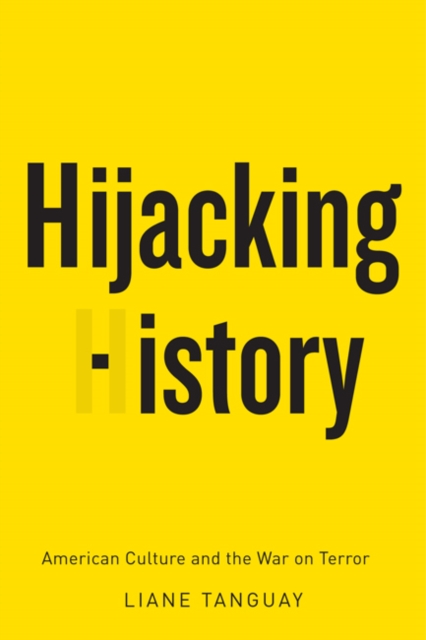
Hijacking History
In Hijacking History, Liane Tanguay unravels the ideology behind an American enterprise unprecedented in scope, ambition, and brazen claim to global supremacy: the War on Terror. She argues that the fears, anxieties, and even the hopes encoded in American popular culture account for the public's passive acceptance of the Bush administration’s wars overseas and violation of many of the rights, privileges, and freedoms they claimed to defend. In her analysis, Tanguay critically examines the neoconservative contention that the current system of liberal-democratic capitalism represents the peak of human evolution - a claim that creates the impression of a \"post-historical\" age. Establishing a continuity between the \"post-historical\" imaginary and the attacks of 9/11, the book examines the links between shifting justifications for the war, renewed militarism, and capitalist globalization. Reviewing a wide range of media including Hollywood films, network television, and presidential rhetoric, Tanguay calls for a revival of politics in popular culture and rejects the politics of fear as disseminated by mass media. A timely retrospective on the War on Terror, Hijacking History examines popular representations of US military action and dissects both the logic and the aesthetics by which the dominant discourses strive to justify war, while revealing how some of those forces can ultimately contribute to an ideology of resistance.
eBook