
Catalogue Search | MBRL


Are you sure you want to remove the book from the shelf?

{{itemTitle}}
4,117
result(s) for
"Taylor, Anne"
Sort by:

Ensuring Digital Accessibility Through Process and Policy
Ensuring Digital Accessibility through Process and Policy provides readers with a must-have resource to digital accessibility from both a technical and policy perspective. Inaccessible digital interfaces and content often lead to forms of societal discrimination that may be illegal under various laws. This book is unique in that it provides a multi-disciplinary understanding of digital accessibility. The book discusses the history of accessible computing, an understanding of why digital accessibility is socially and legally important, and provides both technical details (interface standards, evaluation methods) and legal details (laws, lawsuits, and regulations). The book provides real-world examples throughout, highlighting organizations that are doing an effective job with providing equal access to digital information for people with disabilities. This isn’t a book strictly about interface design, nor is it a book strictly about law. For people who are charged with implementing accessible technology and content, this book will serve as a one-stop guide to understanding digital accessibility, offering an overview of current laws, regulations, technical standards, evaluation techniques, as well as best practices and suggestions for implementing solutions and monitoring for compliance. This combination of skills from the three authors—law, technical, and research, with experience in both corporate, government, and educational settings, is unique to this book, and does not exist in any other book about any aspect of IT accessibility. The authors’ combination of skills marks a unique and valuable perspective, and provides insider knowledge on current best practices, corporate policies, and technical instructions. Together, we can ensure that the world of digital information is open to all users.Learn about the societal and organizational benefits of making information technology accessible for people with disabilitiesUnderstand the interface guidelines, accessibility evaluation methods, and compliance monitoring techniques, needed to ensure accessible content and technologyUnderstand the various laws and regulations that require accessible technologyLearn from case studies of organizations that are successfully implementing accessibility in their technologies and digital content
eBook


Associations between area socioeconomic status, individual mental health, physical activity, diet and change in cardiometabolic risk amongst a cohort of Australian adults: A longitudinal path analysis
Presumed pathways from environments to cardiometabolic risk largely implicate health behaviour although mental health may play a role. Few studies assess relationships between these factors. This study estimated associations between area socioeconomic status (SES), mental health, diet, physical activity, and 10-year change in glycosylated haemoglobin (HbA1c), comparing two proposed path structures: 1) mental health and behaviour functioning as parallel mediators between area SES and HbA1c; and 2) a sequential structure where mental health influences behaviour and consequently HbA1c. Three waves (10 years) of population-based biomedical cohort data were spatially linked to census data based on participant residential address. Area SES was expressed at baseline using an established index (SEIFA-IEO). Individual behavioural and mental health information (Wave 2) included diet (fruit and vegetable servings per day), physical activity (meets/does not meet recommendations), and the mental health component score of the 36-item Short Form Health Survey. HbA1c was measured at each wave. Latent variable growth models with a structural equation modelling approach estimated associations within both parallel and sequential path structures. Models were adjusted for age, sex, employment status, marital status, education, and smoking. The sequential path model best fit the data. HbA1c worsened over time. Greater area SES was statistically significantly associated with greater fruit intake, meeting physical activity recommendations, and had a protective effect against increasing HbA1c directly and indirectly through physical activity behaviour. Positive mental health was statistically significantly associated with greater fruit and vegetable intakes and was indirectly protective against increasing HbA1c through physical activity. Greater SES was protective against increasing HbA1c. This relationship was partially mediated by physical activity but not diet. A protective effect of mental health was exerted through physical activity. Public health interventions should ensure individuals residing in low SES areas, and those with poorer mental health are supported in meeting physical activity recommendations.
Journal Article
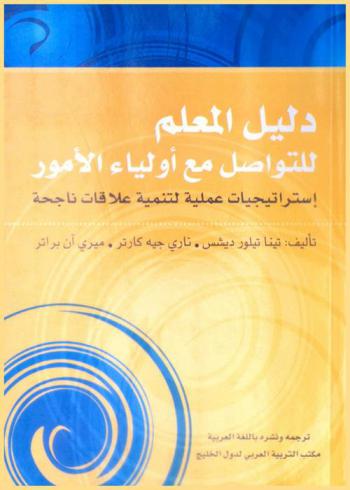
دليل المعلم للتواصل مع أولياء الأمور : استراتيجيات عملية لتنمية علاقات ناجحة
يهتم هذا الكتاب بإيجاد جسور وروابط بين المعلمين وأولياء أمور الطلاب وكذلك إيجاد استراتيجيات عملية لتنمية علاقات ناجحة بهدف مساعدة الطلاب على الارتقاء في مستوياتهم وتحصيلهم المعرفي وتوفير علاقات طيبك بين المدرسة والمنزل وذلك للارتقاء بالمستوى التعليمي حيث أن التواصل بين المعلم وأولياء الأمور يصب في ذلك الأمر.
BOOK

Immune checkpoint inhibitors in kidney transplant recipients: a multicentre, single-arm, phase 1 study
Most kidney transplant recipients with cancer stop or reduce immunosuppressive therapy before starting treatment with an immune checkpoint inhibitor, and approximately 40% of such patients will develop allograft rejection. Isolated immunosuppression reduction might be associated with organ rejection. Whether immunosuppression manipulation, immune checkpoint inhibition, or both, induce organ rejection is difficult to ascertain. The aim of this study was to examine the risk of allograft rejection with immune checkpoint inhibitor exposure when baseline immunosuppression was left unchanged.
We conducted a multicentre, single-arm, phase 1 study in three hospitals in Australia. Kidney transplant recipients aged 18 years or older with incurable, locally advanced cancer or defined metastatic solid tumours were eligible if they had a creatinine concentration of less than 180 mmol/L, no or low concentrations of donor-specific HLA antibodies, and an Eastern Cooperative Oncology Group status of 0–2. Patients received standard doses of nivolumab (3 mg/kg intravenously every 14 days for five cycles, then 480 mg every 28 days for up to 2 years). The primary endpoint was the proportion of patients with irretrievable allograft rejection and no evidence of tumour response. Primary outcome analyses and safety analyses were done in the modified intention-to-treat population. This trial is registered with the Australian and New Zealand Clinical Trials Register, ANZCTR12617000741381, and is completed.
Between May 31, 2017, and Aug 6, 2021, 22 kidney transplant recipients with various solid tumours were screened and enrolled, four of whom chose not to proceed in the study and one of whom had unexpected disease progression. 17 patients (six [35%] women and 11 [65%] men; median age 67 years [IQR 59–71]) were allocated treatment with nivolumab and were included in the analyses. The trial was then stopped due to ongoing difficulties with running clinical trials during COVID-19 health restrictions. Patients were treated with a median of three infusions (IQR 2–10) and median follow-up was 28 months (IQR 16–34). No patients had irretrievable allograft rejection without evidence of tumour response. There were no treatment-related deaths or treatment-related serious adverse events. The most common grade 3 or grade 4 adverse events were decreased lymphocyte count in four (24%) patients, fever or infection in four (24%) patients, decreased haemoglobin in three (18%) patients, and increased creatinine in three (18%) patients.
Maintaining baseline immunosuppression before treatment with an immune checkpoint inhibitor in kidney transplant recipients might not affect expected efficacy and might reduce the risk of allograft rejection mediated by immune checkpoint inhibitors.
Bristol Myers Squibb.
Journal Article
The association between A Body Shape Index and mortality: Results from an Australian cohort
It is well recognised that obesity increases the risk of premature death. A Body Shape Index (ABSI) is a formula that uses waist circumference (WC), body mass index (BMI) and height to predict risk of premature mortality, where a high score (Quartile 4) indicates that a person's WC is more than expected given their height and weight. Our study examines the association between ABSI quartiles and all-cause-, cardiovascular- and cancer-related mortality, and primary cause of death. Self-reported demographic and biomedically measured health-related risk factor and weight data was from the baseline stage of the North West Adelaide Health Study (1999-2003, n = 4056), a longitudinal cohort of Australian adults. Death-related information was obtained from the National Death Index. Primary cause of death across ABSI quartiles was examined. The association between mortality and ABSI (quartile and continuous scores) was investigated using a Cox proportional hazards survival model and adjusting for socioeconomic, and self-reported and biomedical risk factors. The proportion of all three types of mortality steadily increased from ABSI Quartile 1 through to Quartile 4. After adjusting for demographic and health-related risk factors, the risk of all-cause mortality was higher for people in ABSI Quartile 4 (HR 2.64, 95% CI 01.56-4.47), and ABSI Quartile 3 (HR 1.95, 95% CI 1.15-3.33), with a moderate association for the continuous ABSI score (HR 1.32, 95% CI 1.18-1.48). ABSI is therefore positively associated with mortality in Australian adults. Different combined measures of obesity such as the ABSI are useful in examining mortality risk.
Journal Article

Modeling of soil nitrification responses to temperature reveals thermodynamic differences between ammonia-oxidizing activity of archaea and bacteria
Soil nitrification potential (NP) activities of ammonia-oxidizing archaea and bacteria (AOA and AOB, respectively) were evaluated across a temperature gradient (4–42 °C) imposed upon eight soils from four different sites in Oregon and modeled with both the macromolecular rate theory and the square root growth models to quantify the thermodynamic responses. There were significant differences in response by the dominant AOA and AOB contributing to the NPs. The optimal temperatures (
T
opt
) for AOA- and AOB-supported NPs were significantly different (
P
<0.001), with AOA having
T
opt
>12 °C greater than AOB. The change in heat capacity associated with the temperature dependence of nitrification (Δ
C
P
‡
) was correlated with
T
opt
across the eight soils, and the Δ
C
P
‡
of AOB activity was significantly more negative than that of AOA activity (
P
<0.01). Model results predicted, and confirmatory experiments showed, a significantly lower minimum temperature (
T
min
) and different, albeit very similar, maximum temperature (
T
max
) values for AOB than for AOA activity. The results also suggested that there may be different forms of AOA AMO that are active over different temperature ranges with different
T
min
, but no evidence of multiple
T
min
values within the AOB. Fundamental differences in temperature-influenced properties of nitrification driven by AOA and AOB provides support for the idea that the biochemical processes associated with NH
3
oxidation in AOA and AOB differ thermodynamically from each other, and that also might account for the difficulties encountered in attempting to model the response of nitrification to temperature change in soil environments.
Journal Article
Biomedical health profiles of unpaid family carers in an urban population in South Australia
To compare the biomedical health profile and morbidity of adult carers with non-carers.
The North West Adelaide Health Study (NWAHS) is a representative population-based longitudinal biomedical cohort study of 4056 participants aged 18 years and over at Stage One. Informal (unpaid) carers were identified in Stage 3 of the project (2008-2010). Risk factors, chronic medical conditions and biomedical, health and demographic characteristics using self-report and blood measured variables were assessed. Data were collected through clinic visits, telephone interviews and self-completed questionnaires. Risk factors included blood pressure, cholesterol/lipids, body mass index (BMI), smoking and alcohol intake. Chronic medical conditions included cardiovascular and respiratory diseases, diabetes, and musculoskeletal conditions. Blood measured variables were routine haematology, biochemistry, Vitamin D, and the inflammatory biomarkers high sensitivity C-Reactive Protein (hs-CRP), Tumor Necrosis Factor alpha (TNFα) and Interleukin-6 (Il-6).
The prevalence of carers aged 40 years and over was 10.7%, n = 191. Carers aged 40 years and over were more likely to assess their health status as fair/poor and report having diabetes, arthritis, anxiety and depression. They also reported insufficient exercise and were found to have higher BMI compared with non-carers. Significant findings from blood measured variables were lower serum Vitamin D and haemoglobin. Male carers had raised diastolic blood pressure, higher blood glucose, lower haemoglobin and albumin levels and slightly elevated levels of the inflammatory biomarkers TNFα and hs-CRP.
This study confirms informal carers had different biomedical profiles to non-carers that included some chronic physical illnesses. It identifies that both female and male carers showed a number of risk factors which need to be considered in future caregiver research, clinical guidelines and policy development regarding carer morbidity.
Journal Article

The skin is a significant but overlooked anatomical reservoir for vector-borne African trypanosomes
The role of mammalian skin in harbouring and transmitting arthropod-borne protozoan parasites has been overlooked for decades as these pathogens have been regarded primarily as blood-dwelling organisms. Intriguingly, infections with low or undetected blood parasites are common, particularly in the case of Human African Trypanosomiasis caused by Trypanosoma brucei gambiense. We hypothesise, therefore, the skin represents an anatomic reservoir of infection. Here we definitively show that substantial quantities of trypanosomes exist within the skin following experimental infection, which can be transmitted to the tsetse vector, even in the absence of detectable parasitaemia. Importantly, we demonstrate the presence of extravascular parasites in human skin biopsies from undiagnosed individuals. The identification of this novel reservoir requires a re-evaluation of current diagnostic methods and control policies. More broadly, our results indicate that transmission is a key evolutionary force driving parasite extravasation that could further result in tissue invasion-dependent pathology.
Journal Article