
Catalogue Search | MBRL


Are you sure you want to remove the book from the shelf?

{{itemTitle}}
6
result(s) for
"Taylor, J. Edward, author"
Sort by:

Essentials of development economics
\"Essentials of Development Economics represents an alternative approach to traditional development economics textbooks, written to provide students with the critical tools used in today's development economics research and practice. Compact and less expensive than other textbooks for undergraduate development economics courses, Essentials of Development Economics offers a broad overview of key topics and methods in the field. Its fourteen easy-to-read chapters introduce cutting-edge research and present best practices and state-of-the-art methods. Each chapter concludes with an embedded QR code that connects readers to ancillary audiovisual materials and supplemental readings on a website curated by the authors. By mastering the material in this book, students will have the conceptual grounding needed to move on to higher-level development economics courses.\"--Provided by publisher.
Book
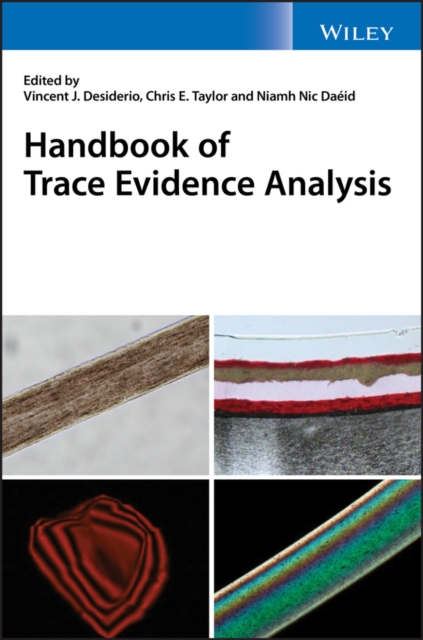
Handbook of Trace Evidence Analysis
Covers new trace evidence techniques and expanding areas of analysis, along with key theory and applications
Developed around the need for updated information in the disciplines of trace evidence the Handbook of Trace Evidence Analysis focuses on the increasing awareness and need for validation, modern methods for addressing and controlling contamination, the shift towards incorporating statistical analyses into the interpretation phase and cutting edge research into new forensic science methods and their application.
Beginning with an overview of the topic and discussing the important role that information derived from trace materials can provide during investigations, the book then presents chapters on key techniques. The first being the critical nature of microscopy, and the methods employed for the recognition, collection, and preservation of trace evidence. Subsequent chapters review the core disciplines of trace evidence examination: paints and polymers, hairs, fibers and textiles and glass. Each chapter contains in-depth discussions on the origin of the materials involved, including any natural or synthetic processes involved in their production, the nuances involved in their detection, and the methods of analysis that are used to extract valuable information from samples. In addition, suggested workflows in method and testing selections, as well as addressing specific scientific challenges as well as the limitations of knowledge on the transfer, persistence and background abundance of trace materials are discussed. The book ends by examining the interpretation of trace evidence findings from a historical perspective and examining the methods that are currently being developed.
* Provides an in-depth introduction to the general area of trace evidence and discusses current and new techniques
* Consolidates trace evidence and materials categories of testing into one reference series
* Offers a detailed focus on technical approaches and guidelines to trace evidence
* Includes analytical schemes/workflows and valuable guides for the interpretation of data and results
The Handbook of Trace Evidence will appeal to forensic science academics, students, and practitioners in the trace evidence and materials science disciplines, as well as DNA analysts, toxicologists, forensic anthropologists, crime laboratory managers, criminal justice students and practitioners, and legal professionals. It would also be a valuable resource for every crime laboratory reference library.
eBook
Transformative conversations : a guide to mentoring communities among colleagues in higher education
Praise for Transformative Conversations
\"In the 'superstorm' of writings about the crisis in higher education this little gem of a book stands out like a mindfulness bell. It calls us back to the only thing that truly matters—the energy and wisdom buried in the minds and hearts of dedicated educators.\" — Diana Chapman Walsh, president emerita, Wellesley College; trustee emerita, Amherst College; member of the MIT Corporation
\"This book is revolutionary! It is about transforming the very essence of higher education through the power of authentic conversation, knowing that as the people within the institution evolve, the institution will transform.\" — Patricia and Craig Neal, The Art of Convening: Authentic Engagement in Meetings, Gatherings, and Conversations; founders, Heartland Inc.
\"This is a radical story about how to create a more intimate and relational culture inside the halls of higher education... for those who long for higher education to return from the abyss of siloed isolation to its original charter as a cooperative learning institution committed to developing the whole person in service of the common good.\" — Peter Block, Flawless Consulting and Abundant Community
Transformative Conversations offers guidance to help readers create and sustain Formation Mentoring Communities, where faculty, staff, and administrators can speak openly and honestly to the heart of their work as educators and human beings.
eBook

Financial Literacy and Adult Education
Many adults attend financial education classes to help them make more informed financial decisions, based on their knowledge of their financial situation available cash or funds planned expenditures. This volume brings together scholars from the fields of adult education and financial literacy and covers topics that reveal the interrelatedness of the two fields. They show how concepts and knowledge about adult education can be utilized in and illuminate financial education, and they offer insights about how financial education, as an eminently practical subject, shows adults learning and putting their new knowledge into action. This is the 141st volume of this Jossey-Bass series. Noted for its depth of coverage, it explores issues of common interest to instructors, administrators, counselors, and policymakers in a broad range of adult and continuing education settings, such as colleges and universities, extension programs, businesses, libraries, and museums.
eBook
Plato : the written and unwritten doctrines
J.N. Findlay, distinguished scholar and acknowledged expert on Plato, argues persuasively for a new interpretation of the Platonic writings. He believes that Plato's Unwritten Doctrines were present in the background of all the great philosopher's mature written work. With the use of Aristotelian and other writings on these reported doctrines he demonstrates that they admit of an intelligible elucidation and they direct indispensable light upon the full meaning of the written Dialogues. The author emphasizes the valuable use of Platonic notions and methods by the Neoplatonists and the Schoolmen as well as by such modern thinkers as Husserl and Russell. He also censures, as a great misinterpretation, the widespread Aristotelian view of Platonism as a two-world theory, and argues that, for Plato, the Ideas and their Principles alone have full reality, everything else being logically parasitic upon them. The work also includes two important Appendices, the first providing translations of the Aristotelian and other ancient material regarding Plato's oral teaching, the second criticizing and refuting the views of Harold F. Cherniss on the same material.
eBook

A companion to Japanese history
A Companion to Japanese History provides an authoritative overview of current debates and approaches within the study of Japan’s history.
Composed of 30 chapters written by an international group of scholars
Combines traditional perspectives with the most recent scholarly concerns
Supplements a chronological survey with targeted thematic analyses
Presents stimulating interventions into individual controversies
eBook