
Catalogue Search | MBRL


Are you sure you want to remove the book from the shelf?

{{itemTitle}}
118
result(s) for
"Thad Sitton"
Sort by:
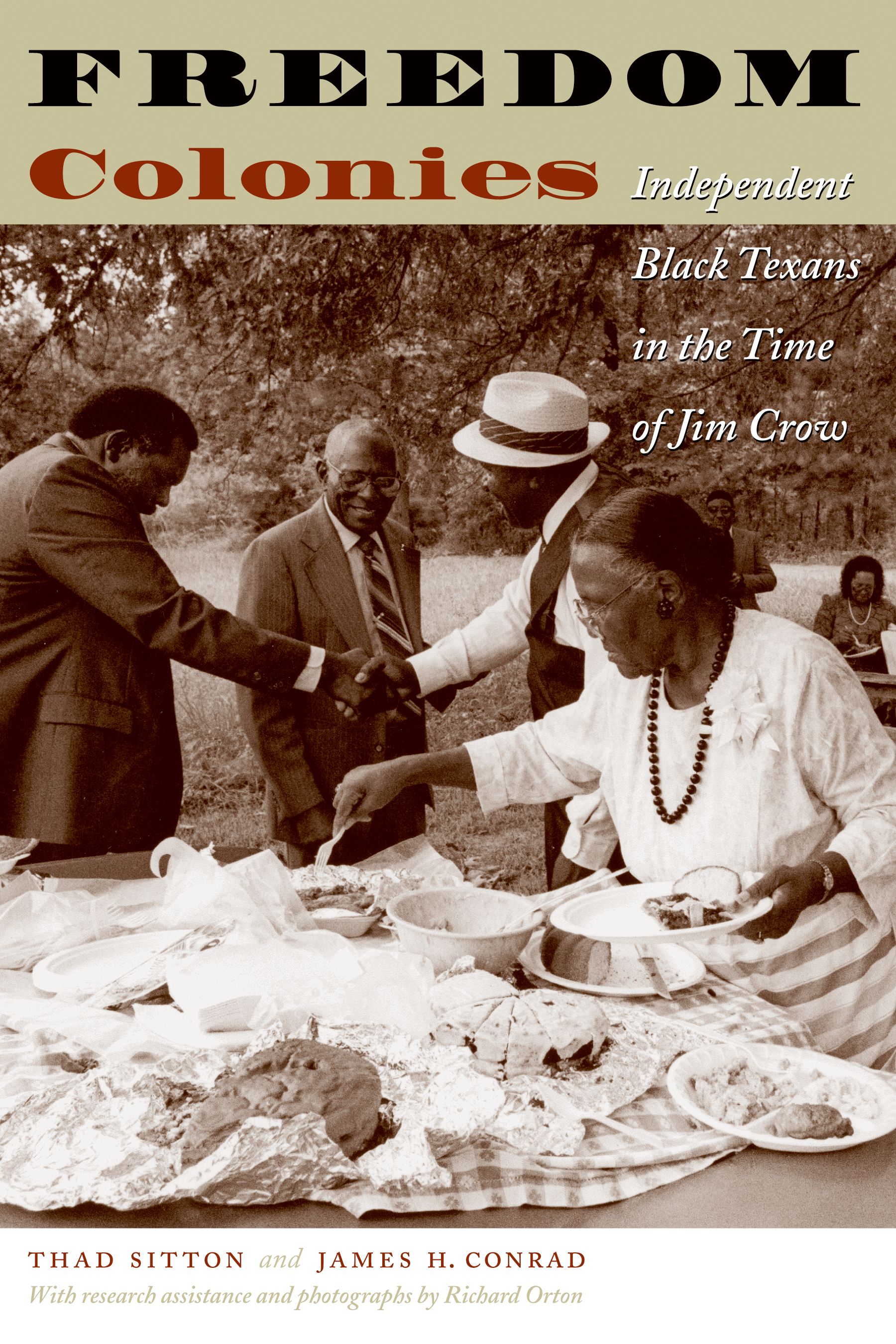
Freedom colonies
In the decades following the Civil War, nearly a quarter of African Americans achieved a remarkable victory—they got their own land. While other ex-slaves and many poor whites became trapped in the exploitative sharecropping system, these independence-seeking individuals settled on pockets of unclaimed land that had been deemed too poor for farming and turned them into successful family farms. In these self-sufficient rural communities, often known as \"freedom colonies,\" African Americans created a refuge from the discrimination and violence that routinely limited the opportunities of blacks in the Jim Crow South. Freedom Colonies is the first book to tell the story of these independent African American settlements. Thad Sitton and James Conrad focus on communities in Texas, where blacks achieved a higher percentage of land ownership than in any other state of the Deep South. The authors draw on a vast reservoir of ex-slave narratives, oral histories, written memoirs, and public records to describe how the freedom colonies formed and to recreate the lifeways of African Americans who made their living by farming or in skilled trades such as milling and blacksmithing. They also uncover the forces that led to the decline of the communities from the 1930s onward, including economic hard times and the greed of whites who found legal and illegal means of taking black-owned land. And they visit some of the remaining communities to discover how their independent way of life endures into the twenty-first century.
eBook

Big Thicket People
Living off the land—hunting, fishing, and farming, along with a range of specialized crafts that provided barter or cash income—was a way of life that persisted well into the twentieth century in the Big Thicket of southeast Texas. Before this way of life ended with World War II, professional photographer Larry Jene Fisher spent a decade between the 1930s and 1940s photographing Big Thicket people living and working in the old ways. His photographs, the only known collection on this subject, constitute an irreplaceable record of lifeways that first took root in the southeastern woodlands of the colonial United States and eventually spread all across the Southern frontier. Big Thicket People presents Fisher's photographs in suites that document a wide slice of Big Thicket life-people, dogs, camps, deer hunts, farming, syrup mills, rooter hogs and stock raising, railroad tie making, barrel stave making, chimney building, peckerwood sawmills, logging, turpentining, town life, church services and picnics, funerals and golden weddings, and dances and other amusements. Accompanying each suite of images is a cultural essay by Thad Sitton, who also introduces the book with a historical overview of life in the Big Thicket. C. E. Hunt provides an informative biography of Larry Jene Fisher.
eBook

Freedom colonies : independent Black Texans in the time of Jim Crow / by Thad Sitton and James H. Conrad ; with research assistance and photographs by Richard Orton
In the decades following the Civil War nearly a quarter of African Americans achieved a remarkable victory - they got their own land.
eBook
Introduction
The Southern backwoodsmen who lived in the Big Thicket of East Texas had no agreed-upon name for who they were and what they did for a living. They described themselves to the census takers of 1900, 1910, and thereafter as farmers, stockmen, tie makers, loggers, and other things, seemingly at a loss to choose a single occupation from the many activities they engaged in to get a living from the woods and swamps. (They tended to list themselves by what they had been doing most lately; one man reported his vocation as “frog gigging.”) They were nothing special, they
Book Chapter