
Catalogue Search | MBRL


Are you sure you want to remove the book from the shelf?

{{itemTitle}}
4
result(s) for
"Thomas, Edward, 1965- author"
Sort by:


South Sudan
In 2011, South Sudan became independent following a long war of liberation, that gradually became marked by looting, raids and massacres pitting ethnic communities against each other. In this remarkably comprehensive work, Edward Thomas provides a multi-layered examination of what is happening in the country today. Writing from the perspective of South Sudan's most mutinous hinterland, Jonglei state, the book explains how this area was at the heart of South Sudan's struggle. Drawing on hundreds of interviews and a broad range of sources, this book gives a sharply focused, fresh account of South Sudan's long, unfinished fight for liberation.
eBook

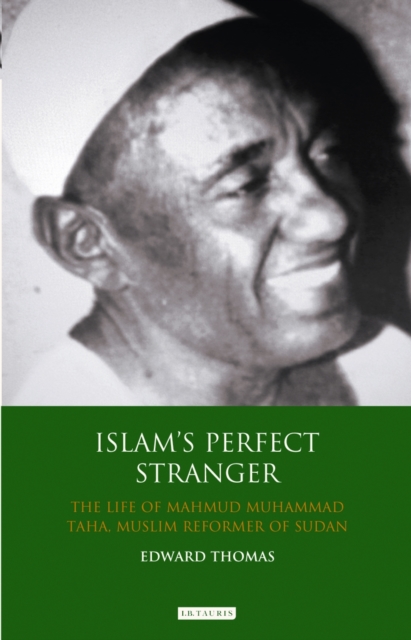
Islam’s Perfect Stranger
Can Sudan, one of Africa’s most diverse countries, function as an Islamic state? Mahmud Muhammad Taha posed an original answer to this question. Taha was the charismatic leader of the ‘Republican Brothers and Sisters’, a small group of Sudanese nationalists who called for a mystical, inclusive reinterpretation of Islam that ended traditional legal discriminations against women and non-Muslims. Taha’s followers pitched his sometimes controversial mix of law and mysticism on Sudanese street corners in the 1970s. Sudanese Islamist politicians, who used a more divisive interpretation of Islam, opposed him vigorously. When they gained control of the state in the chaotic 1980s, Taha was executed. In Taha’s first biography, Edward Thomas explores the life and ideas of an important Sudanese reformer who has become a symbol for resistance, tolerance and human rights.
eBook