
Catalogue Search | MBRL


Are you sure you want to remove the book from the shelf?

{{itemTitle}}
12,445
result(s) for
"Thomas, Michael S. C"
Sort by:


The deleterious effect of WHO grade II diffuse glioma on socioeconomic status as evaluated through occupation
Although previous studies have evaluated return-to-work status following low-grade glioma (LGG) treatment, there is a paucity of detailed data on the nature of the occupation a patient returns to. The aim of this study was to describe the socioeconomic status of patients with WHO grade II diffuse glioma over long-term follow up and whether it changed following the LGG diagnosis. In addition, cognitive, education, and quality of life profiles, as well as estimated premorbid intelligence, were evaluated to explore the possibility of relationships with socioeconomic status. Twenty-one individuals with a histological diagnosis of WHO grade II diffuse glioma were recruited prospectively from a single UK center and completed questionnaires evaluating general health, socioeconomics, education, quality of life, and a battery of validated cognitive tests. Socioeconomic status was evaluated through an occupational-based classification. Forty percent of participants in the most advantaged socioeconomic group prior to the diagnosis of a glioma did not remain in the same advantaged group at the point of recruitment into the study. This is despite no marked cognitive impairments across the cohort and no significant cognitive differences between those who did and did not remain in this advantaged group. Attainment of a university-level qualification was significantly associated with maintenance of socioeconomic advantage following the LGG diagnosis, which may be explained by the concept of cognitive reserve. In conclusion, there are profound deleterious socioeconomic effects of LGG and its treatment. Educational attainment may be protective. Early tailored and proactive professional support regarding work-related issues is required for this patient group.
Journal Article

Using Developmental Trajectories to Understand Developmental Disorders
Dagmara Annaz
University College London
Daniel Ansari
University of Western Ontario, Canada
Gaia Scerif
University of Oxford, United Kingdom
Chris Jarrold
University of Bristol, United Kingdom
Annette Karmiloff-Smith
Birkbeck College
Contact author: Michael Thomas, Developmental Neurocognition Laboratoy, School of Psychology, Birkbeck College, University of London, Malet Street, Bloomsbury, London WC1E 7HX, United Kingdom. E-mail: m.thomas{at}bbk.ac.uk .
Purpose: In this article, the authors present a tutorial on the use of developmental trajectories for studying language and cognitive impairments in developmental disorders and compare this method with the use of matching.
Method: The authors assess the strengths, limitations, and practical implications of each method. The contrast between the methodologies is highlighted using the example of developmental delay and the criteria used to distinguish delay from atypical development.
Results: The authors argue for the utility of the trajectory approach, using illustrations from studies investigating language and cognitive impairments in individuals with Williams syndrome, Down syndrome, and autism spectrum disorder.
Conclusion: Two conclusions were reached: (a) An understanding of the underlying mechanism will be furthered by the richer descriptive vocabulary provided by the trajectories approach (e.g., in distinguishing different types of delay) and (b) an optimal design for studying developmental disorders is to combine initial cross-sectional designs with longitudinal follow-up.
KEY WORDS: development, trajectories, delay, deviance, disorders
CiteULike Connotea Del.icio.us Digg Facebook Reddit Technorati Twitter What's this?
Journal Article

Health comorbidities and cognitive abilities across the lifespan in Down syndrome
Background
Down syndrome (DS) is associated with variable intellectual disability and multiple health and psychiatric comorbidities. The impact of such comorbidities on cognitive outcomes is unknown. We aimed to describe patterns of physical health and psychiatric comorbidity prevalence, and receptive language ability, in DS across the lifespan, and determine relationships with cognitive outcomes.
Methods
Detailed medical histories were collected and cognitive abilities measured using standardised tests for 602 individuals with DS from England and Wales (age range 3 months to 73 years). Differences in prevalence rates between age groups and between males and females were determined using chi-squared or Fisher’s exact tests. In adults, rates for psychiatric comorbidities were compared to expected population rates using standardised morbidity ratios (SMRs). Adapted ANCOVA functions were constructed to explore age and sex associations with receptive language ability across the lifespan, and regression analyses were performed to determine whether the presence of health comorbidities or physical phenotypes predicted cognitive abilities.
Results
Multiple comorbidities showed prevalence differences across the lifespan, though there were few sex differences. In adults, SMRs were increased in males and decreased in females with DS for schizophrenia, bipolar disorder, and anxiety. Further, SMRs were increased in both males and females with DS for dementia, autism, ADHD, and depression, with differences more pronounced in females for dementia and autism, and in males for depression. Across the lifespan, receptive language abilities increasingly deviated from age-typical levels, and males scored poorer than females. Only autism and epilepsy were associated with poorer cognitive ability in those aged 16–35 years, with no relationships for physical health comorbidities, including congenital heart defects.
Conclusions
Our results indicate the prevalence of multiple comorbidities varies across the lifespan in DS, and in adults, rates for psychiatric comorbidities show different patterns for males and females relative to expected population rates. Further, most health comorbidities are not associated with poorer cognitive outcomes in DS, apart from autism and epilepsy. It is essential for clinicians to consider such differences to provide appropriate care and treatment for those with DS and to provide prognostic information relating to cognitive outcomes in those with comorbidities.
Journal Article

Social networking site use, depressive and anxiety symptoms in adolescents: evidence from a longitudinal cohort study (SCAMP)
Background
The growing and pervasive use of social network sites (SNS) has raised concerns about their impact on adolescent mental health during this sensitive developmental phase. Existing longitudinal studies are constrained by methodological limitations and limited exploration of underlying mechanisms. We investigated the longitudinal associations between SNS use and depressive and anxiety symptoms in adolescents and whether sleep mediated these associations.
Methods
We analysed longitudinal data from 2350 adolescents from 31 schools in London, participating in the Study of Cognition, Adolescents, and Mobile Phones (SCAMP). The exposure was self-reported duration of SNS use at baseline (aged 11–12 years). Outcomes were depressive and anxiety symptoms at follow-up, analysed as symptom severity and clinically significant symptoms (aged 13–15 years). The associations between SNS use and depressive and anxiety symptoms were assessed via multi-level ordinal logistic regression (symptom severity) and logistic regression (clinically significant symptoms). The mediation effects of insufficient sleep, sleep onset latency, and sleep disturbance were assessed by mediation analysis.
Results
Compared to 0–30 min per day, more than 3 h per day of SNS use at baseline was associated with higher severity levels of depressive and anxiety symptoms (adjusted odds ratio (OR) = 1.47, 95% CI 1.12, 1.93 and OR = 1.40, 95% CI 1.06, 1.83, respectively) and clinically significant depressive and anxiety symptoms at follow-up (OR = 1.70, 95% CI 1.19, 2.42 and OR = 1.60, 95% CI 1.11, 2.31, respectively). The associations between total and weekend SNS use and depressive symptom severity were stronger in girls than boys. Other associations were similar by gender. Insufficient sleep duration (particularly on weekdays) and sleep onset latency at baseline partly mediated the associations of SNS use and depressive and anxiety symptoms (proportion of mediation ranged between 11.1% and 33.1%). The mediation effects of sleep disturbance were less marked.
Conclusions
In a large longitudinal cohort, we found that SNS use exceeding 3 h per day is associated with increased risks of depressive and anxiety symptoms in adolescents. Findings from mediation analysis suggest that addressing poor sleep hygiene in relation to SNS use might mitigate the negative impact of high SNS use. Our findings may inform the development of early secondary school curricula incorporating digital literacy and sleep hygiene education.
Journal Article

Education, the science of learning, and the COVID-19 crisis
In the COVID-19 crisis, the science of learning has two different responsibilities: first, to offer guidance about how best to deal with the impact of the current situation, including lockdown and home-schooling; and second, to consider bigger questions about what this large-scale educational experiment might mean for the future. The first part of this Viewpoint summarises advice for parents on mental health, and on becoming stand-in-teachers. The second part, taking the longer view, considers the potential negative impact of the COVID-19 crisis in increasing inequality in education; but also the potential positive impact of driving innovations in technology use for educating children.
Journal Article

Multilingualism educational attainment and cognitive development in UK adolescents
Evidence for educational or cognitive advantages in multilinguals is mixed and may reflect socioeconomic or cultural confounds. Using 1673 UK adolescents from the SCAMP cohort, we examined educational attainment at ages 11 and 16 and change in cognitive control between these time points, comparing simultaneous multilinguals, children learning English as a second language, and monolinguals while adjusting for relevant covariates. Simultaneous multilinguals showed a small but reliable attainment advantage over monolinguals at both ages, whereas cognitive differences appeared only in cross-sectional analyses. Children learning English as a second language showed lower attainment at 11, steeper gains, and higher attainment by 16, with no evidence of cognitive differences. Mediation analyses indicated that attainment advantages were largely independent of cognitive measures, suggesting that educational outcomes and cognitive differences should be decoupled. These findings inform policy discussions on multilingual education.
Journal Article

Bidirectional associations between sleep problems and behavioural difficulties and health‐related quality of life in adolescents: Evidence from the SCAMP longitudinal cohort study
Background Sleep problems show associations with negative outcomes in both physical and mental health in adolescents, but the associations may be reciprocal. We aimed to assess bidirectional associations between sleep problems and mental health symptoms including behavioural difficulties (internalising and externalising difficulties) and low health‐related quality of life (HRQoL). Methods A total of 6616 adolescents (52.4% females) across Greater London completed baseline assessments when they were aged 11–12 years, and 3803 of them (57.2% females) completed follow‐up assessments at aged 13–15 years. Weekday and weekend sleep duration were derived from self‐reported bedtime, sleep onset latency and wake time. Sleep disturbance was assessed using a standardized sleep disturbance scale. Internalising and externalising difficulties were assessed using subscales of the Strength and Difficulties Questionnaire. HRQoL was assessed using the KIDSCREEN‐10 questionnaire. Cross‐lagged structural equation modelling was used with multiple imputation to examine bidirectional associations between sleep problems and mental health symptoms. Results Females had greater internalising difficulties, worse HRQoL and more sleep disturbance than males. Persistent insufficient weekday and weekend sleep, and sleep disturbance (i.e., at both baseline and follow‐up) were associated with internalising and externalising difficulties and low HRQoL at follow‐up (ORs ranged from 1.53 to 3.63). Persistent externalising difficulties and low HRQoL were also associated with insufficient weekend sleep and sleep disturbance at follow‐up (ORs ranged from 1.68 to 4.25). Using continuous variables, we found bidirectional associations between weekday sleep duration and HRQoL, weekend sleep duration and externalising score, sleep quality and internalising score, and sleep quality and HRQoL. The association magnitudes were mostly similar in the two directions. Conclusions Our study showed bidirectional associations between sleep problems and mental health symptoms during adolescence, indicating that early intervention and treatment on the first‐occurring symptom may prevent the development of subsequent problems. We assessed bidirectional associations between sleep problems and mental health symptoms including behavioural difficulties (internalising and externalising difficulties) and low health‐related quality of life (HRQoL). Bidirectional associations were found between weekday sleep and HRQoL, weekend sleep and externalising score, as well as sleep quality and internalising score and HRQoL.
Journal Article

Verbal and non-verbal intelligence changes in the teenage brain
The adolescent brain in flux
Intelligence, as measured by IQ, is often thought to be stable across life, but Cathy Price and colleagues investigate whether individual components are stable across adolescence, and whether fluctuations over time correlate to structural and functional brain changes. In a brain-imaging study of 33 healthy and neurologically normal individuals examined early and late in adolescence, verbal and non-verbal IQ is seen to rise and fall, with corresponding changes in grey matter in speech and movement-related regions of the brain, respectively. It seems that an individual's intellectual capacity relative to their peers can decrease or increase in the teenage years, a finding that will interest educationalists and clinical practitioners.
Intelligence quotient (IQ) is a standardized measure of human intellectual capacity that takes into account a wide range of cognitive skills
1
. IQ is generally considered to be stable across the lifespan, with scores at one time point used to predict educational achievement and employment prospects in later years
1
. Neuroimaging allows us to test whether unexpected longitudinal fluctuations in measured IQ are related to brain development. Here we show that verbal and non-verbal IQ can rise or fall in the teenage years, with these changes in performance validated by their close correlation with changes in local brain structure. A combination of structural and functional imaging showed that verbal IQ changed with grey matter in a region that was activated by speech, whereas non-verbal IQ changed with grey matter in a region that was activated by finger movements. By using longitudinal assessments of the same individuals, we obviated the many sources of variation in brain structure that confound cross-sectional studies. This allowed us to dissociate neural markers for the two types of IQ and to show that general verbal and non-verbal abilities are closely linked to the sensorimotor skills involved in learning. More generally, our results emphasize the possibility that an individual’s intellectual capacity relative to their peers can decrease or increase in the teenage years. This would be encouraging to those whose intellectual potential may improve, and would be a warning that early achievers may not maintain their potential.
Journal Article
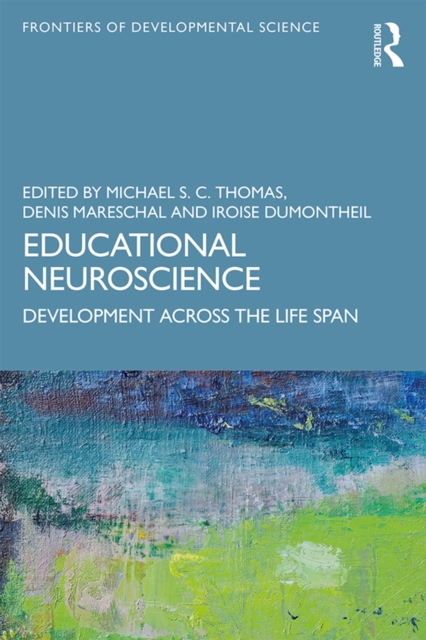
Educational Neuroscience
The field of educational neuroscience uses new insights about the neural mechanisms of learning to improve educational practices and outcomes. The first volume to bring together the latest knowledge on the development of educational neuroscience from a life-span perspective, this important text offers state of the art, authoritative research findings in educational neuroscience before providing evidence-based recommendations for classroom practice.
Thomas, Mareschal, Dumontheil, and the team of expert international contributors assembled in this volume thoroughly explore four main themes throughout the book. The first theme is individual differences, or what makes children perform better or worse in the classroom. The second theme is the nature of individual differences at different stages in development, from early years into adulthood. The third theme addresses cognitive enhancement, summarizing research that has investigated activities that might give general benefits to cognition. And the fourth theme considers the translation of research findings into classroom practices, discussing broader ethical issues raised by educational neuroscience, and what teachers need to know about neuroscience to enhance their day-to-day practice. Specific topics explored include neuropsychological perspectives on socioeconomic disparities in educational achievement, reading difficulties, phonological skills, executive function, and emotional development.
Educational Neuroscience is essential reading for researchers and graduate students of educational psychology, developmental science, developmental psychology, and cognitive psychology, especially those specializing in emotion regulation.
eBook