
Catalogue Search | MBRL


Are you sure you want to remove the book from the shelf?

{{itemTitle}}
9,298
result(s) for
"Thomas, Pierre"
Sort by:


The Fragmented Picture of Antimicrobial Resistance in Kenya: A Situational Analysis of Antimicrobial Consumption and the Imperative for Antimicrobial Stewardship
Antimicrobial resistance (AMR) jeopardizes the effectiveness of essential antimicrobial agents in treating infectious diseases. Accelerated by human activities, AMR is prevalent in Sub-Saharan Africa, including Kenya, due to indiscriminate antibiotic use and limited diagnostics. This study aimed to assess Kenya’s AMR efforts through a situational analysis of policy efficacy, interventions, and implementation, culminating in recommendations for strengthening mitigation. Employing two methodologies, this study evaluated Kenya’s AMR endeavors. A systematic scoping review summarized AMR dynamic, and an expert validated the findings, providing an on-the-ground perspective. Antibiotic resistance is driven by factors including widespread misuse in human medicine due to irrational practices, consumer demand, and substandard antibiotics. Heavy antibiotic use in the agricultural sector leads to contamination of the food chain. The National Action Plan (NAP) reflects a One Health approach, yet decentralized healthcare and funding gaps hinder its execution. Although AMR surveillance includes multiple facets, diagnostic deficiencies persist. Expert insights recognize proactive NAP but underscore implementation obstacles. Kenya grapples with escalating resistance, but commendable policy efforts exist. However, fragmented implementations and complexities persist. Addressing this global threat demands investment in healthcare infrastructure, diagnostics, international partnerships, and sustainable strategies.
Journal Article


Prevalence of genital and anorectal chlamydia trachomatis in Kenya by risk groups: a systematic review and meta-analysis
The epidemiology of
Chlamydia trachomatis
(CT) in Kenya is not well understood. We conducted a systematic review and meta-analysis of CT prevalence using PubMed, Embase, and Kenyan databases (Jan 2000–June 2024). Included studies had laboratory-confirmed CT and were peer-reviewed. Populations were categorized by sex/gender and STI vulnerability. A random-effects model was used to account for heterogeneity. Of 198 records, 51 studies (32,559 participants) were included. CT prevalence was reported for 18 studies on males, 36 on females, and four on the general population. Pooled prevalence was 5.8% (95% CI 4.6–7.4) with high heterogeneity. The highest prevalence was among general population females > 25 years (14.8%), while at risk males > 25 had the lowest (0.1%). Studies spanned 13 regions, with Nairobi, Kisumu, and Mombasa most represented. CT prevalence in Kenya aligns with WHO estimates for Africa. High prevalence among general population women > 25 challenges traditional STI risk assumptions. Importantly, the association between HIV and CT was not uniform across populations, suggesting that relying solely on HIV-focused platforms may overlook groups with a substantial CT burden. Addressing diagnostic gaps, urban–rural disparities, and links with HIV care is critical.
Trial registration
CRD42024567235
Journal Article


Short Communication: Understanding the Barriers to Cervical Cancer Prevention and HPV Vaccination in Saudi Arabia
Cervical cancer, along with other sexual and reproductive health and rights (SRHR) conditions, poses a significant burden in the Kingdom of Saudi Arabia (KSA). Despite the availability of effective preventive methods such as vaccinations, particularly against the Human Papillomavirus (HPV), awareness about such preventive methods and HPV vaccination remains alarmingly low in the KSA, even with governmental effort and support. While many women are aware of the risks, the uptake of the HPV vaccine remains below 10% (7.6%) at the country level. This highlights the urgent need for Knowledge, Attitude, and Practice (KAP) at the community level to raise awareness, dispel misconceptions, and empower women to embrace vaccinations. Additionally, there is a need to revitalize the cancer registry system to better track and monitor cervical cancer cases. This short communication aims to map these barriers while identifying opportunities for impactful research. Drawing from the scientific literature, government reports, and expert insights, we highlight the challenges surrounding the tackling of HPV. By exploring diverse sources of knowledge, this paper not only highlights current obstacles but also proposes actionable solutions for future interventions.
Journal Article
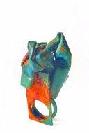

Geometrically Templated Dynamic Wrinkling From Suspended Poly(vinyl alcohol) Soap Films
Wrinkling is commonly observed as mechanical instability when a stiff thin film bound on a compliant thick substrate undergoes in‐plane compression exceeding a threshold. Despite significant efforts to create a broad range of surface patterns via wrinkling, little has been studied about a dynamic and transient wrinkling process, where a suspended polymer thin film undergoes liquid‐to‐solid phase transitions. Here, a spontaneous wrinkling process is reported when drying poly(vinyl alcohol) (PVA) soap films suspended on 3D printed wireframes with near‐zero or negative Gaussian curvatures. As water evaporates, a thickness gradient across the sample is developed, leading to non‐uniform drying rates, and a concentration gradient between the inner and outer sides (exposed to air) of the suspended PVA soap film induces a differential osmotic pressure. Together, these effects contribute to an in‐plane compressive stress, leading to the formation of surface wrinkles, whose growth is guided by the geometry of the frame. Importantly, the wrinkles evolve dynamically: the wavelength and number of the wrinkles can be tuned by altering the concentration of the PVA aqueous solutions, the initial mass, the relative humidity of the drying environment; the patterns of the resulting wrinkles can be programmed by the geometry of the wireframe. When poly(vinyl alcohol) (PVA) soap films are suspended on 3D‐printed wireframes with near‐zero or negative Gaussian curvatures, a spontaneous wrinkling process occurs, attributed to an in‐plane compressive stress and thickness gradient. The growth of wrinkles is guided by the frame geometry and evolves dynamically; the wavelength and number of wrinkles can be tuned by PVA concentration, the initial mass, and the relative humidity of the drying environment.
Journal Article


A review of zoonotic chlamydiae species in Africa: assessing their burden and potential impact through One Health perspective
Chlamydia
species, a group of obligate intracellular Gram-negative bacteria, affect humans, livestock, companion animals, and wildlife, with infections ranging from asymptomatic to severe depending on host species and strain. Diagnosis can be difficult due to mild lesions or co-infections. Because Chlamydiaceae infect multiple hosts, a One Health approach, integrating human, animal, and environmental health is essential for effective control and prevention. C.
trachomatis
remains endemic in many regions, while Chlamydia pneumoniae is implicated in community-acquired pneumonia. C.
abortus
threatens livestock and people in pastoralist communities. Other species, including C.
caviae
, C.
felis
, C.
muridarum
, C.
pecorum
, and C.
psittaci
, cause high morbidity in animals, and many are zoonotic, posing risks to humans through cross-species transmission. Closely related
Chlamydia
-like bacteria also pose emerging threats in both human and animal populations. In Africa, diverse ecosystems facilitate frequent cross-species contacts that can drive disease emergence. Rapid urbanization, population growth, and widespread poverty increase transmission, while political instability and food insecurity reduce public health responses. As the continent faces a disproportionate burden of emerging and re-emerging infections, strengthening surveillance and targeted interventions is crucial. This review examines current knowledge on the transmission dynamics and public health implications of Chlamydiaceae species in African settings.
Journal Article