
Catalogue Search | MBRL


Are you sure you want to remove the book from the shelf?

{{itemTitle}}
20
result(s) for
"Thomas, Sabu, editor"
Sort by:

Hydraulic rubber dam : an effective water management technology
\"Hydraulic Rubber Dam: An Effective Water Management Technology is the go-to source for information on the materials, manufacture, mechanics and functional benefit of rubber dams in water management. Readers will find a detailed background on water conservation and coverage, how inflatable rubber dam technology contributes to the picture, and information on the proper manufacture and use of rubber dams to increase water storage for release and delivery during drought. In addition, the book presents tactics on the even distribution of water across populations, how to increase water use efficiency, conservation, and how to prevent flooding. In particular, this book details specialist manufacturing techniques, including the development of rubber compounds and fabric, the bonding and anchoring systems which hold the rubber dam to the underlying concrete structure, and inflation and deflation mechanisms for rubber dams. The book provides a holistic lifecycle assessment of rubber dams to give additional insight to readers looking to deploy rubber dam technology\"--Page 4 of cover.
Book
Micro- and nanostructured epoxy/rubber blends
Epoxy resins are polymers which are extensively used as coating materials due to their outstanding mechanical properties and good handling characteristics. A disadvantage results from their high cross-link density: they are brittle and have very low resistance to crack growth and propagation. This necessitates the toughening of the epoxy matrix without impairing its good thermomechanical properties. The final properties of the polymer depend on their structure. The book focuses on the microstructural aspects in the modification of epoxy resins with low molecular weight liquid rubbers, one of the prime toughening agents commonly employed.
The book follows thoroughly the reactions of elastomer-modified epoxy resins from their liquid stage to the network formation. It gives an in-depth view into the cure reaction, phase separation and the simultaneous development of the morphology. Chapters on ageing, failure analysis and life cycle analysis round out the book.
eBook
Biopolymer Nanocomposites
Sets forth the techniques needed to create a vast array of useful biopolymer nanocomposites Interest in biopolymer nanocomposites is soaring. Not only are they green and sustainable materials, they can also be used to develop a broad range of useful products with special properties, from therapeutics to coatings to packaging materials. With contributions from an international team of leading nanoscientists and materials researchers, this book draws together and reviews the most recent developments and techniques in biopolymer nano-composites. It describes the preparation, processing, properties, and applications of bio- polymer nanocomposites developed from chitin, starch, and cellulose, three renewable resources. Biopolymer Nanocomposites features a logical organization and approach that make it easy for readers to take full advantage of the latest science and technology in designing these materials and developing new products and applications. It begins with a chapter reviewing our current understanding of bionanocomposites. Next, the book covers such topics as: * Morphological and thermal investigations of chitin-based nanocomposites * Applications of starch nanoparticle and starch-based bionanocomposites * Spectroscopic characterization of renewable nanoparticles and their composites * Nanocellulosic products and their applications * Protein-based nanocomposites for food packaging Throughout the book, detailed case studies of industrial applications underscore the unique challenges and opportunities in developing and working with biopolymer nanocomposites. There are also plenty of figures to help readers fully grasp key concepts and techniques. Exploring the full range of applications, Biopolymer Nanocomposites is recommended for researchers in a broad range of industries and disciplines, including biomedical engineering, materials science, physical chemistry, chemical engineering, and polymer science. All readers will learn how to create green, sustainable products and applications using these tremendously versatile materials.
eBook

Design and Applications of Nanostructured Polymer Blends and Nanocomposite Systems
Design and Applications of Nanostructured Polymer Blend and Nanocomposite Systems offers readers an intelligent, thorough introduction to the design and applications of this new generation of designer polymers with customized properties.
eBook

Nanotechnology Applications for Tissue Engineering
Tissue engineering involves seeding of cells on bio-mimicked scaffolds providing adhesive surfaces.Researchers though face a range of problems in generating tissue which can be circumvented by employing nanotechnology.
eBook
Advanced Materials for Electromagnetic Shielding
A comprehensive review of the field of materials that shield people and sensitive electronic devices from electromagnetic fields Advanced Materials for Electromagnetic Shielding offers a thorough review of the most recent advances in the processing and characterization of the electromagnetic shielding materials. In this groundbreaking book, the authors—noted experts in the field—discuss the fundamentals of shielding theory as well as the practice of electromagnetic field measuring techniques and systems. They also explore applications of shielding materials used as absorbers of electromagnetic radiation, or as magnetic shields and explore coverage of new advanced materials for EMI shielding in aerospace applications. In addition, the text contains methods of preparation and applicability of metal foams. This comprehensive text examines the influence of technology on the micro-and macrostructure of polymers enabling their use in screening technology, technologies of shielding materials based on textiles, and analyses of its effectiveness in screening. The book also details the method of producing nanowires and their applications in EM shielding. This important resource: * Explores the burgeoning market of electromagnetic shielding materials as we create, depend upon, and are exposed to more electronic devices than ever * Addresses the most comprehensive issues relating to electromagnetic fields * Contains information on the manufacturing, characterization methods, and properties of materials used to protect against them * Discusses the important characterization techniques compared with one another, thus allowing scientists to select the best approach to a problem Written for materials scientists, electrical and electronics engineers, physicists, and industrial researchers, Advanced Materials for Electromagnetic Shielding explores all aspects in the area of electromagnetic shielding materials and examines the current state-of-the-art and new challenges in this rapidly growing area.
eBook
Physical Chemistry of Macromolecules
A comprehensive resource, this book summarizes recent technical research accomplishments in the area of thermodynamics, characterizations, and applications of polymer blends. It begins with an overview of thermodynamic behaviors of non-equilibrium polymers, then covers properties of polymer blends, including surface tension, transition, crystallization, morphology, and flow behaviors. It also discusses miscibility and molecular characterizations of polymer blends and reviews applications to various systems. In this time when science has such a strong tendency for diversification, this book demonstrates the relevance of one's own activities with neighboring branches of activities.
eBook
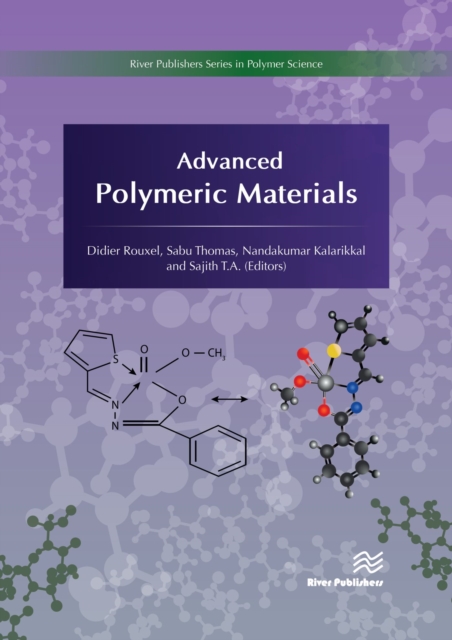
Advanced Polymeric Materials
Recent advances in polymer research has led to the generation of high quality materials for various applications in day to day life. The synthesis of new functional monomers has shown strong potential in generating novel polymer materials, with improved properties.Advanced Polymeric Materials includes fundamentals and numerous examples of polymer blend preparation and characterizations. Developments in blends, polymer nanocomposites and its various characterization techniques are highlighted in the book.
eBook
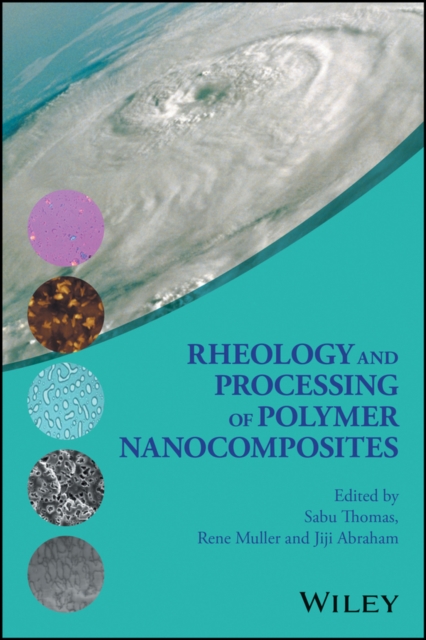
Rheology and Processing of Polymer Nanocomposites
Rheology and Processing of Polymer Nanocomposites examines the current state of the art and new challenges in the characterization of nanofiller/polymer interactions, nanofiller dispersion, distribution, filler-filler interactions and interfaces in polymer nanocomposites.
eBook
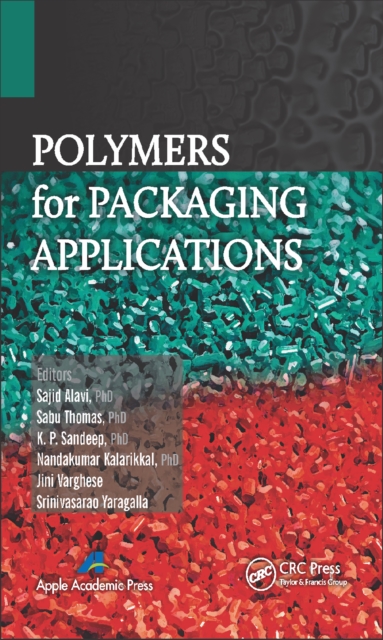
Polymers for Packaging Applications
This book focuses on food, non-food, and industrial packaging applications of polymers, blends, nanostructured materials, macro, micro and nanocomposites, and renewable and biodegradable materials. It details physical, thermal, and barrier properties as well as sustainability, recycling, and regulatory issues. The book emphasizes interdisciplinary research on processing, morphology, structure, and properties as well as applications in packaging of food and industrial products. It is useful for chemists, physicists, materials scientists, food technologists, and engineers.
eBook