
Catalogue Search | MBRL


Are you sure you want to remove the book from the shelf?

{{itemTitle}}
9
result(s) for
"Tichi, Cecelia, 1942-"
Sort by:

Jack London : a writer's fight for a better America
\"Jack London (1876-1916) found fame with his wolf-dog tales and sagas of the frozen North, but Cecelia Tichi challenges the longstanding view of London as merely a mass-market producer of potboilers. A onetime child laborer, London led a life of poverty in the Gilded Age before rising to worldwide acclaim for stories, novels, and essays designed to hasten the social, economic, and political advance of America. In this major reinterpretation of London's career, Tichi examines how the beloved writer leveraged his written words as a force for the future\" -- Provided by publisher.
BOOK

Electronic hearth : creating an American television culture
We all talk about the \"tube\" or \"box,\" as if television were simply another appliance like the refrigerator or toaster oven. But Cecilia Tichi argues that TV is actually an environment--a pervasive screen-world that saturates almost every aspect of modern life. In Electronic Hearth, shelooks at how that environment evolved, and how it, in turn, has shaped the American experience. Tichi explores almost fifty years of writing about television--in novels, cartoons, journalism, advertising, and critical books and articles--to define the role of television in the American consciousness. She examines early TV advertising to show how the industry tried to position the newdevice as not just a gadget but a prestigious new piece of furniture, a highly prized addition to the home. The television set, she writes, has emerged as a new electronic hearth--the center of family activity. John Updike described this \"primitive appeal of the hearth\" in Roger's Version:\"Television is--its irresistible charm--a fire. Entering an empty room, we turn it on, and a talking face flares into being.\" Sitting in front of the TV, Americans exist in a safety zone, free from the hostility and violence of the outside world. She also discusses long-standing suspicions of TVviewing: its often solitary, almost autoerotic character, its supposed numbing of the minds and imagination of children, and assertions that watching television drugs the minds of Americans. Television has been seen as treacherous territory for public figures, from generals to presidents, wheresatire and broadcast journalism often deflate their authority. And the print culture of journalism and book publishing has waged a decades-long war of survival against it--only to see new TV generations embrace both the box and the book as a part of their cultural world. In today's culture, shewrites, we
have become \"teleconscious\"--seeing, for example, real life being certified through television (\"as seen on TV\"), and television constantly ratified through its universal presence in art, movies, music, comic strips, fabric prints, and even references to TV on TV. Ranging far beyond the bounds of the broadcast industry, Tichi provides a history of contemporary American culture, a culture defined by the television environment. Intensively researched and insightfully written, The Electronic Hearth offers a new understanding of a critical, butmuch-maligned, aspect of modern life.
eBook

What would Mrs. Astor do? : the essential guide to the manners and mores of the Gilded Age
\"Cecilia Tichi invites us on a beautifully illustrated tour of the Gilded Age, transporting readers to New York at its most fashionable. A colorful tapestry of fun facts and true tales, What Would Mrs. Astor Do? presents a vivid portrait of this remarkable time of social metamorphosis, starring Caroline Astor, the ultimate gatekeeper\"-- Provided by publisher.
Book

Exposes and Excess
From robber barons to titanic CEOs, from the labor unrest of the 1880s to the mass layoffs of the 1990s, two American Gilded Ages-one in the early 1900s, another in the final years of the twentieth century-mirror each other in their laissez-faire excess and rampant social crises. Both eras have ignited the civic passions of investigative writers who have drafted diagnostic blueprints for urgently needed change. The compelling narratives of the muckrakers-Upton Sinclair, Ida Tarbell, Lincoln Steffens, and Ray Stannard Baker among them-became bestsellers and prizewinners a hundred years ago; today, Cecelia Tichi notes, they have found their worthy successors in writers such as Barbara Ehrenreich, Eric Schlosser, and Naomi Klein. InExposés and ExcessTichi explores the two Gilded Ages through the lens of their muckrakers. Drawing from her considerable and wide-ranging work in American studies, Tichi details how the writers of the first muckraking generation used fact-based narratives in magazines such asMcClure'sto rouse the U.S. public to civic action in an era of unbridled industrial capitalism and fear of the immigrant \"dangerous classes.\" Offering a damning cultural analysis of the new Gilded Age, Tichi depicts a booming, insecure, fortress America of bulked-up baby strollers, McMansion housing, and an obsession with money-as-lifeline in an era of deregulation, yawning income gaps, and idolatry of the market and its rock-star CEOs. No one has captured this period of corrosive boom more acutely than the group of nonfiction writers who burst on the scene in the late 1990s with their exposés of the fast-food industry, the world of low-wage work, inadequate health care, corporate branding, and the multibillion-dollar prison industry. And nowhere have these authors-Ehrenreich, Schlosser, Klein, Laurie Garrett, and Joseph Hallinan-revealed more about their emergence as writers and the connections between journalism and literary narrative than in the rich and insightful interviews that round out the book. With passion and wit,Exposés and Excessbrings a literary genre up to date at a moment when America has gone back to the future.
eBook


Civic Passions
A gripping and inspiring book,Civic Passionsexamines innovative leadership in periods of crisis in American history. Starting from the late nineteenth century, when respected voices warned that America was on the brink of collapse, Cecelia Tichi explores the wisdom of practical visionaries who were confronted with a series of social, political, and financial upheavals that, in certain respects, seem eerily similar to modern times. The United States--then, as now--was riddled with political corruption, financial panics, social disruption, labor strife, and bourgeois inertia.Drawing on a wealth of evocative personal accounts, biographies, and archival material, Tichi brings seven iconoclastic--and often overlooked--individuals from the Gilded Age back to life. We meet physician Alice Hamilton, theologian Walter Rauschenbusch, jurist Louis D. Brandeis, consumer advocate Florence Kelley, antilynching activist Ida B. Wells-Barnett, economist John R. Commons, and child-welfare advocate Julia Lathrop. Bucking the status quo of the Gilded Age as well as middle-class complacency, these reformers tirelessly garnered popular support as they championed progressive solutions to seemingly intractable social problems.Civic Passionsis a provocative and powerfully written social history, a collection of minibiographies, and a user's manual on how a generation of social reformers can turn peril into progress with fresh, workable ideas. Together, these narratives of advocacy provide a stunning precedent of progressive action and show how citizen-activists can engage the problems of the age in imaginative ways. While offering useful models to encourage the nation in a newly progressive direction,Civic Passionsreminds us that one determined individualcanmake a difference.
eBook

The Gilded Age and Progressive era : a historical exploration of literature
\"This book offers a one-stop reference work covering the Gilded Age and Progressive era that serves teachers and their students. Integrates and aligns material for American literature and social studies curricula. Offers a range of tools to support literary works--analysis, history, document excerpts, and areas for study. Provides historical context for multiple key works of literature on the Gilded Age and Progressive era\"-- Provided by publisher.
Book
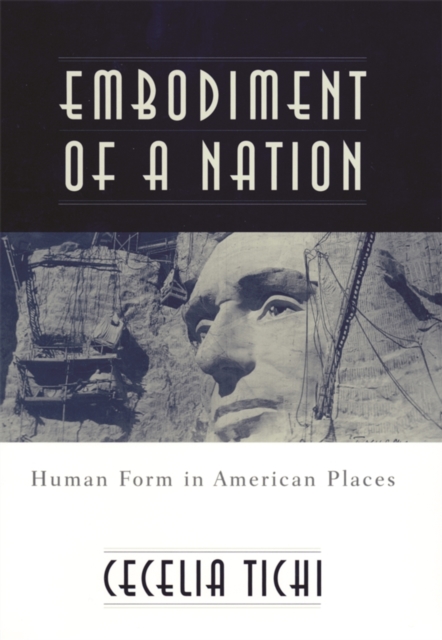
Embodiment of a Nation
From Harriet Beecher Stowe's image of the Mississippi's \"bosom\" to Henry David Thoreau's Cape Cod as \"the bared and bended arm of Massachusetts,\" the American environment has been represented in terms of the human body. Exploring such instances of embodiment, Cecelia Tichi exposes the historically varied and often contrary geomorphic expression of a national paradigm.
eBook

Best of Times, Worst of Times
Late twentieth and early twenty-first century America has been labeled as \"The New Gilded Age,\" a phrase that embodies the glitz and glamour of one of the wealthiest countries in the world but also suggests the greed, corruption, and inequalities teeming just below the surface. Identifying some of the sparkling moments of humanity interwoven between the moments of crisis, Best of Times, Worst of Times features short stories by such renowned writers as Junot Diaz, George Saunders, Jhumpa Lahiri, Tobias Wolff, and many others, whose distinctive authorial voices lend urgency and a sense of heightened awareness to the modern moment. Commenting on and making sense of what is going on in America today, fractured as it is by two ongoing wars, the aftermath of 9/11, Hurricane Katrina, and the worst economic collapse since the Great Depression, these stories speak to some of the most germane issues confronting America today, from race relations, immigration, and social class to gender issues, Iraq, and imperialism. These expertly culled, emotionally powerful stories provide the perfect mirror with which to examine the real state of the union.
eBook