
Catalogue Search | MBRL


Are you sure you want to remove the book from the shelf?

{{itemTitle}}
2
result(s) for
"Tick, Judith, author"
Sort by:

Becoming Ella Fitzgerald : the jazz singer who transformed American song
A landmark biography that reclaims Ella Fitzgerald as a major American artist and modernist innovator. Ella Fitzgerald (1917-1996) possessed one of the twentieth century's most astonishing voices. In this first major biography since Fitzgerald's death, historian Judith Tick offers a sublime portrait of this ambitious risk-taker whose exceptional musical spontaneity made her a transformational artist. Becoming Ella Fitzgerald clears up long-enduring mysteries. Archival research and in-depth family interviews shed new light on the singer's difficult childhood in Yonkers, New York, the tragic death of her mother, and the year she spent in a girls' reformatory school -- where she sang in its renowned choir and dreamed of being a dancer. Rarely seen profiles from the Black press offer precious glimpses of Fitzgerald's tense experiences of racial discrimination and her struggles with constricting models of Black and white femininity at midcentury. Tick's compelling narrative depicts Fitzgerald's complicated career in fresh and original detail, upending the traditional view that segregates vocal jazz from the genre's mainstream. As she navigated the shifting tides between jazz and pop, she used her originality to pioneer modernist vocal jazz. Interpreting long-lost setlists, reviews from both white and Black newspapers, and newly released footage and recordings, the book explores how Ella's transcendence as an improvisor produced onstage performances every bit as significant as her historic recorded oeuvre. From the singer's first performance at the Apollo Theatre's famous \"Amateur Night\" to the Savoy Ballroom, where Fitzgerald broke through with Chick Webb's big band in the 1930s, Tick evokes the jazz world in riveting detail. She describes how Ella helped shape the bebop movement in the 1940s, as she joined Dizzy Gillespie and her then-husband, Ray Brown, in the world-touring Jazz at the Philharmonic, one of the first moments of high-culture acceptance for the disreputable art form. Breaking ground as a female bandleader, Fitzgerald refuted expectations of musical Blackness, deftly balancing artistic ambition and market expectations. Her legendary exploration of the Great American Songbook in the 1950s fused a Black vocal aesthetic and jazz improvisation to revolutionize the popular repertoire. This hybridity often confounded critics, yet throughout the 1970s and 1980s, Ella reached audiences around the world, electrifying concert halls, and sold millions of records. A masterful biography, Becoming Ella Fitzgerald describes a powerful woman who set a standard for American excellence nearly unmatched in the twentieth century.
Book
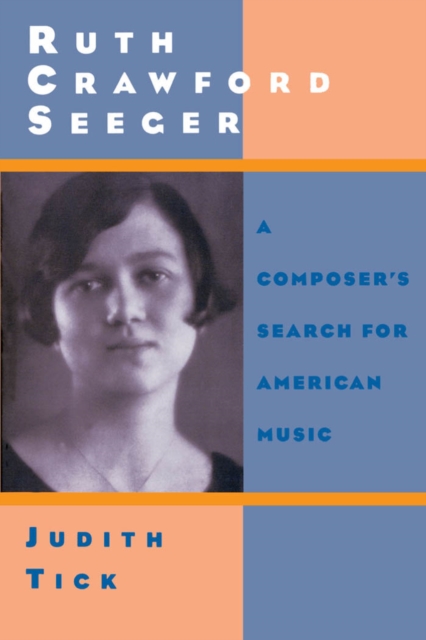
Ruth Crawford Seeger
Ruth Crawford Seeger (1901-1953) is frequently considered the most significant American female composer in this century.Joining Aaron Copland and Henry Cowell as a key member of the 1920s musical avant-garde, she went on to study with modernist theorist and future husband Charles Seeger, writing her masterpiece, String Quartet 1931, not long.
eBook