
Catalogue Search | MBRL


Are you sure you want to remove the book from the shelf?

{{itemTitle}}
136
result(s) for
"Tidwell, James"
Sort by:


The limits of nudging: Results of a randomized trial of text messages to promote home-based caregiving and reduce perceptions of stigma for COVID-19 patients in Kenyan informal settlements
During the early stages of the global COVID-19 pandemic, governments searched for effective means to rapidly disseminate information about how to prevent the disease and care for sick household members. In June 2020, the government of Kenya considered sending text messages, a behavioral nudging approach, to inform and persuade the public to practice home-based care for those who were infected. We conducted a randomized evaluation of simple informational messages compared to messages targeting personal and social benefits for those receiving the messages. We hypothesized that those that received messages tailored around social or personal benefit would be more likely to undertake the promoted behaviors of isolating if infected with COVID-19 and intending to care for an infected family member. While fear and perceptions of stigma were widespread, more than two-thirds of respondents in the control condition expressed an intention to care for an infected family member at home. Despite greater recall of the personal benefit message, which used reciprocity as its key behavioral lever, intentions to provide care at home and perceptions of stigma did not differ across study groups. Rather, capabilities such as wealth and having sufficient room at home were the key determinants. While text messages as behavioral nudges may be useful for some behaviors, policymakers should consider a broader range of tools for behaviors that are influenced by people’s capabilities, since even low-cost interventions may crowd out the time and energy needed for other responses during an emergency.
Journal Article
Impact of a teacher-led school handwashing program on children’s handwashing with soap at school and home in Bihar, India
Handwashing with soap is an important preventive health behavior, and yet promoting this behavior has proven challenging. We report the results of a program that trained teachers to deliver a handwashing with soap behavior change program to children in primary schools in Bihar, India. Ten intervention schools selected along with ten nearby control schools, and intervention schools received the \"School of Five\" program promoting handwashing with soap using interactive stories, games, and songs, behavioral diaries to encourage habit formation, and public commitment. Households with children aged 8-13 attending the nearby school were enrolled in the study. Handwashing with soap was measured using sticker diaries before eating and after defecation 4 weeks after the intervention was completed. Children in the treatment reported 15.1% more handwashing with soap on key occasions (35.2%) than those in the control group (20.1%) (RR: 1.77, CI: (1.22, 2.58), p = .003). There was no evidence that handwashing with soap after defecation was higher in the treatment group than the control group (RR: 1.18, CI: (0.88, 1.57), p = .265), but there was strong evidence that handwashing with soap was greater in the treatment than in the control before eating (RR: 2.68, 95% CI: (1.43, 5.03), p = .002). Rates of handwashing increased both at home (RR: 1.63, CI: 1.14, 2.32), p = .007) and at school (RR: 4.76, 95% CI: (1.65, 17.9), p = .004), though the impact on handwashing with soap at key occasions in schools was much higher than at home. Promoting handwashing with soap through teachers in schools may be an effective way to achieve behavior change at scale.
Journal Article

Freshwater microalgae (Schizochytrium sp.) as a substitute to fish oil for shrimp feed
Micro-algae,
Schizochytrium
sp., is rich source of docosahexaenoic acid, DHA (66%-lipid with 27%-DHA). Eight nutritionally balanced-diets were formulated: diet 1 (control) consisted of only fish oil (FO); diets 2 and 3 had increasing amounts of algae-meal and soybean oil (SBO) at the expense of FO; diet 4 consisted of a combination of algae meal (37-g/kg), SBO (21-g/kg), and linseed oil (LSO) at 4-g/kg each; diet 5 had microalgae meal at 50-g/kg and equal amounts of LSO and SBO at 8-g/kg; diets 6 and 7 contained equal amounts of algae-meal at 62-g/kg, but with LSO or SBO added at 8-mg/g, respectively; diet 8 contained only algae-meal at 75-mg/g. Growth and feeding efficiencies of
L. vannamei
were not significantly different among treatments. Fatty acid composition of muscle generally reflected that of the diet. The amount of muscle sub-epidermal adipose tissue was significantly higher for shrimp fed diets 3 and 7, while intestinal lipase was significantly higher in shrimp fed diets 7 and 8. Muscle lipid peroxidation was unaffected by the dietary treatments, although antioxidant activities were significantly higher in shrimp fed diet 7 compared to those fed diet 1. Overall algal-meal can completely replace the FO in shrimp feed.
Journal Article

Users are willing to pay for sanitation, but not as much as they say: empirical results and methodological comparisons of willingness to pay for peri-urban sanitation in Lusaka, Zambia using contingent valuation, discrete choice experiments, and hedonic pricing
Significant investment is needed to improve peri-urban sanitation. Consumer willingness to pay may bridge some of this gap. While contingent valuation has been frequently used to assess this demand, there are few comparative studies to validate this method for water and sanitation. We use contingent valuation to estimate demand for flushing toilets, solid doors, and inside and outside locks on doors and compare this with results from hedonic pricing and discrete choice experiments. We collected data for a randomized, controlled trial in peri-urban Lusaka, Zambia in 2017. Tenants were randomly allocated to discrete choice experiments (n = 432) or contingent valuation (n = 458). Estimates using contingent valuation were lower than discrete choice experiments for solid doors (US $2.6 vs. US$ 3.4), higher for flushing toilets ( $3.4 vs. $ 2.2), and were of the opposite sign for inside and outside locks ( $1.6 vs. $− 1.1). Hedonic pricing aligned more closely to discrete choice experiments for flushing toilets ( $1.7) and locks (−$ 0.9), suggesting significant and inconsistent bias in contingent valuation estimates. While these results provide strong evidence of consumer willingness to pay for sanitation, researchers and policymakers should carefully consider demand assessment methods due to the inconsistent, but often inflated bias of contingent valuation.
Journal Article

Mobility Patterns During COVID-19 Travel Restrictions in Nairobi Urban Informal Settlements: Who Is Leaving Home and Why
Nairobi’s urban slums are ill equipped to prevent spread of the novel coronavirus disease (COVID-19) due to high population density, multigenerational families in poorly ventilated informal housing, and poor sanitation. Physical distancing policies, curfews, and a citywide lockdown were implemented in March and April 2020 resulting in sharp decreases in movement across the city. However, most people cannot afford to stay home completely (e.g., leaving daily to fetch water). If still employed, they may need to travel longer distances for work, potentially exposing them COVID-19 or contributing to its spread. We conducted a household survey across five urban slums to describe factors associated with mobility in the previous 24 h. A total of 1695 adults were interviewed, 63% female. Of these, most reported neighborhood mobility within their informal settlement (54%), 19% stayed home completely, and 27% reported long-distance mobility outside their informal settlement, mainly for work. In adjusted multinomial regression models, women were 58% more likely than men to stay home (relative risk ratio (RRR): 1.58, 95% confidence interval (CI): 1.16, 2.14) and women were 60% less likely than men to report citywide mobility (RRR: 0.40; 95% CI 0.31, 0.52). Individuals in the wealthiest quintile, particularly younger women, were most likely to not leave home at all. Those who reported citywide travel were less likely to have lost employment (RRR: 0.49; 95% CI 0.38, 0.65) and were less likely to avoid public transportation (RRR: 0.30; 95% CI 0.23, 0.39). Employment and job hunting were the main reasons for traveling outside of the slum; less than 20% report other reasons. Our findings suggest that slum residents who retain their employment are traveling larger distances across Nairobi, using public transportation, and are more likely to be male; this travel may put them at higher risk of COVID-19 infection but is necessary to maintain income. Steps to protect workers from COVID-19 both in the workplace and while in transit (including masks, hand sanitizer stations, and reduced capacity on public transportation) are critical as economic insecurity in the city increases due to COVID-19 mitigation measures. Workers must be able to commute and maintain employment to not be driven further into poverty. Additionally, to protect the majority of individuals who are only travelling locally within their settlement, mitigation measures such as making masks and handwashing stations accessible within informal settlements must also be implemented, with special attention to the burden placed on women.
Journal Article

Low-cost Light-emitting Diode Lights Reduce Production Cost of Bibb Lettuce Grown in Aquaponic Systems
In temperate climates, aquaponic producers must use artificial lighting; however, purchasing light-emitting diode (LED) grow lights can be cost-prohibitive. Two aquaponic trials evaluated low-cost LED lighting for the growth of bibb lettuce ( Lactuca sativa var. capitata ). In trial 1, seven low-cost LED lights were screened and compared with a high-end LED grow light. The three best-performing lights in terms of total plant biomass produced (grams) and total plant biomass per unit of electricity (grams per square meter per kilowatt-hour) were more intensively evaluated in trial 2. These lights included Spider Farmer SF-2000 [SPI ( $300)], Fluence RAZRx [FLU ($ 364)], Designers Fountain 6-Light 5000 K LED High Bay Light [DES ( $100)], and the control NeoSol DS [NEO ($ 1400)]. After 17 days, lettuce grown under NEO achieved higher ( P ≤ 0.05) total biomass (939 g) than DES (812 g). There were no differences ( P > 0.05) in the average individual plant weights in any treatment. Plant production efficiency (grams per square meter per kilowatt-hour) was higher in DES than NEO ( P ≤ 0.05) but was not different from SPI and FLU ( P > 0.05). Results indicate that low-cost LEDs are a viable option for producers looking to reduce investment costs while maintaining adequate plant growth. To further describe potential cost savings for producers, a partial budget analysis evaluated the net change in profits and benefit/cost ratio (BCR) of the experimental lights. All showed improved economic results compared with the control (NEO). These studies indicate that low-cost LED lights can support similar plant growth, at higher energy efficiencies, with better economic viability than more expensive grow lights.
Journal Article

Using a theory-driven creative process to design a peri-urban on-site sanitation quality improvement intervention
Background
Behavior change interventions have been developed by drawing from many different theories using design processes of varying specificity. We describe the development of a behavior change intervention to improve on-site peri-urban sanitation quality in Lusaka, Zambia using the Behavior Centered Design (BCD) framework to explain the results of the process applied to improving the quality of shared peri-urban sanitation and compare them to similar interventions.
Methods
We used the BCD behavioral determinants model to synthesize the data from our literature review and formative research. Then, we partnered with creative professionals using a design process to develop a theory-driven on-site peri-urban sanitation intervention. Particular attention was paid to the implications of using BCD for intervention development on improving its effectiveness, increasing the contributions to knowledge for other behaviors and settings, and advancing the discipline of applied behavioral science.
Results
Based on findings from a literature review and formative research, we designed an intervention to encourage landlords to improve their toilets by making them more accessible, desirable, hygienic, and sustainable. The intervention involved landlords meeting in facilitated groups every 2 weeks with individual follow-up after each meeting. The meetings presented surprising “hidden camera”-style videos to reveal tenants’ perspectives, used participatory activities to help landlords reevaluate the benefits they would derive from improving sanitation on their plots, and provided practical guidance and mechanisms to facilitate the performance of construction and cleaning behaviors.
Conclusions
Using the BCD framework provided an easy-to-follow intervention design process. The resulting intervention is highly creative and multi-faceted, with each element having a theoretical role in an explicit theory of change. The development of this theory-driven intervention advances applied behavioral science by facilitating evaluation of each of the behavior change techniques and the overall delivery mechanism hypothesized to change the target behaviors. This informs the adaptation of these findings to improving on-site sanitation in other settings and the iterative development of the BCD model, which can be used to more effectively change other behaviors.
Journal Article
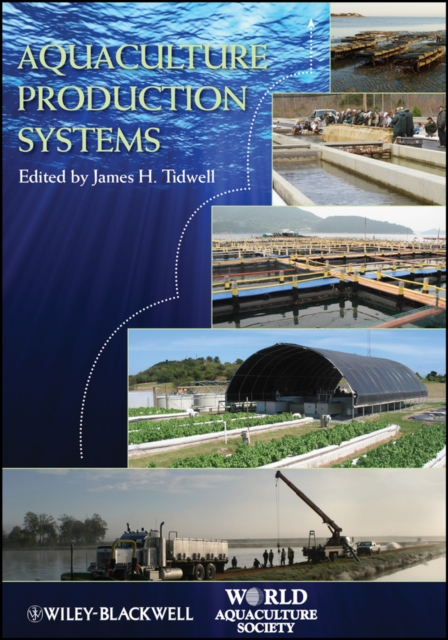
Aquaculture production systems
Provides a valuable survey of key production systems that will allow the reader to better understand how aquaculture depends upon and interacts with its environment. Looks at a variety of systems currently used in the production of shellfish and finfish. These systems range from low input methods to super-intensive systems
eBook

Evaluation of different artificial light technologies for indoor aquaponic production of Bibb lettuce, Lactuca sativa var. capitata, and compact basil, Ocimum basilicum var. Genovese
Aquaponic production in temperate climates is often conducted in insulated buildings to reduce heating costs and therefore must rely on artificial lighting to replace natural sunlight. However, there are several different light technologies available to producers. We conducted two aquaponic growth trials to compare four lighting technologies for the indoor production of Bibb lettuce, Lactuca sativa var. capitata (Trial 1), and basil, Ocimum basilicum var. Genovese (Trial 2). Light types evaluated included metal halide (MH), fluorescent (FLO), light‐emitting diode (LED), and induction (IND). Using a complete block design, each of the four identical aquaponic systems included all four light types. Juvenile Nile tilapia, Oreochromis niloticus, (Trial 1:145 g; Trial 2:169 g) were stocked into each replicate system and fed at a rate of 60 g feed m−2 of plant grow‐space per day. In Trial 1, Bibb lettuce plants grown under LED lights had significantly higher (p ≤ 0.05) average individual weights (164 g), higher production per unit area (3118 g m−2), and higher production per unit energy (84 g m−2 kWh−1) compared to those grown under the other light types. Bibb lettuce grown under IND and FLO lights had significantly higher (p ≤ 0.05) average individual weights (82.0 and 78.0 g, respectively) and production per unit of area (1762 and 1700 g m−2, respectively) than those grown under MH lights (1382 g m−2). In Trial 2, Basil grown under LED lights had significantly higher (p ≤ 0.05) average individual weights (188 g), production per unit area (4970 m−2), and production per unit of energy (1483 g m−2 kWh−1) than basil grown under the other three light types. There was no significant difference (p > 0.05) in average individual weight or production per unit area among basil plants grown under MH, IND or FLO. Analysis of leaf tissues indicated several statistically significant differences among the light treatments. However, the actual magnitudes of these differences were relatively small. Evaluation of emitted wavelengths indicate that production differences may be related to the amount of red light spectra (600–699 nm), and the ratio of red light to blue light (400–499 nm) (R:B ratio) produced by the different light types. The LED had a greater production of red spectra and higher R:B ratios than other lights which appears to be advantageous for growth of Bibb lettuce and basil.
Journal Article