
Catalogue Search | MBRL


Are you sure you want to remove the book from the shelf?

{{itemTitle}}
3,258
result(s) for
"Tom Fox"
Sort by:

Supporting the emotional well-being of children and young people with learning disabilities : a whole school approach
\"This highly practical resource provides schools for children with severe and complex learning disabilities with a framework to support their well-being and mental health. Each chapter provides material, ideas and activities for special school teachers with sections that can be used and adapted for training workshops with the school staff. This book will ensure that teachers of these children develop a greater understanding of their emotional needs and follow two central strategies: to prioritise and support the emotional wellbeing of the whole class and of individual children, recognising that emotional wellbeing is integral to learning and enjoyment at school\"-- Provided by publisher.
Book

Creating the Hudson River Park
The 4-mile-long, 550-acre Hudson River Park is nearing completion and is the largest park built in Manhattan since Central Park opened more than 150 years ago. It has transformed a derelict waterfront, protected the Hudson River estuary, preserved commercial maritime activities, created new recreational opportunities for millions of New Yorkers, enhanced tourism, stimulated redevelopment in adjacent neighborhoods, and set a precedent for waterfront redevelopment. The Park attracts seventeen million visitors annually. Creating the Hudson River Park is a first-person story of how this park came to be. Working together over three decades, community groups, civic and environmental organizations, labor, the real estate and business community, government agencies, and elected officials won a historic victory for environmental preservation, the use and enjoyment of the Hudson River, and urban redevelopment. However, the park is also the embodiment of a troubling trend toward the commercialization of America's public parks. After the defeat of the $2.4 billion Westway plan to fill 234 acres of the Hudson in 1985, the stage was set for the revitalization of Manhattan's West Side waterfront. Between 1986 and 1998 the process focused on the basics like designing an appropriate roadway, removing noncompliant municipal and commercial activities from the waterfront, implementing temporary improvements, developing the Park's first revenue-producing commercial area at Chelsea Piers, completing the public planning and environmental review processes, and negotiating the 1998 Hudson River Park Act that officially created the Park. From 1999 to 2009 planning and construction were funded with public money and focused on creating active and passive recreation opportunities on the Tribeca, Greenwich Village, Chelsea, and Hell's Kitchen waterfronts. However, initial recommendations to secure long term financial support for the Park from the increase in adjacent real estate values that resulted from the Park's creation were ignored. City and state politicians had other priorities and public funding for the Park dwindled. The recent phase of the project, from 2010 to 2021, focused on \"development\" both in and adjacent to the Park. Changes in leadership, and new challenges provide an opportunity to return to a transparent public planning process and complete the redevelopment of the waterfront for the remainder of the 21st-century. Fox's first-person perspective helps to document the history of the Hudson River Park, recognizes those who made it happen and those who made it difficult, and provides lessons that may help private citizens and public servants expand and protect the public parks and natural systems that are so critical to urban well-being.
eBook
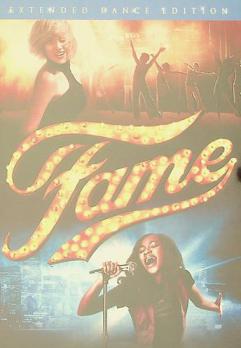
Fame
Passions will be tested and young hearts will be broken. Ultimately, talent, dedication and hard work will triumph. Centers around a group of dancers, singers, musicians and actors at the New York City High School of Performing Arts, and their spirited drive to live out their dreams of stardom. In an incredibly competitive atmosphere, each student must shine amidst the tumult of school work, deep friendships, budding romance and self-discovery.
DVD

Association between routine cell salvage use for lower segment caesarean section and post-operative iron infusion and anemia
Purpose
Intraoperative cell salvage is central to Patient Blood Management including for lower segment caesarean section. Prior to April 2020, we initiated intraoperative cell salvage during caesarean section based on risk assessment for hemorrhage and patient factors. As the pandemic broadened, we mandated intraoperative cell salvage to prevent peri-partum anemia and potentially reduce blood product usage. We examined the association of routine intraoperative cell salvage on maternal outcomes.
Methods
We conducted a single-center non-overlapping before-after study of obstetric patients undergoing lower segment caesarean section in the 2 months prior to a change in practice (‘usual care = selective intraoperative cell salvage’,
n
= 203) and the 2 months following (‘mandated intraoperative cell salvage’,
n
= 228). Recovered blood was processed when a minimal autologous reinfusion volume of 100 ml was expected. Post-operative iron infusion and length of stay were modelled using logistic or linear regression, using inverse probability weighting to account for confounding.
Results
More emergency lower-segment caesarean sections occurred in the Usual Care group. Compared to the Usual Care group, post-operative hemoglobin was higher and anemia cases fewer in the Mandated intraoperative cell salvage group. Rates of post-partum iron infusion were significantly lower in the Mandated intraoperative cell salvage group (OR = 0.31, 95% CI = 0.12 to 0.80,
P
= 0.016). No difference was found for length of stay.
Conclusion
Routine cell salvage provision during lower segment caesarean section was associated with a significant reduction in post-partum iron infusions, increased post-operative hemoglobin and reduced anemia prevalence.
Journal Article

Unscripted Possibilities
Abstract “Unscripted Possibilities” examines the potential for change that emerges in rural environments that are affected by poverty and educational reforms that ignore the specific contexts of rural schools. Using a National Writing Project program, the College, Career, and Community Writers Program as case, we argue that professional learning relationships that are characterized by mutuality and indeterminacy create changes in teacher practice and school culture. Our analysis adapts concepts from Anna Tsing’s (2015)The Mushroom at the End of the World to uncover hopeful possibilities in damaged school environments.
Journal Article

Higher spring phenological sensitivity to forcing temperatures of Asian compared to European tree species under low and high pre-chilling conditions
Winter chilling, spring forcing temperature and photoperiod are the most important drivers explaining the spatial and temporal variability of spring phenology in temperate trees. However, how these factors interact with each other on dormancy release and spring budburst date remains unclear and varies greatly depending on species. Our knowledge is also limited as to whether heat accumulation of forcing temperatures that trigger bud break in spring is a linear or non-linear process. Here, we aimed at experimentally quantifying the effect of chilling, forcing, photoperiod and their interactions on the budburst dates of nine different temperate tree species from East Asia (near Beijing, China) and Central Europe (near Zurich, Switzerland), including six phylogenetically related species (same genus). We conducted a full factorial experiment in climate chambers using two chilling (low and high, i.e., 0 vs. 56 days at 2°C after sampling at the end of December), four forcing (5, 10, 15, and 20°C), and two photoperiod (8 vs. 16 h) treatments simultaneously in Beijing and Zurich. We found that species growing near Beijing responded more readily to forcing conditions than species of the same genus growing near Zurich regardless of chilling treatment. Budburst timing of most species but European beech was marginally, if at all, affected by photoperiod. Furthermore, our results suggest that linear heat accumulation, as commonly used with the growing degree hours (GDH) model, could result in accurate prediction of budburst date depending on the temperature threshold used as a basis for heat accumulation. Our results also demonstrate the important role of chilling in shaping the sensitivity and rate of forcing accumulation to trigger budburst and suggest that species-specific sigmoid relationship for accumulating heat that accounts for prior chilling exposure may yield better predictions of budburst dates. Our results suggest that deciduous trees may have adapted their chilling and forcing requirements in regards to the predictability of winter-spring transition and late spring frosts. A less predictable winter-spring transition, as observed in Central Europe, could have driven species evolution towards higher chilling and forcing requirements compared to species growing in a more predictable climate of Northeastern Asia. Our cross-continental experiment therefore suggests that the spring phenology of East Asian species is tighter coupled to spring forcing temperature than Central European forests.
Journal Article

The National Writing Project’s Networked Personal/Political Strategy
The National Writing Project (NWP) network consists of roughly 180 local writing projects (\"nodes\"), created through partnerships among college or university faculty and K--12 educators. Universities and districts help sustain these nodes, but what makes a network a network, of course, are the links between the nodes. Computer networks link through protocols, common processes that make messages from one node to another understandable. Networks of people also have protocols--agreed-upon values, communication practices, or literacies that connect them. The NWP's collectivity works through formal and informal protocols for practice that distinguish NWP work in school-based professional development, in community-based programs, in digital environments, and in our signature program, the invitational institute. As NWP participants, they understand that the building and rebuilding of their \"collective\"--its longevity--rely on these protocols and the values they embody. Here are three practices they have come to embrace as described by diverse NWP participants are presented.
Journal Article

Giving Credit Where Credit Is Due
Kim Jaxon led the effort to draw upon the collegiality among students in Chico's excellent EOP Summer Bridge program by creating a large enrollment composition class (around 100 students) that meets two times per week in a large room and one time per week in a workshop of 9-10 students. Because the students are already familiar with each other socially, they are lively, engaged, and supportive of each other's success. In the fall of 2018, the English Placement Test was eliminated as a requirement for California State University system, in part because of mainstreaming and similar programs at CSU campuses and in the state community college system. At the National Writing Project he and his colleagues are leading their i3 Scale-Up grant that focuses on professional development on teaching argument writing in economically poor rural schools.
Journal Article

Altered Neuro States
Background the artist's own experience of freedom in receiving a diagnosis of autism spectrum disorder at age 37. Shares his drawing practice. Describes how each drawing is a way of bridging the physical world, delivered by his sensory system, and his internal world. Source: National Library of New Zealand Te Puna Matauranga o Aotearoa, licensed by the Department of Internal Affairs for re-use under the Creative Commons Attribution 3.0 New Zealand Licence.
Journal Article

Corporate Social Responsibility and Development: In quest of an agenda
The contemporary CSR agenda is skewed by the dogma that often limits it to voluntary business activities, by its domination by actors in the North, and its focus on large enterprises. Tom Fox argues there is an urgent need for a more development-oriented approach that focuses on the enabling environment for responsible business in the South and that brings the economic and equity aspects of sustainable development to the forefront of the agenda.
Journal Article