
Catalogue Search | MBRL


Are you sure you want to remove the book from the shelf?

{{itemTitle}}
88
result(s) for
"Treacy, Matt"
Sort by:

The IRA 1956-69 : rethinking the Republic
This study of the IRA's history in the 1960s, when internal divisions culminated in the 1969 split which is often seen as key to the conflict which erupted that year. This book provides an exhaustive survey of internal and official sources, as well as interviews with key IRA members.
Book
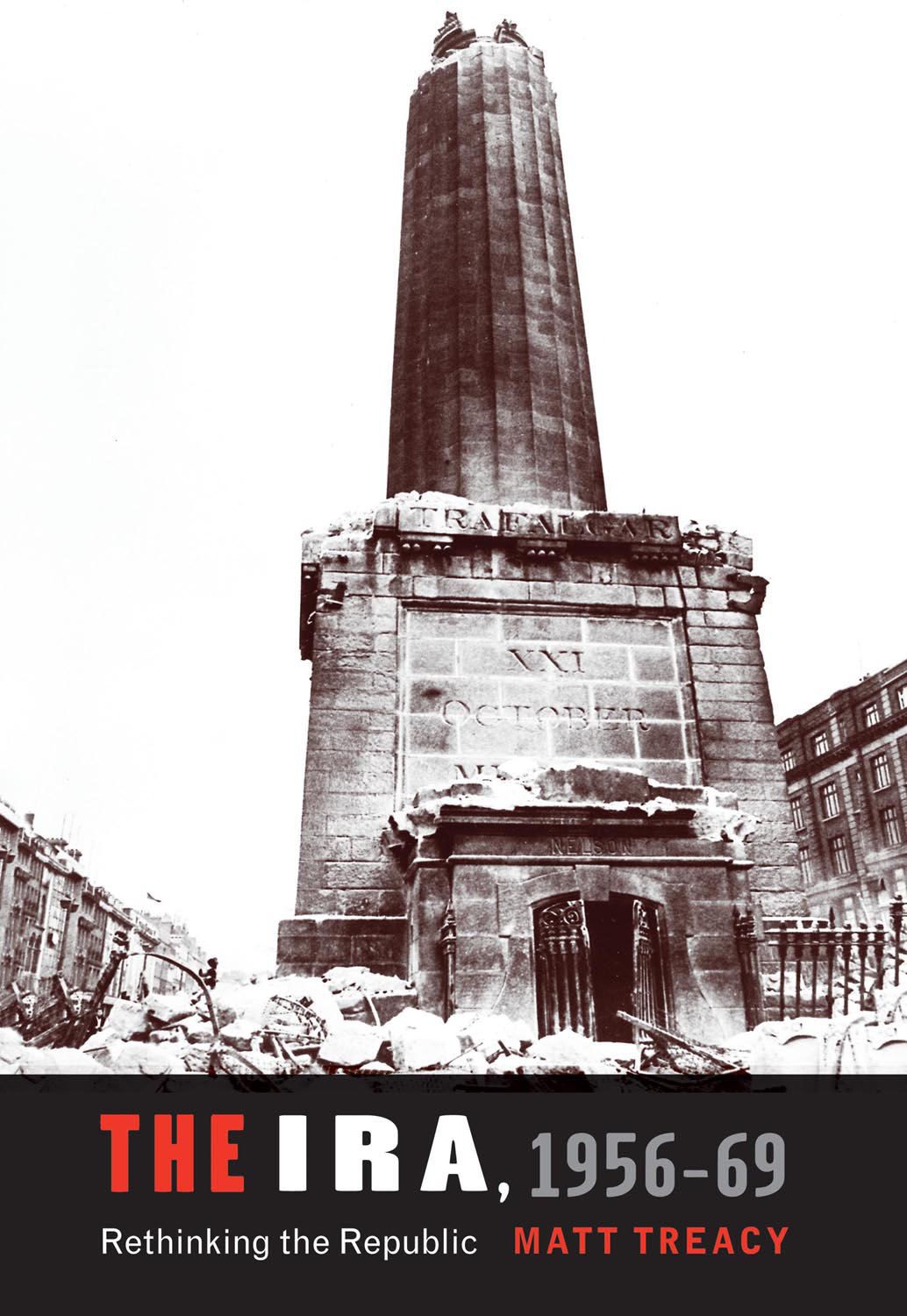
The IRA 1956–69
While there have been many books written about the IRA since 1916, comparatively little attention has been paid to the organisation during the 1960s, despite the fact that the internal divisions culminating in the 1969 split are often seen as key to the conflict which erupted that year. This book, newly available in paperback, redresses that vacuum and through an exhaustive survey of internal and official sources, as well as interviews with key IRA members, provides a unique and fascinating insight into radical Republican politics which will be of interest to those interested in Irish history and politics.The author looks at the root of the divisions which centred on conflicting attitudes within the IRA on armed struggle, electoral participation and socialism. He argues that while the IRA did not consciously plan the northern 'Troubles', the internal debate of the 1960s had implications for what happened in 1969.
eBook

IRA 1956-69
While there have been many books written about the IRA since 1916, comparatively little attention has been paid to the organisation during the 1960s, despite the fact that the internal divisions culminating in the 1969 split are often seen as key to the conflict which erupted that year. This book, newly available in paperback, redresses that vacuum and through an exhaustive survey of internal and official sources, as well as interviews with key IRA members, provides a unique and fascinating insight into radical Republican politics which will be of interest to those interested in Irish history and politics. The author looks at the root of the divisions which centred on conflicting attitudes within the IRA on armed struggle, electoral participation and socialism. He argues that while the IRA did not consciously plan the northern 'Troubles', the internal debate of the 1960s had implications for what happened in 1969.
eBook
IRA 1956-69: Rethinking the Republic: Rethinking the Republic
While there have been many books written about the IRA since 1916, comparatively little attention has been paid to the organisation during the 1960s, despite the fact that the internal divisions culminating in the 1969 split are often seen as key to the conflict which erupted that year.This book rederesses that vacuum and through an exhaustive survey of internal and official sources, as well as interviews with key IRA members, provides a unique and fascinating insight into radical Republican politics which will be of interest to those interested in Irish history and politics. The author looks at the root of the divisions which centred on conflicting attitudes within the IRA on armed struggle, electoral participation and socialism. He argues that while the IRA did not consciously plan the northern 'Troubles', the internal debate of the 1960s had implications for what happened in 1969.
eBook
The Northern crisis and the split
The start of 1969 brought an escalation in tensions in Northern Ireland and there were indications that some Goulding supporters were annoyed at what they regarded as the provocative strategy being pursued by Peoples Democracy and other radical elements in the civil rights movement outside of the control of NICRA. Peoples Democracy was founded in October 1968 in Queen’s by students who were involved in the civil rights movement and the university left. They were strongly influenced by black American groups such as the Student Non Violent Coordinating Council (SNCC) and developed in a similar manner towards a more radical
Book Chapter
The ideology of traditional republicanism
The general view of the republican movement in the 1940s and 1950s, including that of former Chief of Staff Seán Cronin, was that it was imbued with a deeply conservative ideology.¹ It has been argued that the movement was reactionary, and had more in common with European fascism than it did with the leftist image of the movement in the 1930s, although the prominence of socialist ideas projected throughAn Phoblachtunder the editorship of Peadar O’Donnell and Frank Ryan did not necessarily reflect the republican support base. Others have claimed that the movement was by and large apolitical but
Book Chapter
Towards the National Liberation Front
In 1970 Cathal Goulding claimed that ‘by 1967 the movement had become dormant’.¹ Sales of theUnited Irishmanhad fallen to a few thousand by mid-1967, while publicly claiming a circulation of thirty thousand.² When Mick Ryan was asked to travel around the country to collect debts and to report on the movement he found it to be in an ‘awful state’.³ An IRA document on theUnited Irishmanfrom February 1967 recognised the need to boost circulation by setting proper sales targets under the responsibility of county organisers and becoming a ‘campaigning paper’ on social issues.⁴ The paper’s editor
Book Chapter

The Wolfe Tone Society and the Communists
Goulding and those close to him after 1962 quickly came to the conclusion that by itself Sinn Féin was not an adequate vehicle for their political ambitions. Instead, they decided to establish an organisation that they hoped would draw in a wider group of individuals who were sympathetic to republicanism but antipathetic to Sinn Féin and the IRA. A March 1969 memo from Peter Berry suggests that they were persuaded of the merits of this by ‘suggestions from left-wing sources’ outside the movement.¹
The main vehicle for the new departure was the Wolfe Tone Society, which was established to organise
Book Chapter
Abstentionism and the growth of internal divisions
For traditionalist republicans, the refusal to recognise the parliaments in Leinster House and Stormont symbolised their allegiance to thede jureRepublic which they claimed had been illegally overthrown in 1922. For them it still had legitimacy with legal authority having been passed to the IRA Army Council in 1938 by the surviving anti-Treaty Sinn Féin members of the Dáil elected in 1923. Traditionalists, as represented today by Republican Sinn Féin and the Continuity IRA, still adhere to that belief.
A proposal to abandon abstentionism was put to the IRA Convention in November 1964. The strength of the opposition led
Book Chapter
The year 1966 and the revival of the IRA ‘threat’
The Dáil passed the Anglo-Irish Free Trade Agreement on 7 January 1966 by 66 votes to 19. The Labour Party opposed the measure and Fine Gael abstained. Labour put many of the same arguments as republicans and one Labour TD, Denis Larkin, discerned signs of a realignment in the politics of the Dáil that would open up the kind of opportunities for the left that were being envisaged by some republicans and the Communists.¹ The Wolfe Tone Society, which had organised a lobby of the Dáil on 4 January under the auspices of the Economic Independence Committee, congratulated the Labour
Book Chapter