
Catalogue Search | MBRL


Are you sure you want to remove the book from the shelf?

{{itemTitle}}
89
result(s) for
"Treas, Judith"
Sort by:


Educational Gradients in Parents' Child-Care Time Across Countries, 1965-2012
Parental time with children leads to positive child outcomes. Some studies have reported a positive educational gradient: More educated parents devote more time to children than other parents. Furthermore, some research finds that parental child care increased over time. Less certain is whether more educated parents increased their time more than less educated ones did, whether parenting trends for mothers and fathers are the same, and whether observed patterns characterize all Western countries or only some. Hypotheses inspired by theories of social diffusion, class differentiation, and ideologies of child rearing are tested with time-use data for 11 Western countries between 1965 and 2012. For both mothers and fathers, results indicated a widespread educational gradient and an increase in child-care time. In a number of countries, the positive educational gradient increased; nowhere was it diminished. Thus, the advantages of intensive parenting continued to accrue to the well-educated elite.
Journal Article

Gender Inequality in Housework Across 20 European Nations: Lessons from Gender Stratification Theories
The gendered division of housework is the linchpin in a broader system of gender inequality. Consistent with pioneering feminist theories of gender stratification, this cross-national study demonstrates this approach with multi-level models that consider individual as well as cultural and structural variables that are associated with the absolute time men and women spend doing housework. Building on research relating national gender ideology to the husband-wife shares of housework, this paper asks how gender ideology relates to the absolute amount of time that men and women spend doing housework. Complementing this cultural indicator, the paper introduces a previously neglected constraint on domestic practices, asking whether the quality of a country’s housing stock predicts weekly hours in housework. Drawing on 2012 International Social Survey Program data for 20 European countries, we study nationally representative samples totaling 7733 respondents who were ages 18–65 and legally married, cohabiting, or in civil partnerships. Even controlling for individual-level covariates, results confirm that men and women perform less housework in countries where public opinion supports gender equality. In countries with more substandard housing, however, women, but not men, spend more time in housework than they do elsewhere.
Journal Article
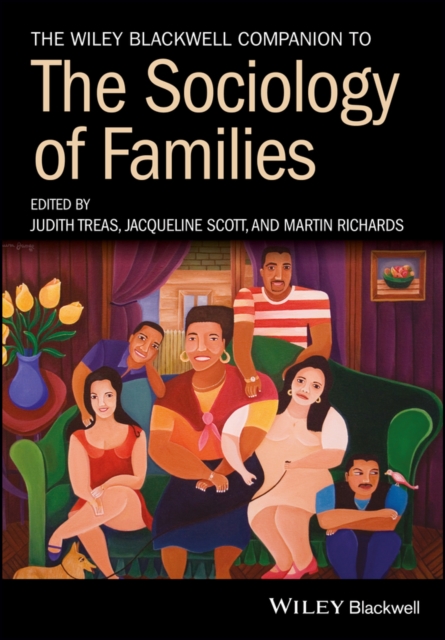
The wiley-blackwell companion to the sociology of families
Written by an international team of experts, this comprehensive volume investigates modern-day family relationships, partnering, and parenting set against a backdrop of rapid social, economic, cultural, and technological change.
* Covers a broad range of topics, including social inequality, parenting practices, children's work, changing patterns of citizenship, multi-cultural families, and changes in welfare state protection for families
* Includes many European, North American and Asian examples written by a team of experts from across five continents
* Features coverage of previously neglected groups, including immigrant and transnational families as well as families of gays and lesbians
* Demonstrates how studying social change in families is fundamental for understanding the transformations in individual and social life across the globe
* Extensively reworked from the original Companion published over a decade ago: three-quarters of the material is completely new, and the remainder has been comprehensively updated
eBook

Attitudes on marriage and new relationships
Consistent with the deinstitutionalization-of-marriage thesis, studies report a decline in support for marital conventions and increased approval of other relationship types. Generalizations are limited by the lack of cross-national research for a broad domain of attitudes on marriage and alternative arrangements, and by the lack of consensus on what counts as evidence.
Acknowledging the conceptual distinction between expectations for behavior inside and outside marriage, we address the deinstitutionalization debate by testing whether support for marital conventions has declined for a range of attitudes across countries.
Based on eleven International Social Survey Program items replicated between the late 1980s and the 2000s, OLS regressions evaluate attitude changes in up to 21 countries.
Consistent with the deinstitutionalization argument, disapproval declined for marital alternatives (cohabitation, unmarried parents, premarital and same-sex sex). For attitudes on the behavior of married people and the nature of marriage the results are mixed: despite a shift away from gender specialization, disapproval of extramarital sex increased over time. On most items, most countries changed as predicted by the deinstitutionalization thesis.
Attitude changes on 'new relationships' and marital alternatives are compatible with the deinstitutionalization of marriage. Beliefs arguably more central to the marital institution do not conform as neatly to this thesis. Because results are sensitive to the indicators used, the deinstitutionalization of marriage argument merits greater empirical and conceptual attention.
Journal Article

Unemployment and the Division of Housework in Europe
Unemployment, especially in insecure times, has devastating effects on families, but it is not clear what happens to domestic work. On the one hand, unemployment frees up time for more housework by both men and women. On the other hand, once unemployed, women may take on more additional housework than men do, either because they capitalize on their time to act out traditional gender roles or because unemployment compounds women’s general disadvantage in household bargaining. Multi-level analyses based on the European Social Survey show that both men and women perform more housework when unemployed. However, the extra domestic work for unemployed women is greater than for unemployed men. They also spend more time on housework when their husband is unemployed. Compared to their employed counterparts, unemployed women, but not men, perform even more housework in a country where the unemployment rate is higher.
Journal Article
Sexual Infidelity Among Married and Cohabiting Americans
Virtually all American couples, married or cohabiting, expect sexual exclusivity of one another. This article asks why some people are sexually exclusive while others have sex with someone besides their mate. Previous research has linked personal values, sexual opportunities, and quality of the marital relationship to extramartial sex. This paper integrates these findings in a multivariate model that incorporates factors informing sexual decision making as well as demographic \"risk factors.\" Nationally representative survey data show higher likelihood of sexual infidelity among those with stronger sexual interests, more permissive sexual values, lower subjective satisfaction with their union, weaker network ties to partner, and greater sexual opportunities. With these factors controlled, gender differences are substantially reduced or eliminated, although racial effects persist.
Journal Article

Transnational Older Adults and Their Families
This qualitative study explores the international migration patterns and the family lives of older adults. Informants (N = 54) reported that they came to the United States to help out their grown children with house-keeping, child care, and domestic economizing. They described how they strategically navigated U.S. immigration laws choosing to visit, immigrate, or naturalize in order to balance their ties to the United States and their homeland. Their transnational loyalties sometimes led to lives that did not strictly match their visa categories. There were \"permanent\" temporary visitors, U.S. permanent residents who maintained a \"permanent\" home elsewhere, and U.S. citizens who had naturalized in order to spend more time abroad. Implications of the findings for immigration policy and family practice are discussed.
Journal Article

Outsourcing the Gender Factory: Living Arrangements and Service Expenditures on Female and Male Tasks
Using data from the U.S. Consumer Expenditure Survey 1998, this study analyzes how much money different types of households spend for domestic services on \"female\" and \"male\" tasks. We test alternative hypotheses based on economic and sociological theories of gender differentiation. Contrary to arguments that marriage lowers the risk to one partner of specializing in housework, we find no differences in service expenditures between cohabiting and married couples. Consistent with gender production arguments that the household context shapes behavior, single women outspend couples across the board. Single men, however, reveal spending behavior more consistent with gender socialization. Comparing single men and single women points to the gendered nature of the tasks as an important aspect of domestic service expenditures.
Journal Article
Call Home? Mobile Phones and Contacts With Mother in 24 Countries
This article explores how the diffusion of mobile phones is associated with communication between adult children and their mothers. The article analyzes 2001 International Social Survey Program data from 24 countries (N = 12,313) combined with the country-level data on the prevalence of mobile phones. Net of individual-level predictors and country wealth, adult children who resided in countries with high prevalence of mobile phones contacted their mothers more frequently. High prevalence of mobile phones was also associated with larger differences in maternal contact by gender and smaller differences by education. These finding suggest that any impact of new communication technology on intergenerational relations is complex.
Journal Article