
Catalogue Search | MBRL


Are you sure you want to remove the book from the shelf?

{{itemTitle}}
16
result(s) for
"Triantaphyllou, Sevi"
Sort by:

Of cattle and feasts: Multi-isotope investigation of animal husbandry and communal feasting at Neolithic Makriyalos, northern Greece
The aim of this study is to investigate livestock husbandry and its relationship to the mobilization of domestic animals for slaughter at large communal feasting events, in Late Neolithic Makriyalos, northern Greece. A multi-isotope approach is built that integrates analysis of: δ13C and δ15N values of human and animal bone collagen for understanding long-term dietary behavior,Incremental δ13C and δ18O values of domestic animal tooth enamel carbonate for assessing seasonal patterns in grazing habits and mobility, and87Sr/86Sr ratios of cattle tooth enamel for examining the possibility that some of the animals consumed at the site were born outside the local environment. The findings indicate that cattle had isotopically more variable diets than sheep, which may reflect grazing over a wider catchment area in the local landscape. Cattle products did not make a significant contribution to the long-term dietary protein intake of the humans, which may indicate that they were primarily consumed during episodic feasting events. There is no indication that pasturing of livestock was pre-determined by their eventual context of slaughter (i.e. large-scale feasting vs. more routine consumption events). Two non-local cattle identified among those deposited in a feasting context may have been brought to the site as contributions to these feasts. The evidence presented provides a more detailed insight into local land use and into the role of livestock and feasting in forging social relationships within the regional human population.
Journal Article
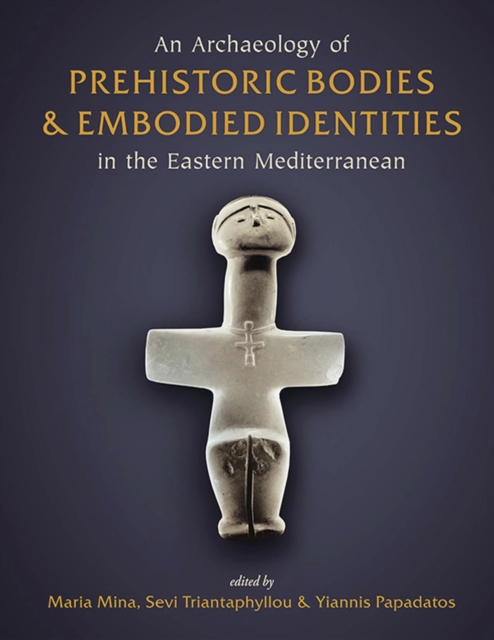
An Archaeology of Prehistoric Bodies and Embodied Identities in the Eastern Mediterranean
In the long tradition of the archaeology of the eastern Mediterranean bodies have held a prominent role in the form of figurines, frescos, or skeletal remains, and have even been responsible for sparking captivating portrayals of the Mother-Goddess cult, the elegant women of Minoan Crete or the deeds of heroic men. Growing literature on the archaeology and anthropology of the body has raised awareness about the dynamic and multifaceted role of the body in experiencing the world and in the construction, performance and negotiation of social identity. In these 28 thematically arranged papers, specialists in the archaeology of the eastern Mediterranean confront the perceived invisibility of past bodies and ask new research questions. Contributors discuss new and old evidence; they examine how bodies intersect with the material world, and explore the role of body-situated experiences in creating distinct social and other identities. Papers range chronologically from the Palaeolithic to the Early Iron Age and cover the geographical regions of the Aegean, Cyprus and the Near East. They highlight the new possibilities that emerge for the interpretation of the prehistoric eastern Mediterranean through a combined use of body-focused methodological and theoretical perspectives that are nevertheless grounded in the archaeological record.
eBook

Early farmers from across Europe directly descended from Neolithic Aegeans
Farming and sedentism first appeared in southwestern Asia during the early Holocene and later spread to neighboring regions, including Europe, along multiple dispersal routes. Conspicuous uncertainties remain about the relative roles of migration, cultural diffusion, and admixture with local foragers in the early Neolithization of Europe. Here we present paleogenomic data for five Neolithic individuals from northern Greece and northwestern Turkey spanning the time and region of the earliest spread of farming into Europe. We use a novel approach to recalibrate raw reads and call genotypes from ancient DNA and observe striking genetic similarity both among Aegean early farmers and with those from across Europe. Our study demonstrates a direct genetic link between Mediterranean and Central European early farmers and those of Greece and Anatolia, extending the European Neolithic migratory chain all the way back to southwestern Asia.
Journal Article

The manipulation of death: a burial area at the Neolithic Settlement of Avgi, NW Greece
In the Neolithic of Northern Greece the disposal of the deceased is strongly related to the community of the living, and in most cases to the built environment. Burials often occur in close proximity to, or underneath ‘domestic’ structures. The constant association of dead ancestors with the living social environment may indicate a particular desire by Neolithic people to negotiate their past by incorporating it into their own present. This paper addresses such issues, based on new evidence from the Neolithic settlement of Avgi, NW Greece. A group of cremations were recently located inside ten small pots buried in an open space in the Neolithic village. The burials consisted of tiny amounts of heavily burnt human bones and, in two cases, were accompanied by carbonized seeds. This paper will discuss the occurrence of the burial pots and the associated cremations as tokens of memory and of special links to the past represented by the dead ancestors.
Journal Article

EXPLORING MOBILITY PATTERNS AND BIOLOGICAL AFFINITIES IN THE SOUTHERN AEGEAN: FIRST INSIGHTS FROM EARLY BRONZE AGE EASTERN CRETE
This paper presents the results of a pilot project which combines, for the first time, biodistance and strontium isotope analyses in the study of human skeletal remains from Early Bronze Age Crete (third millennium bc). Information from these analyses offers, in a direct way, insights into the biological distance, and consequently the gene flow and mobility patterns, among human populations in eastern Crete. The results are synthesised with the evidence of funerary practices in order to explore the nature of interaction among communities in eastern Crete. The biodistance analysis supports a strong genetic affinity between the populations represented at the two Kephala Petras skeletal assemblages, while the results of the available strontium isotope analysis favour their local origin; thus the combined results suggest the lack of significant population influx. The biological distance of the two chronologically contemporary populations at Livari-Skiadi, also manifesting completely different patterns of mortuary disposal, is of particular interest since it contrasts with the Petras situation and raises issues of intra-community distinctions, cultural and biological.
Ανθρώπινη κινητικότητα και βιολογικές συγγένειες στο νότιο Αιγαίο: μια πρώτη προσέγγιση στὴν ανατολική Κρήτη στὴν πρώιμη εποχή του Χαλκού
Το άρθρο παρουσιάζει τα αποτελέσματα ενός πιλοτικού ερευνητικού προγράμματος και συνδυάζει για πρώτη φορά τις βιολογικές αποστάσεις πληθυσμιακών ομάδων με τις αναλύσεις σταθερών ισοτόπων του στροντίου σε ανθρώπινα σκελετικά κατάλοιπα που προέρχονται από την Κρήτη στην Πρώιμη εποχή του Χαλκού (τρίτη χιλιετία π.Χ.). Οι συγκεκριμένες αναλύσεις προσφέρουν, με άμεσο τρόπο, μία πρώτη προσέγγιση στις βιολογικές αποστάσεις και επομένως στη γενετική ροή και στις ανθρώπινες μετακινήσεις στην ανατ. Κρήτη. Τα αποτελέσματα αυτά συνδυάζονται δε σε μία συζήτηση σε σχέση με τις ταφικές πρακτικές της περιόδου από την περιοχή αυτή, έτσι ώστε να διερευνηθεί ο χαρακτήρας της αλληλεπίδρασης των ανθρώπινων κοινοτήτων στην ανατ. Κρήτη. Τα αποτελέσματα των μετρήσεων των βιολογικών αποστάσεων συνιστούν την παρουσία ισχυρών συγγενικών σχέσεων στα δύο ταφικά σύνολα από τη θέση Κεφάλα Πετρά (βραχοσκεπή και ταφικό κτίριο 2) ενώ οι τιμές των σταθερών ισοτόπων του στροντίου υπογραμμίζουν την ντόπια καταγωγή των ανθρώπων από τα ίδια σύνολα, με αποτέλεσμα να διαπιστώνεται μία σχετική απουσία εισροής «ξένων» πληθυσμών. Οι βιολογικές αποστάσεις μεταξύ των δύο σύγχρονων χρονολογικά πληθυσμών από τη θέση Λιβάρι-Σκιάδι (θολωτός τάφος, και βραχοσκεπή) παρουσιάζουν ιδιαίτερο ενδιαφέρον και έρχονται σε αντίθεση με την περίπτωση στην Κεφάλα Πετρά καθώς εμφανίζονται σαφώς ενδείξεις ανομοιογένειας στη βιολογική συγγένεια των πληθυσμιακών ομάδων που συνάδουν με την επίσης διαφοροποιημένη εικόνα των ταφικών πρακτικών.
Journal Article

A bottom-up view of food surplus: using stable carbon and nitrogen isotope analysis to investigate agricultural strategies and diet at Bronze Age Archontiko and Thessaloniki Toumba, northern Greece
We use stable isotope analysis of crop, faunal and human remains to investigate agricultural strategies and diet at EBA-LBA Archontiko and MBA-LBA Thessaloniki Toumba. Crop production strategies varied between settlements, phases and species; flexibility is also apparent within the crop stores of individual houses. Escalating manuring intensity at LBA Thessaloniki Toumba coincides with large co-residential 'blocks' geared towards hoarding of agricultural surpluses, spectacularly preserved by fire at nearby LBA Assiros Toumba. Faunal isotope values reflect a range of feeding strategies, including probable herding of cattle on C
4
-rich coastal salt marshes, evident at Archontiko through to the LBA alongside bulk cockle harvesting. Palaeodietary analysis of LBA humans at Thessaloniki Toumba indicates that C
3
crops represent the only plausible staples. Millet was a minor food but may have played a particular role in the sub-adult diet. Meat probably featured in supra-household food sharing and hospitality, associated with Mycenaean-style tableware in the LBA.
Journal Article

Managing with death in Prepalatial Crete
The Early Bronze Age in Crete is remarkable for the high degree of investment in mortuary facilities versus the less visible habitation sites, to such a degree that it is broadly accepted that the mortuary sphere in Prepalatial Crete provided a focal point for the living community to display, negotiate and assert social roles and make claims for individual identities and group memberships (e.g. Branigan 1998; Murphy 1998; Papadatos 1999; 2005; Relaki 2004; Legarra-Herrero 2009; 2012; 2014; Hatzaki 2012; Vavouranakis 2007; Vavouranakis and Bourbou 2015). Although there are a large number of excavated Prepalatial burial assemblages, the number of published
Book Chapter
Claiming Social Identities in the Mortuary Landscape of the Late Bronze Age Communities of Macedonia
Burial practices in Late Bronze Age Macedonia do not manifest particularly elaborate traits in terms of grave architecture and prestigious items accompanying the dead. In contrast to practices in the southern mainland, local communities adopted subtler and less homogeneous forms of treating the deceased in an attempt to signify their particular identities in the cultural, political, and symbolic landscape. Recent research has established a special focus on descent in extramural cemeteries, such as the cist grave cemetery with multiple burials at Spathes on Mount Olympus, the tumuli of Western Macedonia and Southern Pieria, the burial enclosures of Faia Petra, and the tumuli at Exochi and Potamoi in Eastern Macedonia. In Central Macedonia, on the other hand, where tell settlements dominate the natural and symbolic landscape, burial practices possess a less prominent place in the social space. The dominant trait here seems to be the absence of formal mortuary practices. Burials may occur within the settlement without special care regarding the treatment of the dead, but with a desire to mark out the links of the deceased with particular residential groups. The handling of death in Late Bronze Age Macedonia emerges therefore as a powerful practice, which was manipulated in different modes by the living communities in order to claim a diverse set of social identities and significant properties in the diverse cultural landscape and the varied political scenery of the area.
Book Chapter

Constructing Identities by Ageing the Body in the Prehistoric Aegean
Until recently the perception of age had drawn minimal attention in archaeological research which has been dominated by studies concerning the importance of gender. Work, however, undertaken from the ’90s onwards (Gero and Conkey 1991; Moore and Scott 1997; Montserrat 1998; Hamilakiset al.2001; Díaz-Andreuet al.2005; Joyce 2005; Gowland and Knüsel 2006; Lucy 2005; Sofaer 2006; Insoll 2007; Borić and Robb 2008; Rebay-Salisburyet al.2010; Robbet al.2013) on the archaeology of the body has put forward new arguments as regards the construction of age but also, more lately, the link of gender with age
Book Chapter
