
Catalogue Search | MBRL


Are you sure you want to remove the book from the shelf?

{{itemTitle}}
6
result(s) for
"Trotter, Joe William, 1945- author"
Sort by:

Workers on arrival : black labor in the making of America
\"From the ongoing issues of poverty, health, housing and employment to the recent upsurge of lethal police-community relations, the black working class stands at the center of perceptions of social and racial conflict today. Journalists and public policy analysts often discuss the black poor as \"consumers\" rather than \"producers,\" as \"takers\" rather than \"givers,\" and as \"liabilities\" instead of \"assets.\" In his engrossing new history, Workers on Arrival, Joe William Trotter, Jr. refutes these perceptions by charting the black working class's vast contributions to the making of America. Covering the last four hundred years since Africans were first brought to Virginia in 1619, Trotter traces black workers' complicated journey from the transatlantic slave trade through the American Century to the demise of the industrial order in the 21st century. At the center of this compelling, fast-paced narrative are the actual experiences of these African American men and women. A dynamic and vital history of remarkable contributions despite repeated setbacks, Workers on Arrival expands our understanding of America's economic and industrial growth, its cities, ideas, and institutions, and the real challenges confronting black urban communities today\"--Provided by publisher.
Book
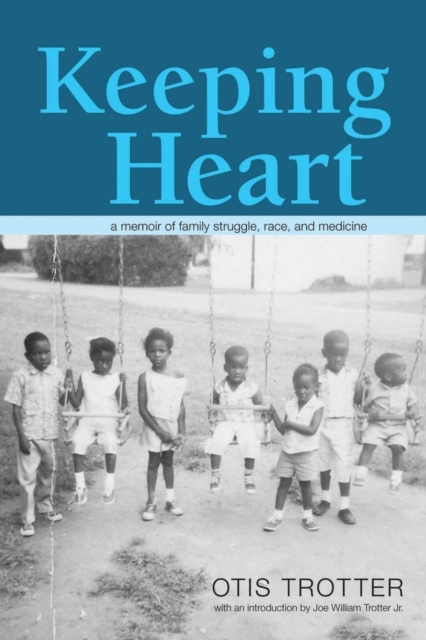
Keeping Heart
Organized around the life histories, medical struggles, and recollections of Otis Trotter and his thirteen siblings, Keeping Heart is a personal account of an African American family's journey north during the second Great Migration.
eBook

Race and Renaissance
African Americans from Pittsburgh have a long and distinctive history of contributions to the cultural, political, and social evolution of the United States. From jazz legend Earl Fatha Hines to playwright August Wilson, from labor protests in the 1950s to the Black Power movement of the late 1960s, Pittsburgh has been a force for change in American race and class relations.Race and Renaissancepresents the first history of African American life in Pittsburgh after World War II. It examines the origins and significance of the second Great Migration, the persistence of Jim Crow into the postwar years, the second ghetto, the contemporary urban crisis, the civil rights and Black Power movements, and the Million Man and Million Woman marches, among other topics.In recreating this period, Trotter and Day draw not only from newspaper articles and other primary and secondary sources, but also from oral histories. These include interviews with African Americans who lived in Pittsburgh during the postwar era, uncovering firsthand accounts of what life was truly like during this transformative epoch in urban history.In these ways,Race and Renaissanceilluminates how African Americans arrived at their present moment in history. It also links movements for change to larger global issues: civil rights with the Vietnam War; affirmative action with the movement against South African apartheid. As such, the study draws on both sociology and urban studies to deepen our understanding of the lives of urban blacks.
eBook

River Jordan : African American urban life in the Ohio Valley
Since the nineteenth century, the Ohio River has represented a great divide for African Americans.It provided a passage to freedom along the underground railroad, and during the industrial age, it was a boundary between the Jim Crow South and the urban North.The Ohio became known as the \"River Jordan,\" symbolizing the path to the promised land.
eBook
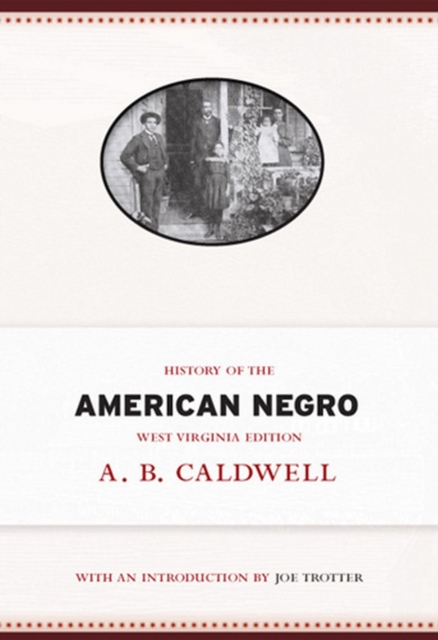
History of the American Negro.: (West Virginia edition)
History of the American Negro: West Virginia Edition is a collection of biographies of African American men and women at the beginning of the twentieth century. Edited and published by A. B. Caldwell, the History of the American Negro collection includes seven volumes that richly describe the lives of citizens in Georgia, South Carolina, North Carolina, Virginia, Washington, DC, and West Virginia. In a statement printed in the first volume of this series, Caldwell wrote that his intent in publishing this collection was neither \"\"comprehensive nor exhaustive,\"\" yet he was determined to shed light on the \"\"successful element unrecorded\"\" of black Americans in the United States. As the 7th volume in Caldwell's collection, History of the American Negro: West Virginia Edition chronicles the struggles and triumphs of everyday African Americans in West Virginia during the post-World War I era. A resource for genealogists, historians, and citizens alike, this history provides a detailed account of the often overlooked lives of ordinary men and women.
eBook

From a raw deal to a New Deal? : African Americans, 1929-1945
Bank closings, soup kitchens, bread lines, unemployed workers begging for work--these images defined the 1930s and '40s in America.For African Americans the era was a study in contrasts: black workers had the highest unemployment rate at a time when black leaders held important positions in Franklin Roosevelt's administration; New Deal.
eBook