
Catalogue Search | MBRL


Are you sure you want to remove the book from the shelf?

{{itemTitle}}
14
result(s) for
"Tuck, Stephen G. N"
Sort by:


The Night Malcolm X Spoke at the Oxford Union
Less than two months before he was assassinated, Malcolm X spoke at the Oxford Union—the most prestigious student debating organization in the United Kingdom. The Oxford Union regularly welcomed heads of state and stars of screen and served as the training ground for the politically ambitious offspring of Britain’s better classes. Malcolm X, by contrast, was the global icon of race militancy. For many, he personified revolution and danger. Marking the fiftieth anniversary of the debate, this book brings to life the dramatic events surrounding the visit, showing why Oxford invited Malcolm X, why he accepted, and the effect of the visit on Malcolm X and British students. Stephen Tuck tells the human story behind the debate and also uses it as a starting point to discuss larger issues of Black Power, the end of empire, British race relations, immigration, and student rights. Coinciding with a student-led campaign against segregated housing, the visit enabled Malcolm X to make connections with radical students from the Caribbean, Africa, and South Asia, giving him a new perspective on the global struggle for racial equality, and in turn, radicalizing a new generation of British activists. Masterfully tracing the reverberations on both sides of the Atlantic, Tuck chronicles how the personal transformation of the dynamic American leader played out on the international stage.
eBook

The other special relationship : race, rights, and riots in Britain and the United States
The close diplomatic, economic, and military ties that comprising the \"special relationship\" between the United States and Great Britain have received plenty of attention from historians over the years. Less frequently noted are the countries' shared experiences of empire, white supremacy, racial inequality, and neoliberalism - and the attendant struggles for civil rights and political reform that have marked their recent history. This state-of-the-field collection traces the contours of this other \"special relationship, \" exploring its implications for our understanding of the development of an internationally interconnected civil rights movement. Here, scholars from a range of research fields contribute essays on a wide variety of themes, from solidarity protests to calypso culture to white supremacy.
eBook
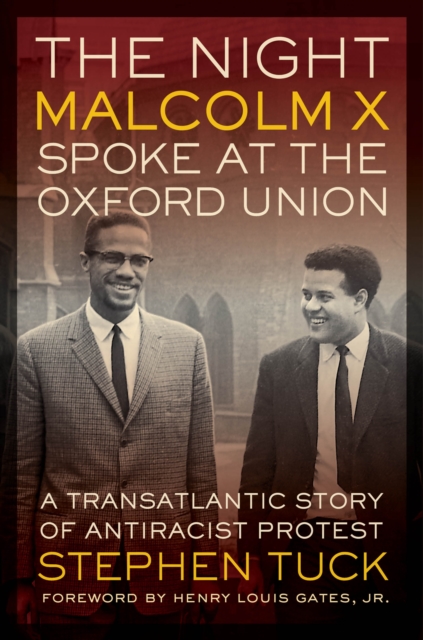
The night Malcolm X spoke at the Oxford Union: a transatlantic story of antiracial protest
Less than two months before he was assassinated, Malcolm X spoke at the Oxford Union-the most prestigious student debating organization in the United Kingdom. The Oxford Union regularly welcomed heads of state and stars of screen and served as the training ground for the politically ambitious offspring of Britain's better classes. Malcolm X, by contrast, was the global icon of race militancy. For many, he personified revolution and danger. Marking the fiftieth anniversary of the debate, this book brings to life the dramatic events surrounding the visit, showing why Oxford invited Malcolm X, why he accepted, and the effect of the visit on Malcolm X and British students.Stephen Tuck tells the human story behind the debate and also uses it as a starting point to discuss larger issues of Black Power, the end of empire, British race relations, immigration, and student rights. Coinciding with a student-led campaign against segregated housing, the visit enabled Malcolm X to...
eBook
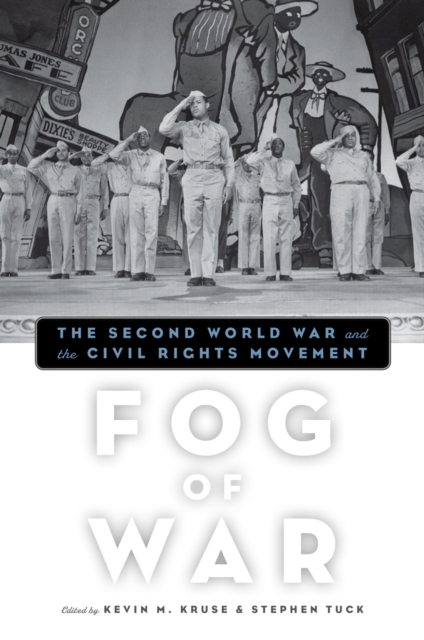
Fog of war : the Second World War and the civil rights movement
This collection is a timely reconsideration of the intersection between two of the dominant events of twentieth-century American history, the upheaval wrought by the Second World War and the social revolution brought about by the African American struggle for equality. Scholars from a wide range of fields explore the impact of war on the longer history of African American protest from many angles: from black veterans to white segregationists, from the rural South to northern cities, from popular culture to federal politics, and from the American confrontations to international connections. It is well known that World War II gave rise to human rights rhetoric, discredited a racist regime abroad, and provided new opportunities for African Americans to fight, work, and demand equality at home. It would be all too easy to assume that the war was a key stepping stone to the modern civil rights movement. But the book shows that in reality the momentum for civil rights was
not as clear cut as that, with activists facing setbacks as well as successes and their opponents finding ways to establish more rigid defenses for segregation. While the way set the scene for a mass movement, it also narrowed some of the options for black activists.
eBook

Historians across borders
In this stimulating and highly original study of the writing of American history, twenty-four scholars from eleven European countries explore the impact of writing history from abroad. Six distinguished scholars from around the world add their commentaries. Arguing that historical writing is conditioned, crucially, by the place from which it is written, this volume identifies the formative impact of a wide variety of institutional and cultural factors that are commonly overlooked. Examining how American history is written from Europe, the contributors shed light on how history is written in the United States and, indeed, on the way history is written anywhere. The innovative perspectives included in Historians across Borders are designed to reinvigorate American historiography as the rise of global and transnational history is creating a critical need to understand the impact of place on the writing and teaching of history. This book is designed for students in historiography, global and transnational history, and related courses in the United States and abroad, for US historians, and for anyone interested in how historians work.
eBook

The Atlanta Riot: Race, Class, and Violence in a New South City
Tuck reviews The Atlanta Riot: Race, Class, and Violence in a New South City by Gregory Mixon.
Book Review


Changes in signalling from faecal neuroactive metabolites following dietary modulation of IBS pain
ObjectiveDietary therapies for irritable bowel syndrome (IBS) have received increasing interest but predicting which patients will benefit remains a challenge due to a lack of mechanistic insight. We recently found evidence of a role for the microbiota in dietary modulation of pain signalling in a humanised mouse model of IBS. This randomised cross-over study aimed to test the hypothesis that pain relief following reduced consumption of fermentable carbohydrates is the result of changes in luminal neuroactive metabolites.DesignIBS (Rome IV) participants underwent four trial periods: two non-intervention periods, followed by a diet low (LFD) and high in fermentable carbohydrates for 3 weeks each. At the end of each period, participants completed questionnaires and provided stool. The effects of faecal supernatants (FS) collected before (IBS FS) and after a LFD (LFD FS) on nociceptive afferent neurons were assessed in mice using patch-clamp and ex vivo colonic afferent nerve recording techniques.ResultsTotal IBS symptom severity score and abdominal pain were reduced by the LFD (N=25; p<0.01). Excitability of neurons was increased in response to IBS FS, but this effect was reduced (p<0.01) with LFD FS from pain-responders. IBS FS from pain-responders increased mechanosensitivity of nociceptive afferent nerve axons (p<0.001), an effect lost following LFD FS administration (p=NS) or when IBS FS was administered in the presence of antagonists of histamine receptors or protease inhibitors.ConclusionsIn a subset of IBS patients with improvement in abdominal pain following a LFD, there is a decrease in pronociceptive signalling from FS, suggesting that changes in luminal mediators may contribute to symptom response.
Journal Article