
Catalogue Search | MBRL


Are you sure you want to remove the book from the shelf?

{{itemTitle}}
65
result(s) for
"Tucker, Todd N."
Sort by:

A Pragmatic Approach to Carbon Border Measures
This article offers the justification for a type of carbon customs union in which countries with a diverse range of high-ambition domestic climate measures would adopt a common external tariff on carbon intensive imports from countries outside the union. We explain why any pragmatic approach to carbon border measures (CBMs) is likely to create problems under prevailing interpretations of the World Trade Organization's (WTO) primary rules. Given the urgency of the climate crisis and the fact that the legality of a CBM – no matter how designed – will be a question of first impression for any WTO dispute panel, WTO consistency should take a backseat to considerations of domestic legal and political feasibility in designing a CBM. Instead of trying to fit a CBM into current understandings of WTO rules, WTO members should renegotiate WTO rules to permit a range of aggressive, but likely trade-restrictive, decarbonization measures. Having said that, we also recognize that WTO negotiations may take longer than optimal from a decarbonization standpoint. We therefore suggest an approach that would allow WTO members to take advantage of flexibilities that existing WTO rules afford.
Journal Article
Trade and Climate, Law and Politics: A Response
We are grateful to Simon Lester for responding to our piece, 'A pragmatic approach to carbon border measures' (see Simon Lester, \"How the United States can lead the effort to reduce carbon emissions\", 'World Trade Review', (2022) 21(1) pages 121-126) and its companion policy proposal, 'A Green Steel Deal: Towards a pro-jobs, pro-climate Transatlantic cooperation on carbon border measures'. We are heartened to find ourselves broadly in agreement with Lester on the need for WTO rules to offer states greater flexibility to pursue legitimate policy objectives. This agreement is part of a broadening consensus that the WTO Appellate Body interpreted the combination of nondiscrimination rules and exceptions in a narrow and technical fashion that ultimately has made it difficult for governments to comply with their WTO commitments while simultaneously addressing existential threats like climate change. People who hold this general view may differ on how to solve this problem. Our view is that the Appellate Body interpreted the element of 'likeness' in the WTO's non-discrimination rules in an expansive way, disregarding the aim of a government's measure in drawing distinctions among products. At the same time, the Appellate Body suggested in 'EC-Asbestos' that it would interpret non-discrimination treatment standards to permit governments to draw distinctions among products without violating WTO rules. The Appellate Body's reasoning in subsequent disputes left that promise unfulfilled, emphasizing how a government's measure alters the conditions of competition, rather than why it does so. Nondiscrimination principles applicable to the GATT Article XX exceptions through that article's chapeau have extended the difficulty to exceptions. Thus, even if one agrees that the Appellate Body's direction of travel in interpreting the GATT's exceptions - towards broader acceptance of governments' legitimate policy objectives - was correct, one might still feel that the Appellate Body ultimately failed to show sufficient deference to national regulators pursuing legitimate objectives. Our disagreements with Lester are less about WTO law and more about the politics of integrating climate into trade policy.
Journal Article

“An Unacceptable Surrender of Fiscal Sovereignty”: The Neoliberal Turn to International Tax Arbitration
The growth of inequality over the past half century is closely connected to the rise of neoliberal policies and institutions, the latter of which shield capital from state actions that might limit wealth accumulation. Economic nationalism since the global financial crisis has slowed or even reversed this, yet this same era has seen the emergence of a new form of instrument in the neoliberal mold, in a stronghold of state sovereignty: taxation. Under mandatory binding tax arbitration, states cede sovereignty over the interpretation of international tax agreements to panels of transnational tax adjudicators. Focusing on the pivotal role of the United States, we use historical documents, including from the congressional archive and interviews with key actors to ask why tax arbitration emerged late in the neoliberal era, and at a counterintuitive time. We demonstrate that this outcome is the result of instrumental business power driving a process of incremental change through layering, to overcome states’ preference to retain sovereignty. This experience sheds light on the historically structured ways that business power constrains sovereignty in an era of high inequality.
Journal Article
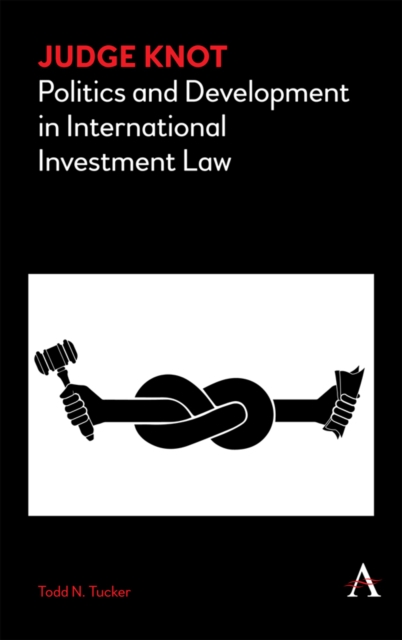
Judge knot
‘Judge Knot’ explores the biggest and the most controversial success story in international law: investor-state dispute settlement, or ISDS. Since 1990, investors have launched hundreds of claims against government regulation. This exclusive inside look explains what makes the system tick: its poorly understood centuries-old origins, why corporations demand investment law solutions to political problems, how arbitrators supply these solutions, and why the system lasts despite the many politicians and citizens unhappy with it. Building off of an unprecedented set of interviews with the arbitrators who actually decide the cases, ‘Judge Knot’ brings together the best of political science, law and development economics scholarship and offers a concrete alternative to ISDS that leverages what works about the system and discards what does not, so that international law can be more supportive of democracy and development goals.
eBook

Grounded Theory Generation
The paradigm wars between quantitative and qualitative methodologists have focused on the validity and reliability of theory testing, with increasing concerns for transparency in both types of work. But not all research topics lend themselves to theory testing and, rather, require the generation of new theoretical concepts. The relative lack of attention to the “why” and “how” of qualitative theory generation has stunted innovation, forcing scholars to avoid such work or “reinvent the wheel” rather than build on community accomplishments. This article shows that grounded theory methods from sociology provide useful techniques for theory generation and can help scholars break through theoretical muddles. These methods have the added benefit of utilizing a workflow management that lends itself to more transparency than is common in much qualitative work. This article concludes by suggesting steps to boost transparency for grounded theory in international relations and push out the knowledge frontier.
Journal Article

HISTORICIZING INVESTMENT LAW
Any scholarly consideration of international investment law faces an immediate hurdle: What theory or even what academic discipline is best suited to the task?
There are a few disciplines we can exclude from the outset, for instance economic development studies. From a pro-statedirigistethinking of the postwar period to a market fundamentalist neoliberalism in more recent years, development scholars have thoroughly trod the terrain of the optimal balance between the state and the market in emerging economies. This happens to be much of the same subject matter that now consumes investor–state dispute settlement (ISDS) arbitrations, which are overwhelmingly
Book Chapter
WHY INVESTMENT LAW LASTS
In the last two chapters, we have focused on the world inside arbitration. In the next two, we zoom our lens outward to put it in a political context.
How has the world responded to investment-treaty arbitration and arbitration to the world? More than twenty years ago, sociology-and-law scholars Yves Dezalay and Bryant Garth (1996) had a prediction. Their book was the first major study of international arbitrators. At that time, arbitration was mostly an inter-corporate affair. A typical case might involve a London insurance company that insured a Massachusetts shipper but failed to pay out on the policy. Instead
Book Chapter
WHY ARBITRATORS SUPPLY INVESTMENT LAW
Serving as an arbitrator is a relatively poor way to get rich. Working as counsel to an investor can net a private lawyer more than $1,000 per hour. In contrast, arbitrators (at least at the World Bank) earn $3,000 per day. What an arbitrator gets in a day of hearings, counsel earns by lunch. Moreover, serving as counsel can fill up significant chunks of one’s professional calendar for years, while an arbitrator who charges for more than a few weeks of work would seem overly costly, raise eyebrows, and risk future appointments.
What motivates arbitrators to supply investment law? I
Book Chapter
TOWARD GLOBAL POPULAR CONSTITUTIONALISM
Is another investment law possible? Up to this point, we have seen how investment arbitration builds on long-standing and increasingly conservative projects in Western liberal thought about the appropriate balance between state and market (chapters 2 and 3), represents an ingenious but asymmetric and complex substitute for missing governance institutions in the global economy (chapters 4 and 5) and tangles up domestic politics and law (chapter 1).
The downsides of this system are increasingly getting notice. Witness chapter 1’s opening quote from comedian John Oliver, fuming over controversial tobacco arbitrations and raging that investors even have the option of second-guessing
Book Chapter
WHY INVESTORS DEMAND INVESTMENT LAW
To invert the slogan from the 1980s movieField of Dreams, just because you build it, does not mean they will come. The twentieth century is full of examples of ambitious international courts that were dreamed up, built, but then never utilized. Duke University political scientist Suzanne Katzenstein recounts stillborn proposals such as the 1907 Court of Arbitral Justice, the 1920 Criminal Court and the 1949 Human Rights Court (Katzenstein 2014). In each case, enterprising legal scholars and practitioners identified a theoretical need for international dispute resolution. But due to a lack of uptake by states and non-state actors, none
Book Chapter