
Catalogue Search | MBRL


Are you sure you want to remove the book from the shelf?

{{itemTitle}}
24
result(s) for
"Tumino, Stephen"
Sort by:

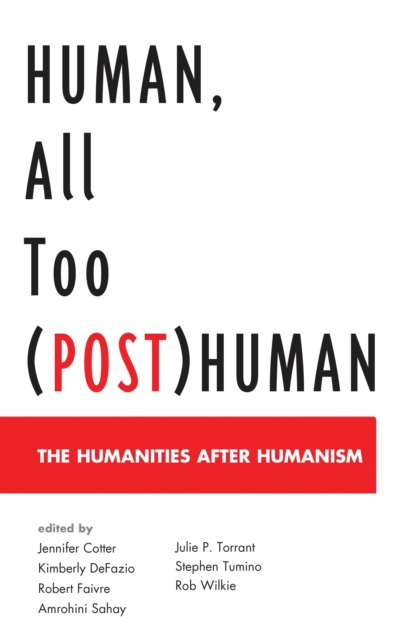
Human, all too (post)human
The contemporary has marked itself off from modernity by questioning its humanism that centers the world around the human as the moral subject of free will and self-determination, the bearer of universal essence that is the basis of human rights. Modernism normalizes humanism through language as referential, a set of interrelated signs that correspond to the empirical reality outside it. Humanist modernity, in other words, is seen in the contemporary as a regime that, by separating the human from the non-human and insisting on language as correspondence, not only fails to engage the emerging forms of social relations in which the boundaries of human and machine are fading but is also indifferent to the difference between the \"other\"'s life and other lives. Human, All Too (Post)Human: The Humanities after Humanism argues that the Nietzschean tendencies that provide the philosophical boundaries of post-humanism do not undo humanism but reform it, constructing a parallel discourse that saves humanism from itself.
Grounded in materialist analysis of social life, Human, All Too (Post)Human argues that humanism and post-humanism are cultural discourses that normalize different stages of capitalism—analog and digital capitalism. They are different orders of property relations. The question, the writers argue, is not humanism or post-humanism, namely cultural representations, but the material relations of production that are centered on wage labor. Language, free will, or human rights are not the issues since \"Right can never be higher than the economic structure of society and its cultural development conditioned thereby.\" The question that shapes all questions, in Human, All Too (Post)Human is freedom from (wage) labor.
eBook

Stylizing Global Protest: Latin America and the Media
Empire does not explain the world as an effect of the economic laws of motion of capital accumulation (an understanding necessary for transforming the world). It announces a new world, free from the past, that changes in response to changes in rhetoric (freedom of speech). [Michael Hardt] and [Antonio Negri] declare, for example, that \"imperialism is over\" because we now live in a world system where \"the economic, the political, and the cultural increasingly overlap and invest one another\" (xiii). The purpose of this rhetoric is to make the source of profit in surplus labor explained by Marx's labor theory of value a \"fiction\" (402). Without Marx's labor theory, there can be no basic contestation of capitalism, only moral condemnation of its more oppressive effects; exploitation is thus kept intact, immunized from critique. Empire, in short, does the ideological work of capital by giving it a human face, by displacing Marx's ruthless critique of \"surplus labor\" with the sentimentality of \"affective labor.\" Behind the premise that imperialism has been displaced by empire is the reduction of history to politics (desire) and the erasure of the primacy of the economic (need). Empire is Hardt and Negri's imaginary of a new time in capitalism free from history that cannot be explained by class struggle. Empire is, they claim, beyond \"the fiction of any measure of the working day\" (402). In actuality, empire represents the moment in their analytic when material interests do not enter into consideration under the alibi that labor is no longer economically exploited at the site of production (because, they say, it is \"post-fordist,\" \"flexible,\" and \"co-operative\"). Whether it is called \"multitude,\" \"creative\" or \"affective\" or \"immaterial labor,\" or a \"new proletariat,\" the idealism is the same: a trope of spontaneity and freedom from necessity is meant to signal a basic change in capitalism that makes it impossible to materially explain what makes capitalism and why it changes. Their concept of labor is really a trope of cultural resistance, a change of values. As another autonomist Marxist puts it: Empire is a religious and therefore reactionary text. Its basic idea is that the world is an expression of an ahistorical essence: the \"constitutive power\" of affective labor (which is a code for representing the informal high-tech sector in the North as a cooperative social arrangement that makes socialism unnecessary). This agency is ahistorical because it is posited as existing independently of the series of material conflicts over the social relations of property. As in [Foucault], materiality is made a matter of desire; affective labor is an excess of history that resists explanation, while its historicity is idealist, only ever considered genealogically, i.e., as a discursive construction. In other words, Hardt and Negri's \"labor\" is what Foucault called an \"event\": \"the appropriation of a vocabulary turned against those who once used it\" (1990, 154); like all \"events,\" it is unexplainable. The most important effect of such an ahistorical view of labor is its opposition to the only consistently materialist theory of labor, Marx's labor theory of value. Marx's theory explains the agency of labor not as spontaneous resistance to causal explanation in a world without borders (a throwback to romanticism), but, borrowing a phrase from Marx, as an effect of \"the ensemble of the social relations\" (Marx 1976, 4)--i.e., the ongoing class conflicts over the conditions of production.
Journal Article

The labor theory of culture
The Labor Theory of Culture is a rigorous inquiry into the commonsense of contemporary cultural theory and an effort to articulate a materialist cultural theory as an alternative to the commonsense. Cultural theory, I believe, in focusing on the immanence of culture separate from economics, has ultimately separated culture entirely from the labor relations and conflicts in which it is always involved. It has become so focused on the details of culture and cultural difference that it cannot address cultural difference except on its own immanent terms. It has therefore been increasingly unable, I suggest, to account for the new complexities of culture in relation to the emerging global class dynamics of the late twentieth and early twenty-first century. I argue that by developing a labor theory of culture based on the texts of classical Marxism it becomes possible to address not only the immanent specifics of culture but culture's relation to its outside, which I think provides for a more comprehensive analysis of culture. I realize that to argue for a labor theory of culture today is to write against the grain of cultural theory. I therefore spend some time closely analyzing some of the central assumptions under girding \"culturalism\" by reading specific texts of theorists such as Georg Lukacs, Stuart Hall, Jacques Derrida, Slavoj Zizek, and Antonio Negri, whose work has transformed the vocabularies and interpretive strategies of contemporary cultural theory. The self-situating of the labor theory of culture is important because almost all contemporary cultural theories regard themselves to be material, if not materialist. The question of what makes materiality in cultural theory is therefore a central question of my project. I for the most part focus on (post)modern North-Atlantic cultural theory and look at the way that the relation of culture to materiality has been deployed in the texts of Immanuel Kant, Roger Scruton, Tom Cohen, Fredric Jameson and Antonio Negri, as well as provide detailed readings of literature (Kafka), art (Matthew Barney), film (The Butcher Boy), and the \"culture wars,\" to make my argument for a labor theory of culture in the contemporary more concrete.
Dissertation


Age at Menopause, Reproductive Life Span, and Type 2 Diabetes Risk
OBJECTIVE-Age at menopause is an important determinant of future health outcomes, but little is known about its relationship with type 2 diabetes. We examined the associations of menopausal age and reproductive life span (menopausal age minus menarcheal age) with diabetes risk.
RESEARCH DESIGN AND METHODS-Data were obtained from the InterAct study, a prospective case-cohort study nested within the European Prospective Investigation into Cancer and Nutrition. A total of 3,691 postmenopausal type 2 diabetic case subjects and 4,408 subcohort members were included in the analysis, with a median follow-up of 11 years. Prentice weighted Cox proportional hazards models were adjusted for age, known risk factors for diabetes, and reproductive factors, and effect modification by BMI, waist circumference, and smoking was studied.
RESULTS-Mean (SD) age of the subcohort was 59.2 (5.8) years. After multivariable adjustment, hazard ratios (HRs) of type 2 diabetes were 1.32 (95% CI 1.04-1.69), 1.09 (0.90-1.31), 0.97 (0.86-1.10), and 0.85 (0.70-1.03) for women with menopause at ages <40, 40-44, 45-49, and >= 55 years, respectively, relative to those with menopause at age 50-54 years. The HR per SD younger age at menopause was 1.08 (1.02-1.14). Similarly, a shorter reproductive life span was associated with a higher diabetes risk (HR per SD lower reproductive life span 1.06 [ 1.01-1.12]). No effect modification by BMI, waist circumference, or smoking was observed (P interaction all > 0.05).
CONCLUSIONS-Early menopause is associated with a greater risk of type 2 diabetes. Diabetes Care 36:1012-1019, 2013
Journal Article

Association of plasma biomarkers of fruit and vegetable intake with incident type 2 diabetes: EPIC-InterAct case-cohort study in eight European countries
AbstractObjectiveTo investigate the association of plasma vitamin C and carotenoids, as indicators of fruit and vegetable intake, with the risk of type 2 diabetes.DesignProspective case-cohort study.SettingPopulations from eight European countries.Participants9754 participants with incident type 2 diabetes, and a subcohort of 13 662 individuals from the European Prospective Investigation into Cancer and Nutrition (EPIC) cohort of 340 234 participants: EPIC-InterAct case-cohort study.Main outcome measureIncident type 2 diabetes.ResultsIn a multivariable adjusted model, higher plasma vitamin C was associated with a lower risk of developing type 2 diabetes (hazard ratio per standard deviation 0.82, 95% confidence interval 0.76 to 0.89). A similar inverse association was shown for total carotenoids (hazard ratio per standard deviation 0.75, 0.68 to 0.82). A composite biomarker score (split into five equal groups), comprising vitamin C and individual carotenoids, was inversely associated with type 2 diabetes with hazard ratios 0.77, 0.66, 0.59, and 0.50 for groups 2-5 compared with group 1 (the lowest group). Self-reported median fruit and vegetable intake was 274 g/day, 396 g/day, and 508 g/day for participants in categories defined by groups 1, 3, and 5 of the composite biomarker score, respectively. One standard deviation difference in the composite biomarker score, equivalent to a 66 (95% confidence interval 61 to 71) g/day difference in total fruit and vegetable intake, was associated with a hazard ratio of 0.75 (0.67 to 0.83). This would be equivalent to an absolute risk reduction of 0.95 per 1000 person years of follow up if achieved across an entire population with the characteristics of the eight European countries included in this analysis.ConclusionsThese findings indicate an inverse association between plasma vitamin C, carotenoids, and their composite biomarker score, and incident type 2 diabetes in different European countries. These biomarkers are objective indicators of fruit and vegetable consumption, and suggest that diets rich in even modestly higher fruit and vegetable consumption could help to prevent development of type 2 diabetes.
Journal Article

Dietary fibre and incidence of type 2 diabetes in eight European countries: the EPIC-InterAct Study and a meta-analysis of prospective studies
Aims/hypothesis
Intake of dietary fibre has been associated with a reduced risk of type 2 diabetes, but few European studies have been published on this. We evaluated the association between intake of dietary fibre and type 2 diabetes in the European Prospective Investigation into Cancer and Nutrition (EPIC)-InterAct study and in a meta-analysis of prospective studies.
Methods
During 10.8 years of follow-up, 11,559 participants with type 2 diabetes were identified and a subcohort of 15,258 participants was selected for the case-cohort study. Country-specific HRs were estimated using Prentice-weighted Cox proportional hazards models and were pooled using a random effects meta-analysis. Eighteen other cohort studies were identified for the meta-analysis.
Results
In the EPIC-InterAct Study, dietary fibre intake was associated with a lower risk of diabetes (HR
Q4 vs Q1
0.82; 95% CI 0.69, 0.97) after adjustment for lifestyle and dietary factors. Similar inverse associations were observed for the intake of cereal fibre and vegetable fibre, but not fruit fibre. The associations were attenuated and no longer statistically significant after adjustment for BMI. In the meta-analysis (19 cohorts), the summary RRs per 10 g/day increase in intake were 0.91 (95% CI 0.87, 0.96) for total fibre, 0.75 (95% CI 0.65, 0.86) for cereal fibre, 0.95 (95% CI 0.87, 1.03) for fruit fibre and 0.93 (95% CI 0.82, 1.05) for vegetable fibre.
Conclusions/interpretation
The overall evidence indicates that the intake of total and cereal fibre is inversely related to the risk of type 2 diabetes. The results of the EPIC-InterAct Study suggest that the association may be partially explained by body weight.
Journal Article
Autoimmunity plays a role in the onset of diabetes after 40 years of age
Aims/hypothesisType 1 and type 2 diabetes differ with respect to pathophysiological factors such as beta cell function, insulin resistance and phenotypic appearance, but there may be overlap between the two forms of diabetes. However, there are relatively few prospective studies that have characterised the relationship between autoimmunity and incident diabetes. We investigated associations of antibodies against the 65 kDa isoform of GAD (GAD65) with type 1 diabetes and type 2 diabetes genetic risk scores and incident diabetes in adults in European Prospective Investigation into Cancer and Nutrition (EPIC)-InterAct, a case-cohort study nested in the EPIC cohort.MethodsGAD65 antibodies were analysed in EPIC participants (over 40 years of age and free of known diabetes at baseline) by radioligand binding assay in a random subcohort (n = 15,802) and in incident diabetes cases (n = 11,981). Type 1 diabetes and type 2 diabetes genetic risk scores were calculated. Associations between GAD65 antibodies and incident diabetes were estimated using Prentice-weighted Cox regression.ResultsGAD65 antibody positivity at baseline was associated with development of diabetes during a median follow-up time of 10.9 years (HR for GAD65 antibody positive vs negative 1.78; 95% CI 1.43, 2.20) after adjustment for sex, centre, physical activity, smoking status and education. The genetic risk score for type 1 diabetes but not type 2 diabetes was associated with GAD65 antibody positivity in both the subcohort (OR per SD genetic risk 1.24; 95% CI 1.03, 1.50) and incident cases (OR 1.97; 95% CI 1.72, 2.26) after adjusting for age and sex. The risk of incident diabetes in those in the top tertile of the type 1 diabetes genetic risk score who were also GAD65 antibody positive was 3.23 (95% CI 2.10, 4.97) compared with all other individuals, suggesting that 1.8% of incident diabetes in adults was attributable to this combination of risk factors.Conclusions/interpretationOur study indicates that incident diabetes in adults has an element of autoimmune aetiology. Thus, there might be a reason to re-evaluate the present subclassification of diabetes in adulthood.
Journal Article