
Catalogue Search | MBRL


Are you sure you want to remove the book from the shelf?

{{itemTitle}}
47
result(s) for
"Tunick, Michael"
Sort by:


The chemical and attitudinal differences between commercial and artisanal products
Here we report a study of artisanal grain, coffee, ice cream, cheese, and chocolate made in the Philadelphia and New York areas, exploring the chemistry responsible for the differences between artisanal and mass-produced food, the rationale that artisans have toward making their products, and consumer attitudes toward purchasing artisanal food. The contrasting techniques used in manufacturing these two classes of food lead to differences in composition, flavor, and texture. Dairy products made from pasture-fed cows, for instance, display more complex flavor profiles owing to the greater variety of plants the animals consume. Consumers are willing to pay more for artisanal food, feeling that it tastes better, is healthier, and helps support family-owned operations. Producers not only want to be able to control their businesses, but also wish to create better and more-authentic food in an environmentally friendly manner. The psychology surrounding artisanal food is partly based on their chemistry.
Journal Article

Keratin sponge/hydrogel: I. Fabrication and characterization
Keratin sponge/hydrogels formed by oxidation and reduction hydrolysis of US domestic fine- or coarse-grade wool exhibited distinctively different topologies, each with unique porous structure. These materials retained amino acids and microstructure as protein homologues of intact keratin. Amphoteric character was confirmed by differential dyeing with anionic and cationic dyes. Differential scanning calorimetry (DSC) provided evidence of molecular organization and the behavior of occluded moisture through measurements of glass transition, peak temperature, thermal degradation temperature, enthalpy of water removal, and degradation (Tg, Tw, ΔHw, Tt, and ΔHt). The absence of denaturation peaks indicated highly crosslinked molecular association. Low ΔHw indicated high plasticity and the ability to absorb and retain moisture. Small amplitude strain analysis rheology to measure storage or elastic modulus, G′, and shear loss or viscous modulus, G′′, as a function of applied strain characterized the sponge/hydrogels as covalently crosslinked networks. With viscoelastic properties typical of both liquids and solids, they maintained their structural integrity under strain.
Journal Article

Fatty Acid Profiles of In Vitro Digested Processed Milk
Digestion of milkfat releases some long-chain (18-carbon) fatty acids (FAs) that can provide health benefits to the consumer, yet because they are found in small amounts and can be difficult to identify, there is limited information on the effects that common fluid milk processing may have on the digestibility of these FAs. This study provides FA profiles for raw and combinations of homogenized and/or heat-treated (high and ultra-high temperature pasteurization) milk, before and after in vitro digestion, in order to determine the effects of processing on the digestibility of these healthy fatty acids. Use of a highly sensitive separation column resulted in improved FA profiles that showed that, when milk was subjected to both pasteurization and homogenization, the release of the 18-carbon FAs, oleic acid, linoleic acid (an omega-6 FA), rumenic acid (a conjugated linoleic acid, CLA), and linolenic acid (an omega-3 FA) tended to be higher than with either pasteurization or homogenization, or with no treatment. Milk is noted for containing the omega-3 FAs and CLAs, which are associated with positive health benefits. Determining how processing factors may impact the components in milk will aid in understanding the release of healthy FAs when milk and dairy foods are consumed.
Journal Article
Comparison of SPME Methods for Determining Volatile Compounds in Milk, Cheese, and Whey Powder
Solid phase microextraction and gas chromatography-mass spectrometry (SPME-GC-MS) are commonly used for qualitative and quantitative analysis of volatile compounds in various dairy products, but conditions have to be adjusted to maximize release while not generating new compounds that are absent in the original sample. Queso Fresco, a fresh non-melting cheese, may be heated at 60 °C for 30 min; in contrast, compounds are produced in milk when exposed to light and elevated temperatures, so milk samples are heated as little as possible. Products such as dehydrated whey protein are more stable and can be exposed to longer periods (60 min) of warming at lower temperature (40 °C) without decomposition, allowing for capture and analysis of many minor components. The techniques for determining the volatiles in dairy products by SPME and GC-MS have to be optimized to produce reliable results with minimal modifications and analysis times.
Journal Article
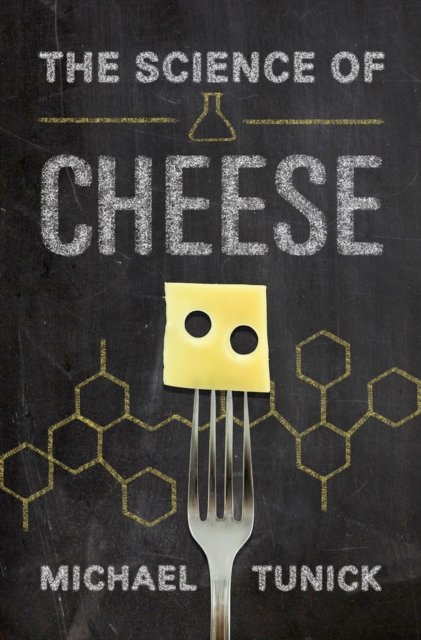
The science of cheese
Describes the science of cheese making, from chemistry to biology, in a lively way that is readable for both the food scientist and the artisanal hobbyist.
eBook

Consumer-Directed Health Care And The Courts: Let The Buyer (And Seller) Beware
In consumer-directed health care, patients will be expected to exert greater control over their spending decisions than before. As consumer-directed care gains market acceptance, courts will inevitably be involved in resolving challenges to the new arrangements. We anticipate that courts will be generally favorable toward consumer-directed care, but the new legal doctrine will not uniformly favor medical professionals and insurers. The information demands inherent in consumer-directed care will present particular legal challenges to physicians and insurers. Even as courts provide flexibility to reflect the new market realities, they will closely monitor how consumer-directed care is implemented. [PUBLICATION ABSTRACT]
Journal Article

The science of cheese / Michael H. Tunick
\"Experienced food scientist Michael Tunick details the chemistry and biology that go into cheese and its formation, as well as many other scientific aspects of dairy products. Tunick takes us back 8,000 years to the Fertile Crescent and shows us the accidental scientific discovery of cheese, when milk separated into curds and whey. We learn about milk allergies, lactose intolerance, and the reasons why cheese is vital to a balanced diet. Though he's spent 27 years studying the chemistry, biology, physics, nutrition, and even the climatology of cheese, Tunick writes for the non-scientific reader, providing an engaging and entertaining look at the science behind one of the world's favorite foods. The Science of Cheese reveals how, as much as cheese-making is a celebrated culinary art, it is an equally distinct scientific process.\"--Jacket.
eBook


Electrospinning Pullulan Fibers from Salt Solutions
There is an increasing interest in applying the technology of electrospinning for making ultrafine fibers from biopolymers for food-grade applications, and using pullulan (PUL) as a carrier to improve the electrospinnability of proteins and other naturally occurring polyelectrolytes. In this study, PUL solutions containing NaCl or Na3C6H5O7 at different concentrations were electrospun. The inclusion of salts interrupted the hydrogen bonding and altered solution properties, such as viscosity, electric conductivity, and surface tension, as well as physical properties of fibers thus obtained, such as appearance, size, and melting point. The exogenous Na+ associated to the oxygen in the C6 position of PUL as suggested by FTIR measurement and was maintained during electrospinning. Bead-free PUL fibers could be electrospun from PUL solution (8%, w/v) in the presence of a 0.20 M NaCl (124 ± 34 nm) or 0.05 M Na3C6H5O7 (154 ± 36 nm). The further increase of NaCl or Na3C6H5O7 resulted in fibers that were flat with larger diameter sizes and defects. SEM also showed excess salt adhering on the surfaces of PUL fibers. Since most food processing is not carried out in pure water, information obtained through the present research is useful for the development of electrospinning biopolymers for food-grade applications.
Journal Article