
Catalogue Search | MBRL


Are you sure you want to remove the book from the shelf?

{{itemTitle}}
42
result(s) for
"Tuniz, C."
Sort by:

Radioactivity : a very short introduction
The author explains the nature of radioactivity and discuss its role in nature. Describing radioactivity in the stars and in the Earth, he also looks at its wide range of applications in biomedicine and in science, as well as the mechanisms of nuclear fission and fusion, and the harnessing of nuclear power.
Book

The Science of Human Origins
Our understanding of human origins has been revolutionized by new discoveries in the past two decades. In this book, three leading paleoanthropologists and physical scientists illuminate, in friendly, accessible language, the amazing findings behind the latest theories. They describe new scientific and technical tools for dating, DNA analysis, remote survey, and paleoenvironmental assessment that enabled recent breakthroughs in research. They also explain the early development of the modern human cortex, the evolution of symbolic language and complex tools, and our strange cousins from Flores and Denisova.
eBook


A multi-analytical study of Bronze Age pottery from the UNESCO site of Al-Khutm (Bat, Oman)
The extensive investigation carried out in recent years at the UNESCO site of Al-Khutm (Ibri, Oman) has allowed to uncover the monumental remains of a tower dated back to the third millennium BC and to collect an abundant ceramic assemblage from the associated soil deposits. Eighteen selected pottery samples have been investigated using a multi-analytical approach including microfocus X-ray computed tomography, X-ray diffraction, optical microscopy and prompt gamma activation analysis to analyse the vessel-forming technique and to characterise their micro-structure, mineralogical and chemical composition to recognise possible local vs. non-local raw materials. The results provided new insights on ancient manufacturing processes and revealed that most of the vessels were locally produced exploiting raw materials from the surroundings of the site with the exception of a fragment of a black slipped jar. The chemical results suggest that the latter was imported from the Indus area in nowadays Pakistan. This evidence integrates our knowledge about the presence of this type of vessels in Oman and confirms the involvement of inland centres like Bat and Al-Khutm into a large-scale exchange system.
Journal Article

Polished stone axes from Varna/Nössingbühel and Castelrotto/Grondlboden, South Tyrol (Italy)
A collection of polished stone axes from a late Neolithic site and an Early Bronze Age hill fort in South Tyrol (Italy) have been analysed through a multi-analytical approach, mainly based on non-destructive techniques (i.e. Raman spectroscopy, X-ray fluorescence and prompt gamma activation analysis) to identify the raw materials used in the same area during different periods and compare them with those in use in the surrounding territories. The analytical results suggest raw material exploitation strategies based on local or close sedimentary, metamorphic and magmatic rocks. Most of the artefacts are made from antigoritic serpentinite, whose origin is probably from Hohe Tauern (Austria) or related secondary deposits. These data confirm the importance of such raw material for the production of polished stone axes during recent prehistory and integrate the present knowledge about the distribution of antigoritic artefacts in north-eastern Italy and neighbouring countries.
Journal Article
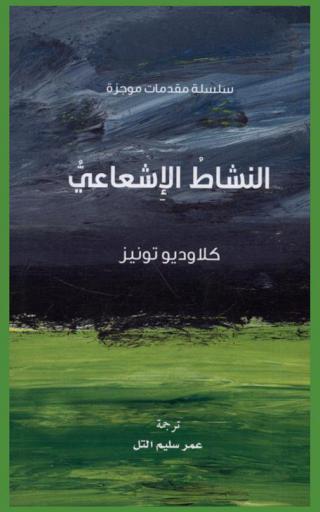
النشاط الإشعاعي
يقدم هذا الكتاب شرحا للنشاط الإشعاعي، الذي يعد من أهم العمليات الأساسية في الطبيعة، بطريقة متسلسلة زمنيا، مستكشفا كيفية نشوء تطبيقاته الواسعة والمهمة في العلوم والطب والصناعة والزراعة وإنتاج الطاقة ويتناول الكتاب مسائل تخص موضوعات أمن المفاعلات النووية وسلامتها والمخاوف المتصلة بالنشاط الإشعاعي وينقلنا المؤلف وهو ذو اختصاص عال في هذا المجال، من أقدم نقطة زمنية لكوننا ونعني بها الانفجار العظيم، مرورا ببدء تشكل الأرض قبل بضعة مليارات من السنين، إلى العصور السحيقة وظهور الحياة وأشباه البشر ولقد جرى اكتشاف ذلك كله باستخدام النشاط الإشعاعي، ثم يأخذنا في رحلة سريعة يعرفنا-عبرها-على مختلف الأجهزة المعتمدة على النشاط الإشعاعي ويقدم عرضا سلسا وسهلا لمبدأ عمل كل منها. إن هذا الكتاب بيان واضح وثري وموثوق، حول النشاط الإشعاعي وتطبيقاته وقد نجح المؤلف في بسط هذا العلم لينتفع به القارئ غير المختص.
Book

Biogeochemical fingerprints of life: earlier analogies with polar ecosystems suggest feasible instrumentation for probing the Galilean moons
We base our search for the right instrumentation for detecting biosignatures on Europa on the analogy suggested by the recent work on polar ecosystems in the Canadian Arctic at Ellesmere Island. In that location sulphur patches (analogous to the Europan patches) are accumulating on glacial ice lying over saline springs rich in sulphate and sulphide. Their work reinforces earlier analogies in Antarctic ecosystems that are appropriate models for possible habitats that will be explored by the European Space Agency JUpiter ICy Moons Explorer (JUICE) mission to the Jovian System. Its Jupiter Ganymede Orbiter (JGO) will include orbits around Europa and Ganymede. The Galileo orbital mission discovered surficial patches of non-ice elements on Europa that were widespread and, in some cases possibly endogenous. This suggests the possibility that the observed chemical elements in the exoatmosphere may be from the subsurface ocean. Spatial resolution calculations of Cassidy and co-workers are available, suggesting that the atmospheric S content can be mapped by a neutral mass spectrometer, now included among the selected JUICE instruments. In some cases, large S-fractionations are due to microbial reduction and disproportionation (although sometimes providing a test for ecosystem fingerprints, even though with Sim – Bosak – Ono we maintain that microbial sulphate reduction large sulphur isotope fractionation does not require disproportionation. We address the question of the possible role of oxygen in the Europan ocean. Instrument issues are discussed for measuring stable S-isotope fractionations up to the known limits in natural populations of δ34 ≈ −70‰. We state the hypothesis of a Europa anaerobic oceanic population of sulphate reducers and disproportionators that would have the effect of fractionating the sulphate that reaches the low-albedo surficial regions. This hypothesis is compatible with the time-honoured expectation of Kaplan and co-workers (going back to the 1960s) that the distribution range of 32S/34S in analysed extra-terrestrial material appears to be narrower than the isotopic ratio of H, C or N and may be the most reliable for estimating biological effects. In addition, we discuss the necessary instruments that can test our biogenic hypothesis. First of all we hasten to clarify that the last-generation miniaturized mass spectrometer we discuss in the present paper are capable of reaching the required accuracy of ‰ for the all-important measurements with JGO of the thin atmospheres of the icy satellites. To implement the measurements, we single out miniature laser ablation time-of-flight mass spectrometers that are ideal for the forthcoming JUICE probing of the exoatmospheres, ionospheres and, indirectly, surficial low-albedo regions. Ganymede's surface, besides having ancient dark terrains covering about one-third of the total surface, has bright terrains of more recent origin, possibly due to some internal processes, not excluding biological ones. The geochemical test could identify bioindicators on Europa and exclude them on its large neighbour by probing relatively recent bright terrains on Ganymede's Polar Regions.
Journal Article

Humans : an unauthorized biography
\"Based on the latest scientific discoveries, this \"unauthorized biography\" of the Humans recounts the story of our distant ancestors during the past 6 million years, since the line of our extended family separated from that leading to modern chimpanzees. The book explains how different species evolved, both anatomically and cognitively, and describes the impacts of climatic and environmental change on this process. It also explores the nature of relationships within and between species, describes their everyday lives, and discusses how isolated individuals became members of larger social groups. The concluding chapters highlight the paramount importance of the emergence of symbolic thought and discuss its contribution to the formation of institutions, societies, and economies. The multifaceted picture that emerges will help the reader to make sense not only of \"what we were\", but also of \"what we are\", here and now. The book is both entertaining and rigorous in integrating results from a wide selection of disciplines. It will be particularly suitable for people with a curious and open mind, keen to overcome long-standing prejudices on man's place in nature.\"--Page 4 of cover.
Book

Estimation of soil water evaporative loss after tillage operation using the stable isotope technique
Application of stable isotopes in soil studies has improved quantitative evaluation of evaporation and other hydrological processes in soil. This study was carried out to determine the effect of tillage on evaporative loss of water from the soil. Zero tillage and conventional tillage were compared. Suction tubes were installed for soil water collection at the depths 0.15, 0.50, and 1.0 m by pumping soil water with a peristaltic pump. Soil water evaporation was estimated using stable isotopes of water. The mean isotopic composition of the soil water at 0.15 m soil depth were -1.15‰ (δ
O) and -0.75‰ (δD) and were highly enriched compared with the isotopic compositions of the site precipitation. Soil water stable isotopes (δ
O and δD) were more enriched near the surface under zero tillage while they were less negative down the profile under zero tillage. This suggests an occurrence of more evaporation and infiltration under conventional then zero tillage, respectively, because evaporative fractionation contributes to escape of lighter isotopes from liquid into the vapour phase leading to enrichment in heavy isotopes in the liquid phase. The annual evaporation estimated using the vapour diffusion equation ranges from 46-70 and 54-84 mm year
under zero and conventional tillage, respectively, indicating more evaporation under conventional tillage compared with zero tillage. Therefore, to reduce soil water loss, adoption of conservation tillage practices such as zero tillage is encouraged.
Journal Article