
Catalogue Search | MBRL


Are you sure you want to remove the book from the shelf?

{{itemTitle}}
232
result(s) for
"Turnbull, Sarah"
Sort by:

All good things : from Paris to Tahiti: life and longing
\"In this lushly written follow-up to Almost French, Sarah Turnbull explores a new paradise: Tahiti. Having shared her story in her bestselling memoir, Almost French, Australian writer Sarah Turnbull seemed to have had more than her fair share of dreams come true. While Sarah went on to carve out an idyllic life in Paris with her husband, Frederic, there was still one dream she was beginning to fear might be impossible-starting a family. Then out of the blue an opportunity to embark on another adventure offered a new beginning-and new hope. Leaving behind life in the world's most romantic and beautiful city was never going to be easy. But it helps when your destination is another paradise on earth: Tahiti. \"-- Provided by publisher.
Book

In or against the state? Hospitality and hostility in homelessness charities and deportation practice
This paper examines how deportation became a solution to rough sleeping in pre-Brexit England. It identifies relationships between the social regulation of vulnerable and marginalised adults, contemporary governance arrangements and bordering practices characteristic of Britain's ‘hostile environment’. Drawing on media reports and grey organisational literature, the focus of discussion is events across 2015–2018 in which three London-based charities were criticised for working with the Home Office to deport homeless migrants under its European Economic Area Administrative Removal policy. The overall tenor of criticism was that collaboration with the government compromised the organisations’ independence and charitable missions and aims. This diminished their capacity to both advocate for vulnerable adults and effectively challenge oppressive state practices. The paper observes how state and nonprofit relations structure institutional and socio-legal responses to marginalised and ‘othered’ adults through commissioning and contracting mechanisms. It demonstrates that the social and legal control of homeless migrants may be differently constituted by institutions delivering services in relation to citizenship, vulnerability and marginalisation. This analysis incorporates a broader appraisal of institutional motivations, values and beliefs in social welfare delivery, including the historic role of charitable agencies in the criminalisation of social welfare users. Taken together, the paper offers an interdisciplinary critique of the relationships between border control, neoliberal governance and the sociocultural and historic construction of homeless migrants.
Journal Article
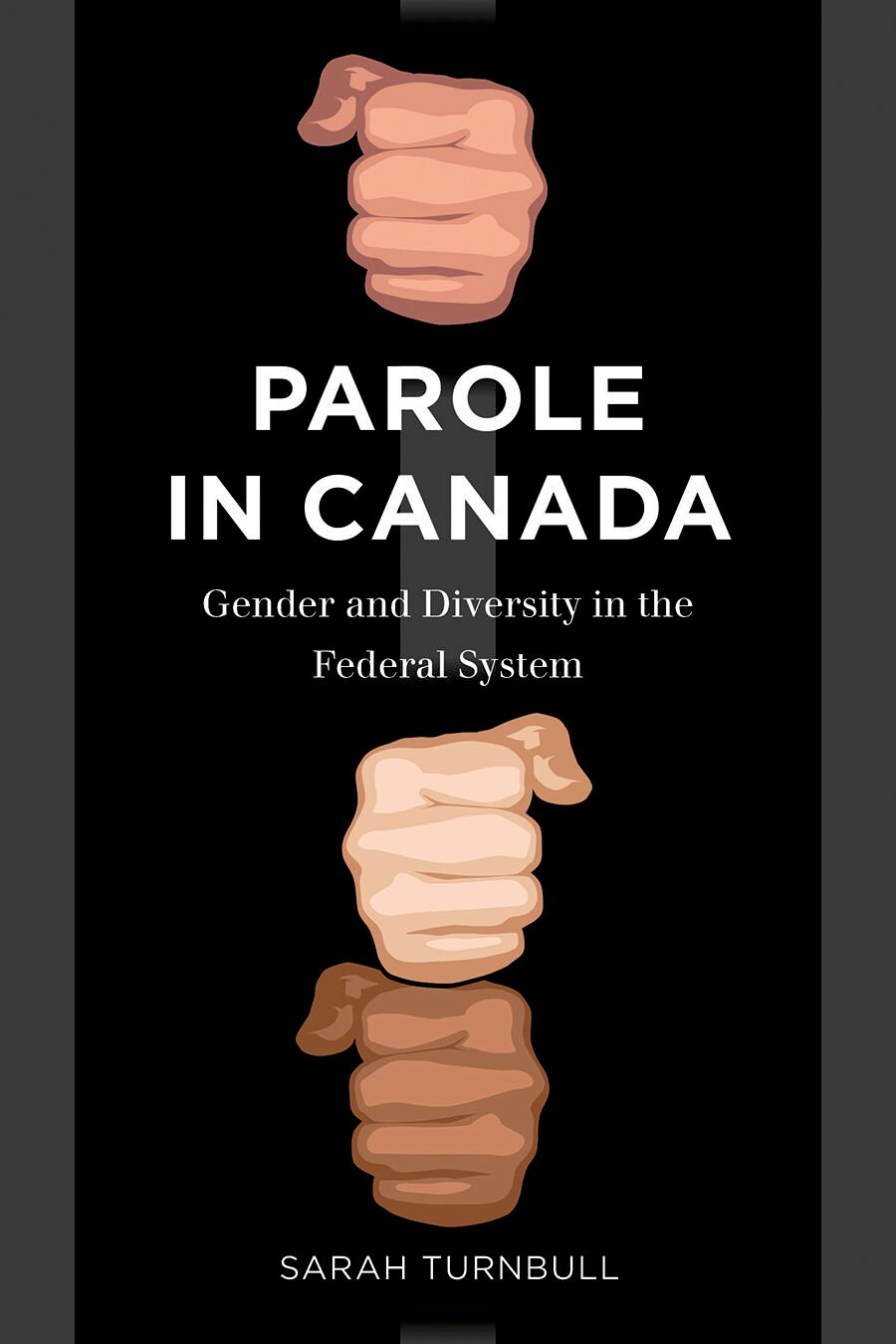
Parole in Canada
Just as Canada’s population has changed in the past four decades, so too has its prison population. The increasing diversity among prisoners raises important questions about how we punish those who break the law. Parole in Canada is the first book to explore how concerns about Aboriginality, gender, and the multicultural ideal of “diversity” have been interpreted and used to alter federal parole policy and practice. Using the Parole of Board of Canada as a case study, this book shows how certain facets of offender differences are selectively included for “accommodation,” while fundamental institutional structures, practices, and power arrangements remain unchanged. Sarah Turnbull argues that, as the current approach fails to challenge outdated notions about gender, race, and aboriginality within the penal system, instead of addressing concerns around diversity, these measures end up contributing to further exclusion and discrimination within the system.
eBook

Guest editors' introduction: Migration, vulnerability and violence
People migrate for a variety of reasons which are often categorised as voluntary or forced, involving complex combinations of choices and threats. Forced migration includes refugee flows, people seeking asylum and those who are internally displaced - the majority of whom are fleeing persecution (related to political affiliation, race, ethnicity, religion, gender and sexuality), wars, armed conflict, climate change and other situations related to insecurity and poverty. Individuals travel from their countries of origin, crossing borders and transiting through various nation states, in search of stability and security. Throughout their journeys they may be exposed to violence, brutality by state authorities and various forms of exploitation (eg see Calais Writers 2017; Craig et al. 2015; Koca 2016; Crawley et al. 2017). Exposure to violence and exploitation often continues even after reaching the destination countries as migrants face multiple and escalating harms as a consequence of detrimental policies and practices, political rhetoric and anti-immigrant and xeno-racist sentiments in the host societies (Bhatia 2020; Boochani 2018; Canning 2020).
Journal Article

Introduction to the Special Issue: Migration, Vulnerability and Violence
The contributions to this special issue within this double issue tackle some of the pressing, contemporary issues across the migration landscape. Paying attention to stratifying factors including race, gender and class, the six articles that make up this special issue critically analyse migrant vulnerability as well as resilience and resistance. Adopting different theoretical and methodological approaches, they engage with a variety of contexts and geographical sites (Portugal, Spain, Turkey and the United Kingdom [UK]). The collection cuts across various disciplines but retains a strong commitment to uncovering the violence of denial, exclusion and deprivation while at the same time making visible migrant struggles and lived experiences.
Journal Article

Halal holidays: exploring expectations of Muslim-friendly holidays
Purpose
The purpose of this study is to explore the expectations of Muslim tourists when taking a halal holiday. Understanding consumer expectations is an important factor in any service context since expectations determine whether the consumer is satisfied or dissatisfied with the service outcome.
Design/methodology/approach
An exploratory approach was adopted and in-depth interviews with Muslim tourists and halal holiday providers were undertaken.
Findings
The findings identified services and facilities Muslim consumers expect from a halal holiday and those they did not expect to see. Factors such as halal food, women-only facilities and dress codes were identified as services and facilities that are expected, whereas no alcohol was seen to be an important factor for Muslim tourists.
Research limitations/implications
This exploratory study used a small sample and hence the findings should not be seen to be generalisable. However, the study provides a number of valuable insights into the expectations of Muslim leisure tourists. Halal travel organisations and tourism boards will benefit from a better understanding of factors that influence the satisfaction/dissatisfaction of Muslim tourists.
Originality/value
The study makes three main contributions to our understanding of halal holidays. First, the study identifies expectations that are likely to influence satisfaction, such as halal food and women-only facilities. Second, the study highlights those expectations which are likely to cause dissatisfaction for halal holidaymakers, such as alcohol and dress codes. Third, the study highlights the difference in expectations which exist between halal holidaymakers and how the interpretation and practice of Islam is highly varied.
Journal Article

Parole in Canada : gender and diversity in the federal system
Parole in Canada explores how concerns about aboriginality, gender, and the multicultural ideal of \"diversity\" have altered parole policy and practice - and asks whether these changes go far enough.
eBook


Festivals as strategic tools: exploring the Dubai Lynx International Festival of Creativity
Purpose
This paper aims to provide insight into the use of festivals as a strategy to position cities as creative hubs.
Design/methodology/approach
This paper has been prepared by an independent author who provides their views and personal experiences of festivals.
Findings
Festivals are an effective strategic tool for countries to use to engage business audiences and associate themselves with values such as creativity.
Originality/value
This paper shares highlights from the 2016 Dubai Lynx International Festival of Creativity. Three presentations have been chosen for review, and two of the developmental programmes are discussed. While these provide only a brief insight into the festival, they reflect the quality of speakers and the unique opportunities for professional development offered at this annual Dubai event.
Journal Article