
Catalogue Search | MBRL


Are you sure you want to remove the book from the shelf?

{{itemTitle}}
5
result(s) for
"Turner, Mark W., editor"
Sort by:

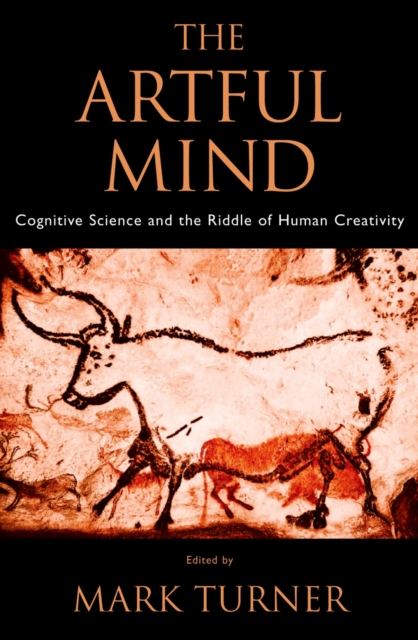
The Artful Mind
All normal human beings alive in the last fifty thousand years appear to have possessed, in Mark Turner's phrase, “irrepressibly artful minds”. Cognitively modern minds have produced a staggering list of behavioral singularities—science, religion, mathematics, language, advanced tool use, decorative dress, dance, culture, art—that seems to indicate a mysterious and unexplained discontinuity between us and all other living things. This brute fact gives rise to some tantalizing questions: How did the artful mind emerge? What are the basic mental operations that make art possible for us now, and how do they operate? These are the questions that occupy the chapters in this book. These chapters bring to bear a range of disciplinary and cross-disciplinary perspectives on the relationship between art (broadly conceived), the mind, and the brain. Together they hope to provide directions for a new field of research that can play a significant role in answering the great riddle of human singularity.
eBook

The history and practice of college health
This volume is the first definitive reference and textbook in the one-hundred-fifty year history of college health. Written for professionals and for those working in student services and higher education administration, it covers the history of college health, administrative matters including financing and accreditation, and clinical issues such as women's health, HIV/AIDS, and mental health. The book also focuses on prevention, including immunization and tuberculin testing. The contributors are well respected in the field and are actively working in the specific areas on which they write.
eBook
Handbook of Cognitive Linguistics
Cognitive Linguistics is an approach to language study based on the assumptions that our linguistic abilities are firmly rooted in our cognitive abilities, that meaning is essentially conceptualization, and that grammar is shaped by usage. The Handbook of Cognitive Linguistics provides state-of-the-art overviews of the numerous subfields of cognitive linguistics written by leading international experts which will be useful for established researchers and novices alike. It is an interdisciplinary project with contributions from linguists, psycholinguists, psychologists, and computer scientists which will emphasise the most recent developments in the field, in particular, the shift towards more empirically-based research. In this way, it will, we hope, help to shape the field, encouraging methodologically more rigorous research which incorporates insights from all the cognitive sciences.
Editor Ewa D?browska was awarded the Alexander von Humboldt Professorship 2018.
eBook
Metonymy in Language and Thought
Metonymy in Language and Thought gives a state-of-the-art account of metonymic research. The contributions have different disciplinary and theoretical backgrounds in linguistics, psycholinguistics, psychology and literary studies. However, they share the assumption that metonymy is a cognitive phenomenon, a \"figure of thought,\" underlying much of our ordinary conceptualization that may be even more fundamental than metaphor. The use of metonymy in language is a reflection of this conceptual status. The framework within which metonymy is understood in this volume is that of scenes, frames, scenarios, domains or idealized cognitive models.The chapters are revised papers given at the Metonymy Workshop held in Hamburg, 1996.
eBook