
Catalogue Search | MBRL


Are you sure you want to remove the book from the shelf?

{{itemTitle}}
20
result(s) for
"Tygstrup, Frederik"
Sort by:

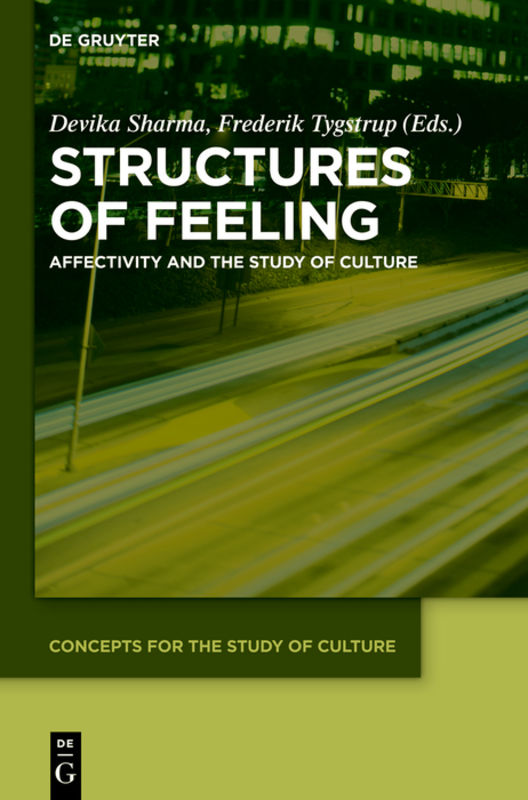
Structures of Feeling
Raymond Williams coined the notion \"structure of feeling\" in the 1970s to facilitate a historical understanding of \"affective elements of consciousness and relationships.\" Since then, the need to understand emotions, moods and atmospheres as historical and social phenomena has only become more acute in an era of social networking, ubiquitous media and a public sphere permeated by commodities and advertisement culture. Concomitantly, affect studies have become one of the most thriving branches of contemporary humanities and social sciences. This volume explores the significance of the study of affectivity for already thriving fields of cultural analysis such as media studies, memory studies, gender studies and cultural studies at large.
The volume is divided into four sections. The first part, Producing Affect, brings together contributions which explore some of the ways in which new media works to produce and intensify affectivity. The essays making up the second part, Affective Pasts, explore the significance of affect to the ways we remember, commemorate and in other ways get hold of things in our recent and not so recent past – or fail to do so. The essays engage the affective production of presence in contexts such as 9/11, the emotional culture of the eighteenth century, and literary auto-fiction. The third part, Affective Thinking, examines various concepts, theories, and forms of thinking not so much to show how the thinking in question may inform the field of affect studies but rather in order to draw attention to the way in which these modes of thinking are themselves already attuned to matters of affect. New social relations and ways of being in a networked world are the common themes of the essays in the final part of the volume, Circulating Affect.
eBook


Literature and Democracy
Literary fiction is probably the medium that most radically extends and expands human experience. When reading literature, you can visit every region of the world, and every world that can be imagined in any region, without leaving the armchair. You can get to see and feel it in all conceivable scales, from minute sensation to full-horizon overlook; you can see it with the eyes of any living being and learn what it does to their minds and their bodies. You discover the multiplicity of ways in which things, people, and situations can be apprehended, how emotions are formed, and how ideas coalesce. This is the mundane magic of literature: It not only makes your world indefinitely big, it also, importantly, provides access to it through the other. You enter into the consciousness, the eyes and ears, the sensibility of someone who is not you, all while opening up this world by means of your own imagination. The experience of reading literature is one of blending into the other, of thinking the thoughts of others in your own head, and eventually of continuously becoming yourself by merging into the lives of others.
Journal Article

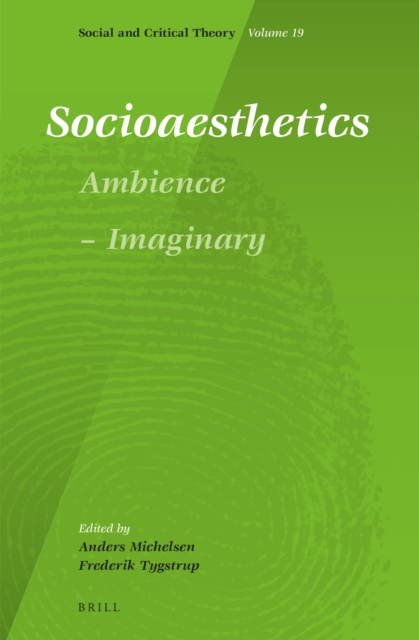
Socioaesthetics: Ambience – Imaginary
The volume SocioAesthetics: Ambience - Imaginary collects scholars from social science, aesthetics, arts, and cultural studies in case-driven debate, ranging from biometrics to luxury commodities, on how a new alignment of aesthetics and the social is possible and what the possible prospects of this may be.
eBook
Structures of feeling: affectivity and the study of culture
Die Reihe widmet sich zentralen neueren Konzepten und Methoden im Feld der kulturwissenschaftlichen Grundlagenforschung und inhaltlichen Fragestellungen. Sie zielt darauf, die gegenwärtige Diskussion in den Kulturwissenschaften weiter zu profilieren und sie zugleich für die Arbeit in den Disziplinen fruchtbar zu machen: durch die Ausarbeitung interdisziplinärer Schlüsselkonzepte und die Entwicklung einer transkulturellen study of culture. Die Bände gehen überwiegend aus den Literatur-, Geschichts- und Kulturwissenschaften hervor, aber auch aus der Politikwissenschaft, der Soziologie und den Medienwissenschaften.
eBook


