
Catalogue Search | MBRL


Are you sure you want to remove the book from the shelf?

{{itemTitle}}
67
result(s) for
"VERMA, BHAWNA"
Sort by:

A transcriptome-wide identification of ATP-binding cassette (ABC) transporters revealed participation of ABCB subfamily in abiotic stress management of Glycyrrhiza glabra L
Transcriptome-wide survey divulged a total of 181 ABC transporters in
G. glabra
which were phylogenetically classified into six subfamilies. Protein–Protein interactions revealed nine putative GgABCBs (-B6, -B14, -B15, -B25, -B26, -B31, -B40, -B42 &-B44) corresponding to five AtABCs orthologs (-B1, -B4, -B11, -B19, &-B21). Significant transcript accumulation of
ABCB6
(31.8 folds), -
B14
(147.5 folds), -
B15
(17 folds),
-B25
(19.7 folds), -
B26
(18.31 folds),
-B31
(61.89 folds),
-B40
(1273 folds) and -
B42
(51 folds) was observed under the influence of auxin. Auxin transport-specific inhibitor, N-1-naphthylphthalamic acid, showed its effectiveness only at higher (10 µM) concentration where it down regulated the expression of
ABCBs
,
PINs
(PIN FORMED) and
TWD1
(TWISTED DWARF 1) genes in shoot tissues, while their expression was seen to enhance in the root tissues. Further, qRT-PCR analysis under various growth conditions (
in-vitro
, field and growth chamber), and subjected to abiotic stresses revealed differential expression implicating role of
ABCBs
in stress management. Seven of the nine genes were shown to be involved in the stress physiology of the plant.
GgABCB6
,
15
,
25
and
ABCB31
were induced in multiple stresses, while
GgABCB26
,
40
&
42
were exclusively triggered under drought stress. No study pertaining to the ABC transporters from
G. glabra
is available till date. The present investigation will give an insight to auxin transportation which has been found to be associated with plant growth architecture; the knowledge will help to understand the association between auxin transportation and plant responses under the influence of various conditions.
Journal Article
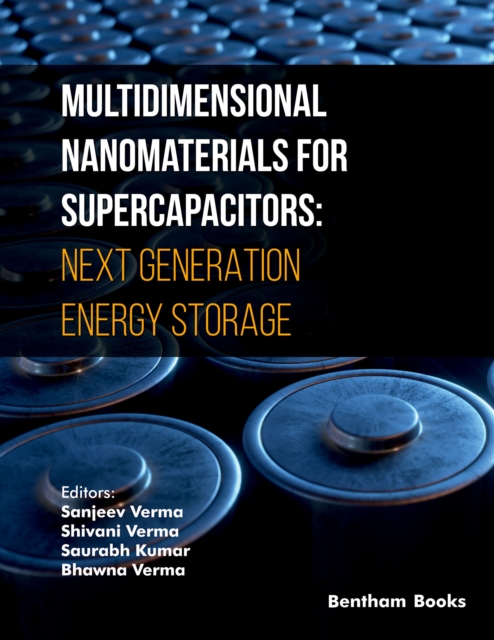
Multidimensional Nanomaterials for Supercapacitors: Next Generation Energy Storage
Multidimensional Nanomaterials for Supercapacitors: Next Generation Energy Storage explores the cutting-edge advancements in multidimensional nanomaterials for supercapacitor applications, addressing key techniques, challenges, and future prospects in the field. The book offers a comprehensive overview of the fundamentals of supercapacitors, including electrode materials, electrolytes, charge storage mechanisms, and performance metrics. Key Features Comprehensive Coverage: 15 referenced chapters cover a wide range of topics, including graphene derivatives, quantum dots, MOFs, MXenes, and fiber-shaped supercapacitors, providing a holistic view of the field. Cutting-Edge Techniques: Covers the latest advancements in multidimensional nanomaterials for supercapacitors, providing insights into their synthesis, properties, and applications. Future Applications: Chapters explore the potential future applications of nanomaterials in energy storage devices, offering valuable insights for researchers and practitioners. Real-World Case Studies: Practical examples and case studies illustrate the application of nanomaterials in supercapacitors, enhancing understanding and applicability. Challenges and Opportunities: Highlights the challenges and limitations associated with nanomaterial-based supercapacitors, offering information into overcoming barriers and expanding possibilities for future research. Readership This book is essential reading for chemists, electrochemists, chemical and electrical engineers, materials scientists, research scholars, and students interested in advancing their knowledge of energy storage technologies and multidimensional nanomaterials.
eBook

Recent updates on applications of ionic liquids (ILs) for biomedical sciences
Ionic liquids (ILs) are known as green solvents that comprise of cations and anions in equal ratios and exist as liquid at temperature below 100 °C. They possess desirable properties such as biocompatibility, solubility, and inherent tunability that makes them suitable for biomedical applications. In recent years, the implementation of ILs in biomedical sciences has been increased dramatically as they have exceptional characteristics and tunability. Herein, we have highlighted the ILs and their characteristics. Further, we have briefly discussed the applications in biomedical sciences such as pharmaceutical delivery carriers, proteins or nucleic acid stabilizers, biosensors, and antimicrobial agents. Challenges and future perspectives of ILs have also been highlighted.
Journal Article

Study on thermo-kinetic modeling of green route synthesized inorganic loading on PVDF membrane for Cr(VI) removal and its optimization
Mathematical modeling of a phase inversion membrane was studied to predict the morphology. The effect of different concentrations of TiO
2
nanoparticles on the thermodynamic and kinetic properties of polyvinylidene fluoride (PVDF) membrane casting solutions was investigated. The addition of green synthesized TiO
2
increases the viscosity, and a sufficient amount results in the formation of two phases. Thermodynamics enhances the demixing rate, whereas kinetics delays the demixing rate; this trade-off between thermodynamic and kinetic parameter will affect the membrane morphology. A quadratic phase diagram for PVDF/ TiO
2
/solvent/Water system was drawn experimentally at different concentrations of TiO
2
using a new method. Synthesized membranes were characterized by the contact angle, porosity, and permeability. Surface morphologies at different compositions were also examined using High Resolution scanning electron microscope (HRSEM). At TiO
2
concentration of 2 wt% in the polymer casting solution, thermodynamics parameter dominates kinetics parameter; thus, maximum porosity with enhanced permeability was achieved experimentally. The importance of thermo-kinetic parameters was further assessed using response surface optimization. The study suggested an optimum value of 2.165% of weight% TiO
2
at 5.125 pH giving excellent agreement to the experimental data.
Journal Article

The Pain Descriptors Used by Individuals with Musculoskeletal Pain from Northern India
Chronic pain is a common health problem worldwide that results in significant costs to society and has negative impacts on the individuals with chronic pain. In order to study and treat pain, valid and reliable pain assessment is necessary, including assessment of pain quality. However, all of the most commonly used measures of pain quality were developed in Western countries. Evidence has shown that some of these measures are not content valid for use in non-Western countries. Moreover, it remains unclear which pain descriptors are universal across people from different countries who speak different languages, and which are specific to individuals from a particular country or even from a particular region within one country.
The current study sought to: (1) identify the number and frequency of words used by native speakers of Hindi in northern India to describe their pain; (2) compare the rates of descriptor use in these individuals with samples of individuals from Nepal and the USA; and (3) investigate the content validity of the most commonly used pain quality measures for measuring pain in this Hindi-speaking population.
Two hundred and forty individuals with chronic musculoskeletal pain who speak and understand Hindi were asked to describe their pain.
The results showed overlap as well as differences in the words used to describe pain with samples of individuals with pain from other countries. Moreover,
of the pain quality measures examined were found to be content valid in the Hindi-speaking sample, suggesting that these measures need to be adapted to assess pain quality in this population.
The study findings confirm the conclusion that pain quality measures developed in one country or in one pain population are not necessarily valid for assessing pain quality in a population from another country. The findings also suggest the possibility that a measure could be developed which would allow for more valid assessment of pain quality in individuals with pain from different countries.
Journal Article

Genetic diversity and structure of Pyrus accessions of Indian Himalayan region based on morphological and SSR markers
Genetic diversity and phylogenetic relationships among 48 pear accessions belonging to six species were determined using 23 morphological traits and 20 simple sequence repeat (SSR) primers. To assess the genetic diversity, data on morphological (both quantitative and qualitative) traits were recorded during 2010–2012 using standard pear descriptors. It was observed that the traits ratio of fruit length to diameter, persistency of calyx on mature fruits and fruit surface and pulp texture were important in detecting variation across pear species. At molecular level, 20 SSR primers amplified 190 polymorphic alleles with an average of 9.5 alleles per primer. Size of amplified alleles ranged from 85 to 450 bp. Mean polymorphic information content (PIC) was 0.80 showing high level of SSR polymorphism. Bayesian model-based STRUCTURE analysis assigned genotypes into five clusters and also showed the extent of admixture within individuals. Genotypes belonging to Pyrus pyrifolia were clustered into two different clusters indicating broad genetic base for this species while Pyrus communis genotypes appeared to have conserved genetic makeup. Dendrogram-based on Jaccard’s similarity coefficient and neighbor-joining tree showed two major groups of Asiatic (P. pyrifolia, Pyrus pashia, Pyrus serotina and Pyrus jacquemontiana) and European (P. communis) pears. However, accessions belonging to P. pyrifolia were further divided into subgroups. Cluster analysis based on morphological traits was in agreement with the dendrogram and structure clusters obtained with SSR data. The Mantel matrix correspondence test was used to further compare the molecular and morphological similarity matrices and positive correlation coefficient (r = 0.164; P = 0.001) was observed. Results of this study present important information about genetic structure of Indian pear accessions which can contribute significantly to future breeding and improvement programmes in this species.
Journal Article

Facile synthesis of paratoluene sulfonic acid assisted S-doped polyaniline hybrid composite for energy storage devices
Ternary composites were prepared by varying the weight ratio of the individuals, and their electrochemical performances were recorded by cyclic voltammetry, charging-discharging, and electrochemical impedance spectroscopy. Polyaniline-acetylene black-cobalt ferrite having the weight ratio of 4:1:2 (aniline:acetylene black:cobalt ferrite) gave outstanding electrochemical outputs. The corresponding system (4:1:2 ratio based system) had 294.49 F/g of specific capacitance at 1 mA of current for the two-electrode configuration. It exhibited the maximum coulombic efficiency of 99.1%. Specific energy and power values are the highest for this system, which are 40.9 Wh/kg and 125 W/kg, respectively. It has quite good capacitance retention of 83.5% after 8000 cycles. The charge transfer resistance is only 1 Ω for this system.
Journal Article

Sustainable synthesis of polyaniline and activated carbon using citrus limetta peel for asymmetric supercapacitors
The sustainable synthesis of energy storage materials having good ion transport mechanisms is the need of the hour. Conducting polymers like polyaniline is an excellent pseudocapacitive material. In our work, we sustainably synthesized polyaniline and activated carbon from the citrus waste with enhanced electrochemical properties. To study the electrochemical behavior 1 M H
2
SO
4
electrolyte was used. The polyaniline electrode showed a specific capacitance of 647 F g
−1
at the current density of 0.5 A g
−1
. The pseudocapacitive nature of polyaniline is due to the emeraldine to leucoemeraldine redox transitions. The inner (intercalation) and outer (surface) charges stored by polyaniline were approximately 39 and 61%, respectively. Also, the full-cell polyaniline//AAC asymmetric system showed a maximum specific energy of 35.3 Wh kg
−1
and a corresponding specific power of 250 W kg
−1
at a current density of 0.5 A g
−1
with an operating potential of 1 V. The specific power of 5056 W kg
−1
and specific energy of 6.7 Wh kg
−1
were obtained at a much higher current density of 10 A g
−1
. A capacitance retention of 90.12% was observed after 2500 cycles. This detailed study of polyaniline shows excellent charge storage capability and makes it a potential material that can be used for energy storage applications as a pseudocapacitive material.
Graphical abstract
Journal Article

ABCB transporters: functionality extends to more than auxin transportation
Main conclusion
ABCs transport diverse compounds; with plant’s most abundant ABCG and ABCB subfamilies. ABCBs are multi-functional transporter proteins having role in plant adaptation.
ATP-binding cassette (ABC) proteins have been known for the transportation of various structurally diverse compounds in all kingdoms of life. Plants possess a particularly high number of ABC transporters compared to other eukaryotes: the most abundant being ABCG followed by the ABCB subfamilies. While members of the ABCB subfamily are primarily known for auxin transportation, however, studies have shown their involvement in variety of other functions viz
.
growth and development, biotic and abiotic stresses, metal toxicity and homeostasis, cellular redox state stability, stomatal regulation, cell shape maintenance, and transport of secondary metabolites and phytohormones. These proteins are able to perform various biological processes due to their widespread localization in the plasma membrane, mitochondrial membrane, chloroplast, and tonoplast facilitating membrane transport influenced by various environmental and biological cues. The current review compiles published insights into the role of ABCB transporters, and also provides brief insights into the role of ABCB transporters in a medicinal plant, where the synthesis of its bioactive secondary metabolite is linked to the primary function of ABCBs,
i.e.,
auxin transport. The review discusses ABCB subfamily members as multi-functional protein and comprehensively examines their role in various biological processes that help plants to survive under unfavorable environmental conditions.
Graphical abstract
Journal Article