
Catalogue Search | MBRL


Are you sure you want to remove the book from the shelf?

{{itemTitle}}
45
result(s) for
"Vachudova, Milada Anna"
Sort by:

Europe Undivided
The quality of political competition at the moment of transition explains the divergence in the domestic trajectories of East European states, steering Poland, Hungary, and the Czech Republic towards liberal democracy, and Romania, Bulgaria and Slovakia towards illiberal democracy after 1989. From 1989 to 1994, the European Union (EU) exerted only passive leverage on its democratizing neighbours, reinforcing liberal strategies of reform but failing to avert illiberal ones. After 1995, the EU exerted active leverage on the domestic politics of credible future members through the enlargement process. The benefits and requirements of EU membership, combined with the structure of the EU’s pre-accession process, interacted with domestic factors to improve the quality of political competition and to accelerate political and economic reforms in candidate states. The enlargement of the EU has thus promoted a convergence towards liberal democracy across the region. I unpack the consequences of the pre-accession process for the quality of democracy in the new members, the dynamics of the negotiations between the old members and the candidates, and the impact of the 2004 enlargement on the future of European integration. I conclude by exploring the usefulness of the EU’s active leverage in promoting liberal democracy in other prospective members such as Turkey and the states of the Western Balkans, and the trade-offs of further enlargements for the EU itself. The most successful tool of EU foreign policy has turned out to be EU enlargement—and this book helps us understand why and how it works.
eBook

Ukraine's Challenge to Europe: The EU as an Ethical and Powerful Geopolitical Actor
In this essay, we bridge the gap between two understandings of the power of the European Union (EU): as a normative actor, guided by ethical principles and empowered by the internal market, and as a geopolitical actor, building its own military capabilities and ready to defend its interests through deterrence and defense. In view of Russia's invasion of Ukraine, we challenge the established “values vs. interests” dichotomy and argue that defending liberal democratic values is an essential foundation of the EU's existing and potential geopolitical power. We show how, over the last decade, opting for short-term expediency and capitulating to a kind of realpolitik “regime indifference” in dealings with authoritarian regimes at home and abroad have severely weakened the EU and also diminished Ukraine's capacities to defend itself as it fights for these shared values on the battlefield. We argue that it is in the EU's strategic interest to strengthen its commitment to values-based foreign and defense policies, revive a meritocratic and credible enlargement process, and work with the United States to provide more effective military assistance to Ukraine in its fight for liberal democratic values and a rules-based European security order.
Journal Article

Explaining the salience of anti-elitism and reducing political corruption for political parties in Europe with the 2014 Chapel Hill Expert Survey data
This article addresses the variation of anti-corruption and anti-elite salience in party positioning across Europe. It demonstrates that while anti-corruption salience is primarily related to the (regional) context in which a party operates, anti-elite salience is primarily a function of party ideology. Extreme left and extreme conservative (TAN) parties are significantly more likely to emphasize anti-elite views. Through its use of the new 2014 Chapel Hill Expert Survey wave, this article also introduces the dataset.
Journal Article

From Competition to Polarization in Central Europe
Political competition in some member states of the European Union has shifted to issues of identity as populist parties take positions defending “the people.” This symposium contribution sketches how polarization goes hand in hand with democratic backsliding in Hungary and Poland, how a somewhat different dynamic is playing out in the Czech Republic, and how ruling populists in all three states treat the European Union and Russia. It concludes by considering the consequences of this populist and illiberal turn for the European Union’s power and for democratization in the Western Balkans.
Journal Article

Transnational Actors in Central and East European Transitions
When Vladimir Putin claimed \"outside forces\" were at work during the Ukrainian Orange Revolution of 2004, it was not just a case of paranoia. In this uprising against election fraud, protesters had been trained in political organization and nonviolent resistance by a Western-financed democracy building coalition. Putin's accusations were more than just a call to xenophobic impulses-they were a testament to the pervasive influence of transnational actors in the shaping of postcommunist countries.Despite this, the role of transnational actors has been downplayed or dismissed by many theorists. Realists maintain that only powerful states assert major influence, while others argue that transnational actors affect only rhetoric, not policy outcomes. The editors of this volume contend that transnational actors have exerted a powerful influence in postcommunist transitions. They demonstrate that transitions to democracy, capitalism, and nation-statehood, which scholars thought were likely to undermine one another, were facilitated by the integration of Central and East European states into an international system of complex interdependence. Transnational actors turn out to be the \"dark matter\" that held the various aspects of the transition together.Transnational actors include international governmental and nongovernmental organizations, corporations, banks, foundations, religious groups, and activist networks, among others. The European Union is the most visible transnational actor in the region, but there are many others, including the OSCE, NATO, Council of Europe, the Catholic Church, and the Soros Foundation.Transnational Actors in Central and East European Transitionsassembles leading scholars to debate the role and impact of transnational actors and presents a promising new research program for the study of this rapidly transforming region.
eBook
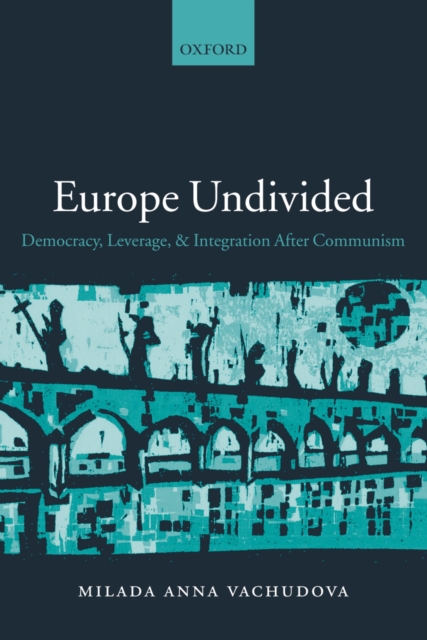
Europe undivided: democracy, leverage and integration after 1989
Europe Undivided explores how the leverage of an enlarging EU has facilitated a convergence toward liberal democracy among credible future members of the EU in Central and Eastern Europe. It reveals how variations in domestic competition put democratizing states on different political trajectories after 1989, and illuminates the changing dynamics of the relationship between the EU and candidate states from 1989 to accession, and beyond. Albeit not by design, the most powerful and successful tool of EU foreign policy has turned out to be EU enlargement - and this book helps us to understand why, and how, it works.
eBook

The positions and fortunes of social democratic parties in East Central Europe
IntroductionSocial democratic parties were active before the onset of communism throughout East Central Europe, some building on the legacy of the Austrian social democrats. After the fall of communism, it was economically right and centre-right movements and parties, many of them rooted in the anti-communist opposition, that won elections in Poland, Hungary and Czechoslovakia, and laid the foundations for liberal democracy and a market economy. Soon after that, however, social democratic parties won elections – in 1993 in Poland, in 1994 in Hungary and in 1998 in the Czech Republic. Their success was based on two broad appeals. The first was economic. Without questioning the transition to a market economy, social democratic parties promised reforms beneficial to the lower and middle classes while using state programmes to cushion the impact of unemployment and inflation. These promises mattered, even while in some cases social democratic parties were more vigorous in implementing market-friendly reforms than their ‘right-wing’ opponents. The second appeal was social and national. Social democratic parties stood for more liberal social values, such as limiting the influence of the Church in Poland, ratcheting down state-sponsored nationalism in Hungary, and embracing the EU in the Czech Republic. Broadly speaking, they attracted ‘conservative’ left and communist voters – and brought them to accept the market and the West, sometimes promoting tolerance along the way.
Book Chapter
